


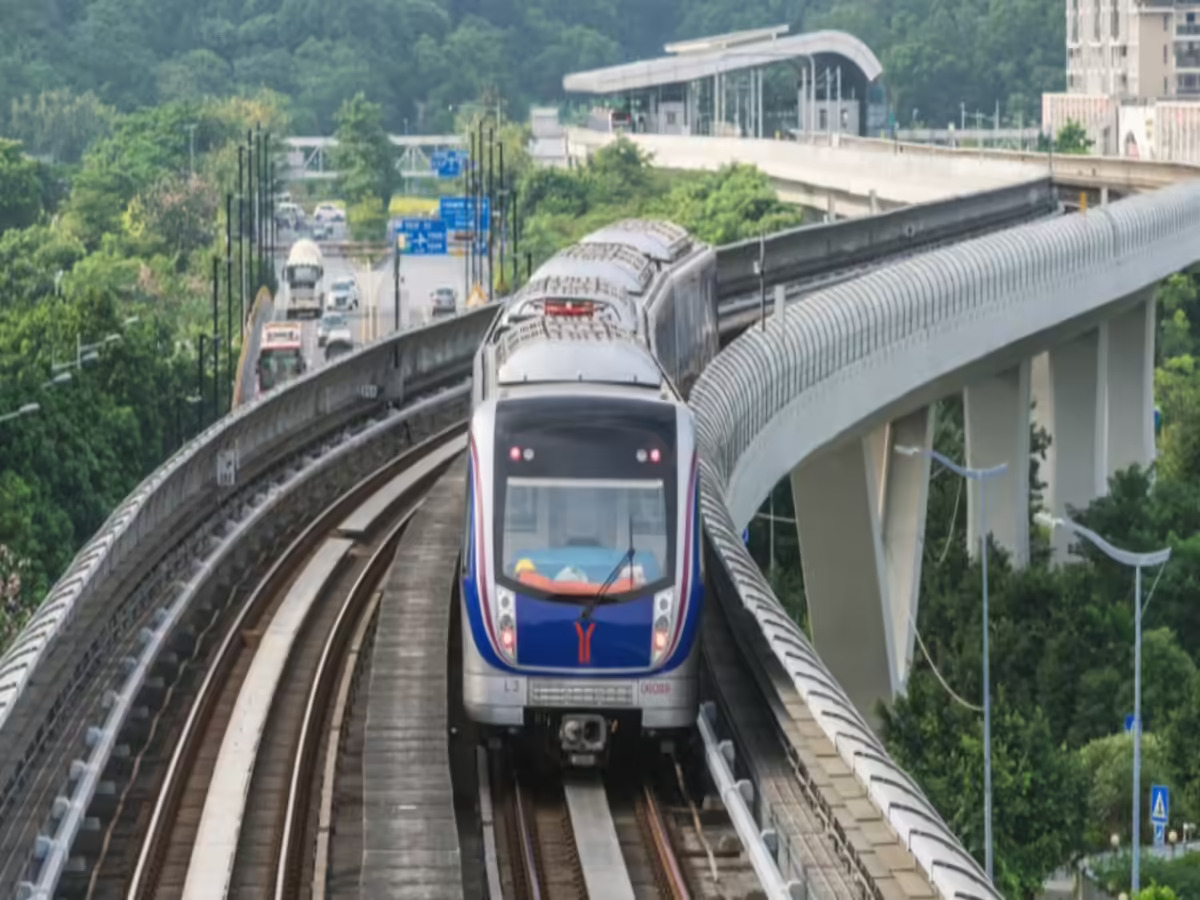
The much-anticipated Mumbai Metro Line 4 is set to take a significant step forward, with its first trial run scheduled on a completed 10-kilometre stretch in Thane on September 22. The section, which extends from Cadbury Junction to Kasarvadavali, has been prepared for preliminary operations after months of track laying, signalling, and system integration, according to officials overseeing the project.
The trial is being seen as a critical milestone for the Metro 4 corridor, which aims to connect Wadala in central Mumbai to Kasarvadavali in Thane through a 32-kilometre route. This line is projected to substantially cut down commuting time between Mumbai and its rapidly urbanising peripheries, offering residents a faster, cleaner, and more reliable alternative to existing road transport. Officials highlighted that the initial trial runs will focus on testing train dynamics, braking systems, signalling coordination, and safety parameters before passenger operations are considered. These trials are expected to continue for several months, allowing engineers and operators to make necessary adjustments and ensure compliance with the highest safety standards.
The completion of this first stretch represents progress not just for Thane, but also for the larger metropolitan region where traffic congestion, long commutes, and vehicular emissions have become pressing challenges. Experts believe that once fully operational, Metro 4 will significantly reduce the dependence on private vehicles, thereby contributing to lower carbon emissions and improved air quality in the Mumbai Metropolitan Region. Urban planners emphasise that the project aligns with the broader vision of building sustainable and equitable cities. The line is designed to encourage more people to adopt public transport, which in turn supports efforts to make urban mobility more inclusive, energy-efficient, and environmentally responsible. With Thane emerging as one of the fastest-growing residential and commercial hubs, the operationalisation of this metro stretch is expected to boost economic opportunities while improving the daily quality of life for thousands of commuters.
The Mumbai Metro network, once completed across all phases, is projected to span over 300 kilometres, making it one of the largest urban rail systems in the country. Each new stretch adds not only to transport capacity but also signals a shift towards more climate-conscious urban development. While residents eagerly await the commencement of passenger services on the Thane section, officials have cautioned that rigorous testing and safety clearances will precede full-scale operations. The gradual rollout, they argue, is essential to ensuring that the system delivers on its promises of efficiency, safety, and sustainability.
For Mumbai and Thane, the upcoming trial is more than just a technical procedure—it represents a step closer to building a greener and more connected future where mobility is not a privilege but a public right accessible to all.
Also Read : New Delhi Expands Connectivity with UER II Tunnel Flyovers Expressways
