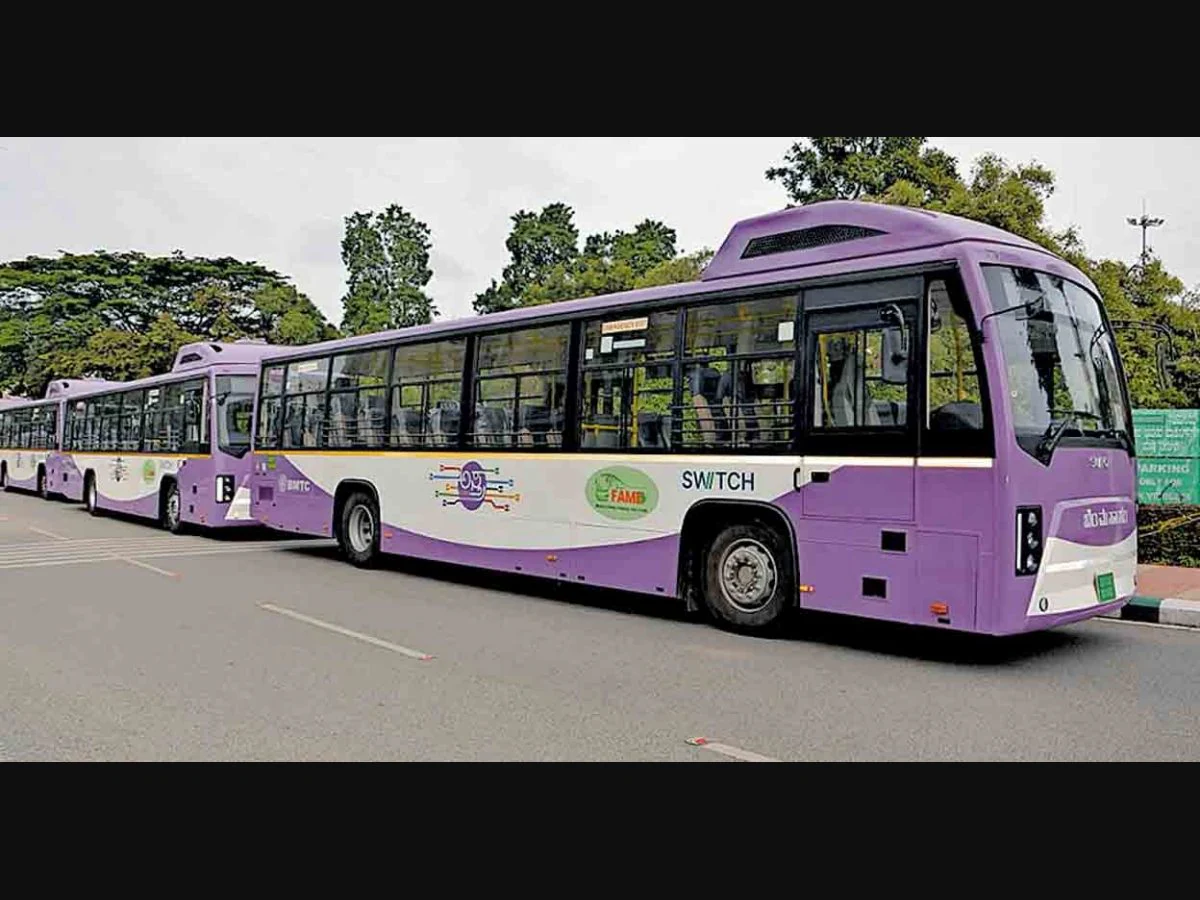
Bengaluru Expands Bus Services 40 Km With 4500 Electric Fleet
The Bengaluru Metropolitan Transport Corporation (BMTC) has cleared a proposal to extend its bus services up to 40 kilometres beyond the city’s administrative boundary, significantly expanding coverage into suburban and rural areas. The move, which awaits final approval at the government level, is seen as a major step towards building a greener and more inclusive public transport system.
The expansion will stretch BMTC’s operational radius from the current 25 kilometres to 40 kilometres, taking services into fast-growing hubs such as Kanakapura, Ramangara, Magadi, Devanahalli, Doddaballapura and Nelamangala. In later phases, services may reach Malur and extend beyond Anekal, close to the Tamil Nadu border. Transport officials said the decision is a direct response to the rapid urbanisation of Bengaluru’s outskirts, where daily commuter flows into the city are rising sharply.
The proposal carries particular significance for sustainability. BMTC plans to power the expansion through the induction of 4,500 electric buses under the central PM-e-Drive scheme. This will take its fleet size from the present 7,000 to more than 10,000 buses, marking one of the largest shifts towards electric mobility in India’s public transport sector. Experts highlight that such a move can drastically reduce carbon emissions and dependence on fossil fuels while improving air quality across the metropolitan region.
With Bengaluru’s population growth spilling into neighbouring taluks, the demand for affordable and reliable transport has outpaced existing services. Currently, BMTC operates about 250 long-distance and express buses linking towns like Magadi, Chikkaballapur and areas beyond Devanahalli. Officials explained that extending services to a 40-kilometre radius under the new Greater Bengaluru Authority (GBA) framework would help bridge gaps in last-mile connectivity while reducing the strain on private vehicles and road congestion.
The GBA, introduced this year under new governance reforms, has redrawn the city’s planning boundary to more than 700 square kilometres. It aims to unify transport, land use and civic planning across multiple municipal corporations. Analysts note that BMTC’s expansion aligns with this integrated vision, as a larger bus network can complement future metro extensions and non-motorised transport plans.
However, transport experts caution that the expansion may overlap with services offered by the Karnataka State Road Transport Corporation, which currently runs express routes to several suburban towns. They suggest that careful coordination between agencies will be necessary to avoid duplication and ensure equitable service distribution.For Bengaluru’s commuters, the prospect of expanded services offers the promise of cleaner, more reliable and gender-inclusive public transport, especially for those living in suburban stretches often underserved by formal mobility options. If implemented effectively, the 40-kilometre expansion combined with an electric fleet could be a turning point in Bengaluru’s journey towards a carbon-neutral, socially equitable and globally competitive urban transport system.