


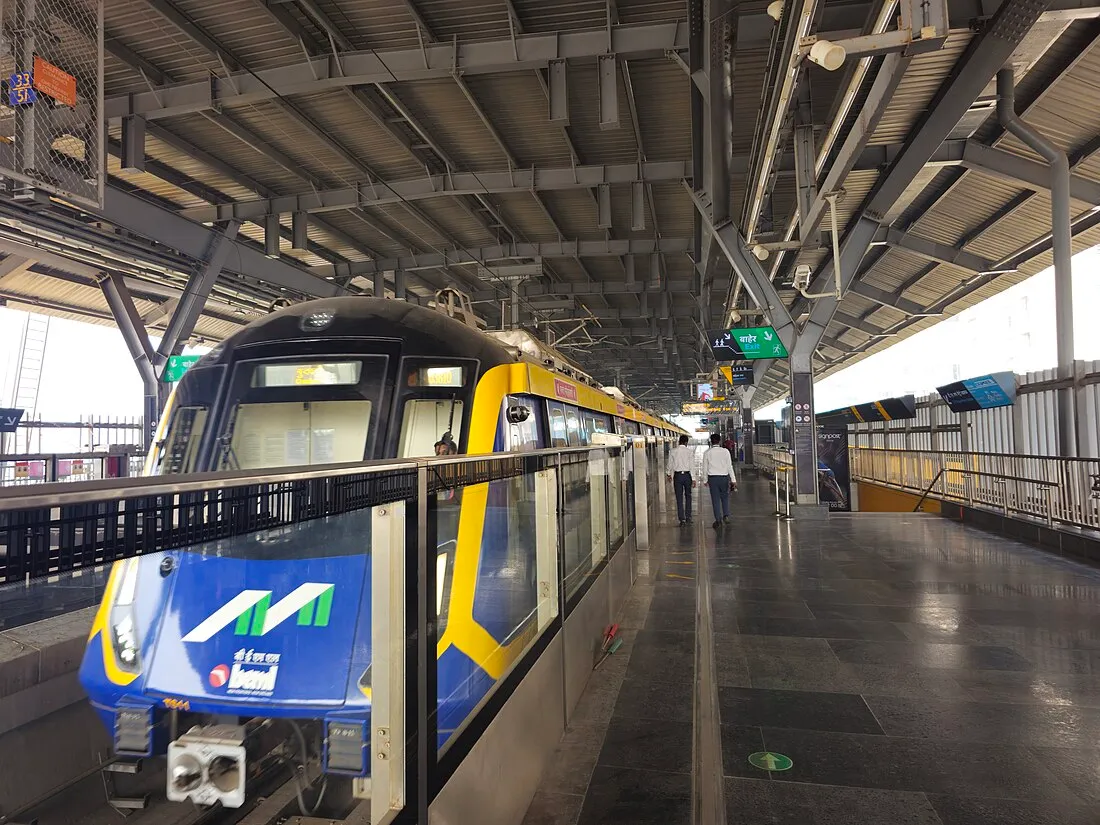
Mumbai’s long-delayed Metro Line 2B has reached a decisive stage, with final safety inspections commencing today on its first operational stretch. The Commissioner of Metro Rail Safety (CMRS) team is carrying out extensive checks along the 5.4-kilometre elevated corridor between Diamond Garden in Chembur and Mandale in Mankhurd. Passenger services will begin only after the safety regulator grants its approval.
Officials explained that the inspections would cover infrastructure reliability, signalling systems, and station readiness. A preliminary review was conducted earlier this year, when several conditions were set out for the implementing agency, the Mumbai Metropolitan Region Development Authority. Authorities now confirm that the checklist has been met, enabling the final round of scrutiny. The initial phase of the project comprises five stations—Diamond Garden, Shivaji Chowk, BSNL Metro, Mankhurd and Mandale. Once commissioned, the corridor is expected to ease travel across the city’s eastern belt, particularly improving east–west connectivity, a long-standing challenge for residents and office-goers.
The first six-coach train for the line, built by Bharat Earth Movers Ltd, arrived at the Mandale depot in late 2023. In its complete form, Metro Line 2B will extend 23.6 kilometres with 20 stations, providing crucial linkages to the Western and Eastern Express Highways, suburban railway, monorail, and other metro corridors including Line 2A, Line 3 and Line 4. The project, however, has faced repeated setbacks. Relocation of utilities, traffic diversions, and disruptions caused by the pandemic slowed progress significantly. The line, initially targeted for completion in December 2025, remains behind schedule, though authorities assert that commissioning of Phase 1 will restore confidence in the timeline.
A key feature of the development is the Mandale car shed, spanning over 31 hectares, which will house and maintain the fleet. With metro ridership in Mumbai expanding rapidly, experts note that depot infrastructure will be critical to sustaining service frequency and safety standards. Transport analysts highlight that when fully functional, Metro Line 2B could reduce travel time along the route by as much as 75 per cent, cutting peak-hour congestion on road corridors and offering a cleaner alternative to private vehicles. Officials point out that integrating the line with other modes of transport will support Mumbai’s broader ambition of building a low-carbon, sustainable urban mobility ecosystem.
While commuters must wait for the CMRS decision before boarding the new trains, the inspection marks a significant milestone for a project that has endured multiple delays. The coming weeks will be crucial in determining when central Mumbai’s newest metro link can begin easing the city’s daily commute.
Also Read : Mumbai Elphinstone Bridge Closes Today For Vehicular Traffic Amid Redevelopment Plan
