


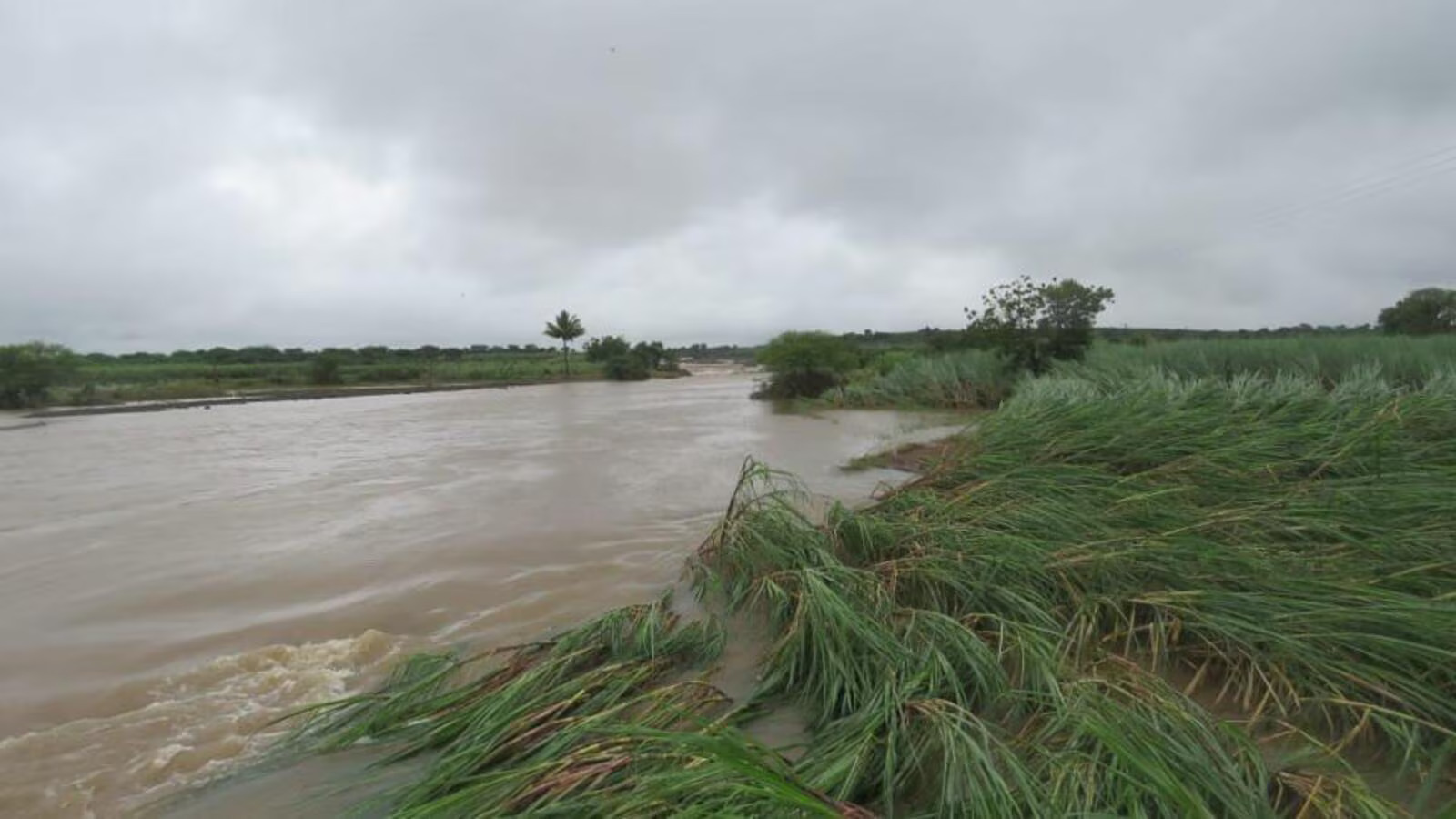
Maharashtra’s agrarian economy has taken a severe hit, with heavy rainfall in August damaging crops spread over nearly 1.4 million hectares of farmland across 29 districts. According to the state agricultural department, major kharif crops such as soybean, maize, cotton, and pulses have been among the worst affected, intensifying concerns over farmer livelihoods and the rural economy.
The most destructive spell of rain occurred between 15 and 20 August, particularly in the Vidarbha and Marathwada regions. Officials reported cloudburst-like conditions in parts of Nanded, where floodwaters submerged both agricultural land and residential zones. Several deaths due to lightning strikes and drowning were also recorded, while hundreds of families were relocated to temporary shelters. Preliminary assessments indicate that 191 tehsils witnessed crop losses, with 12 districts recording damage exceeding 10,000 hectares each. Nanded emerged as the epicentre of devastation, with more than 6.2 lakh hectares of farmland rendered unproductive. Other heavily impacted districts included Yavatmal, Washim, Dharashiv, Buldhana, Solapur, Akola, Amravati, Hingoli, Beed, Parbhani, and Jalgaon.
Experts point out that such widespread agricultural damage comes at a critical stage of the kharif season, with many farmers already burdened by debt and input costs. The disruption could not only hurt household incomes but also put pressure on food supply chains, especially in oilseeds and cotton-based industries. Officials have clarified that the final figure of loss is still being collated, as the process of panchnamas—ground-level surveys that verify damage—is underway. Early estimates put the affected agricultural area at 1,444,749 hectares, though this number may rise once reports from more villages are verified.
State authorities have assured farmers of timely compensation. Senior officials stated that “no farmer will be left behind,” confirming that relief measures will be extended once the final verification process is completed. Compensation will be distributed under state and central relief frameworks, with a focus on ensuring coverage for small and marginal farmers who form the backbone of rural Maharashtra. Agricultural experts, however, warn that financial relief alone may not be enough. They stress the need for climate-resilient farming practices, improved water management, and stronger crop insurance systems to mitigate future risks. With erratic rainfall patterns becoming more frequent, experts argue that Maharashtra’s agricultural policies must prioritise sustainability and climate adaptation to secure rural livelihoods.
The August rainfall episode has once again highlighted the vulnerability of farming communities to extreme weather. For many farmers across Vidarbha and Marathwada, the challenge now lies not only in recovering from immediate crop losses but also in adapting to a climate reality that is reshaping agriculture year after year.
Also Read : Maharashtra Approves 238 AC Local Trains And New 136 Km Suburban Corridors
