


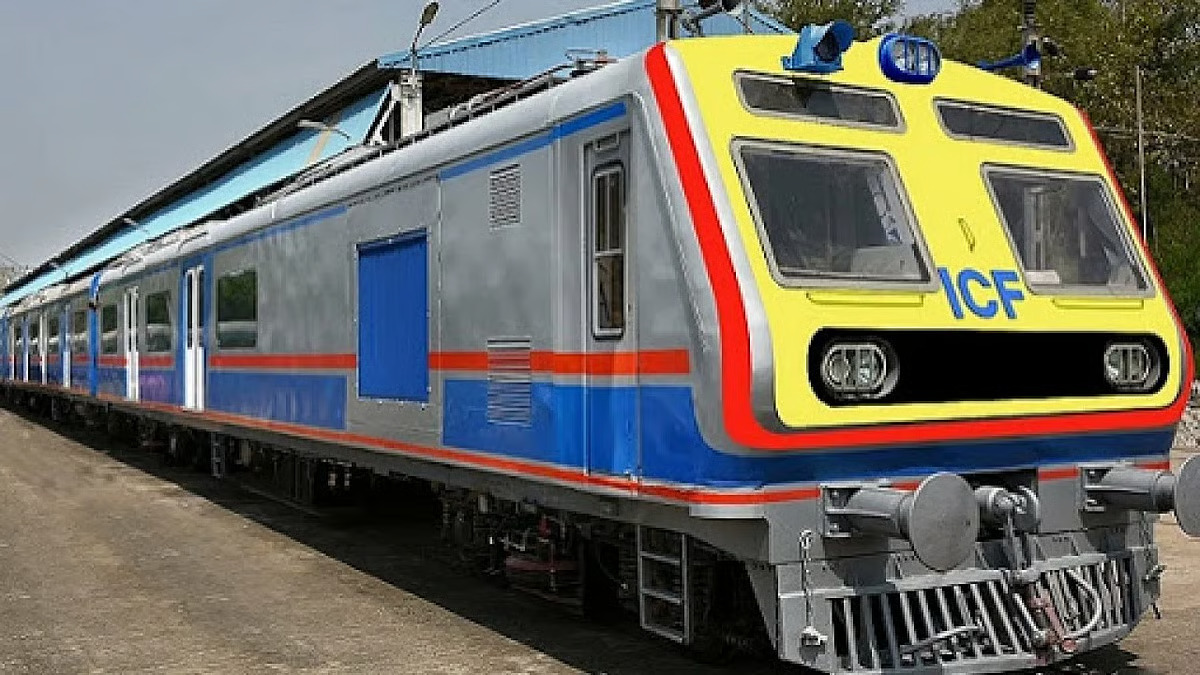
The Maharashtra cabinet has cleared a series of infrastructure and welfare projects that signal a major push towards sustainable mobility, economic expansion, and social inclusion. Among the most significant approvals is the procurement of 238 new air-conditioned local trains for Mumbai’s suburban network, along with funding for 136 kilometres of fresh suburban rail corridors.
Officials said the AC local fleet, sanctioned under MUTP-3 and 3A, will cost Rs 4,826 crore and aims to ease congestion while improving comfort for millions of daily commuters. In parallel, Rs 14,907 crore has been allocated to expand connectivity on critical stretches such as Panvel–Vasai, Kasara–Asangaon, and Badlapur–Karjat. A third and fourth suburban corridor between Pune and Lonavala has also been approved at a cost of Rs 5,100 crore, reinforcing the state’s intent to reduce travel bottlenecks and shift more commuters towards mass transit. For Mumbai, these decisions build on earlier commitments to expand the metro footprint. A Rs 23,487 crore investment has been approved for Metro Line-11 between Wadala and Gateway of India, alongside a Thane circular metro. Pune will see the extension of Metro Lines 2 and 4, with new stations at Balajinagar and Bibwewadi. In Nagpur, Phase-2 of the metro has been cleared, supported by a Rs 13,748 crore outer ring road and four logistics hubs designed to transform the city into a regional trade and industrial centre.
State officials also announced an International Business and Finance Centre (IBFC) under the ‘New Nagpur’ initiative, with an investment of Rs 6,500 crore and a projected five lakh jobs. A Rs 6,363 crore elevated road linking Thane and Navi Mumbai and a Rs 3,750 crore Bombay High Court complex in Bandra (East) were also sanctioned, reflecting the government’s mix of urban transport, judicial, and civic infrastructure commitments. On the welfare front, the cabinet approved a rise in monthly allowances for disabled beneficiaries under the Sanjay Gandhi Niradhar and Shravanbal schemes, from Rs 1,500 to Rs 2,500. This revision, effective from October 2025, will benefit nearly 4.75 lakh citizens and entail an annual outlay of Rs 570 crore.
The state also advanced its green agenda, approving a revised fly ash utilisation policy for thermal power plants with the goal of 100 per cent eco-friendly disposal. Civic experts emphasised that the new framework will promote circular economy practices while generating local jobs. For tribal students, a central pre-matric scholarship scheme will now replace the state’s earlier Suvarna Mahotsavi Scholarship, offering higher benefits and continued hostel support. Urban planners note that Maharashtra’s strategy combines large-scale mobility investments with social equity measures, reflecting an intent to build sustainable, inclusive and future-ready cities. By prioritising suburban rail, metro corridors, and green policies, the state is positioning itself at the intersection of infrastructure growth and climate-conscious urban planning.
Also Read : Mumbai Willingdon Society Residents To Pay Rs 35 Crore Penalty To BMC
