


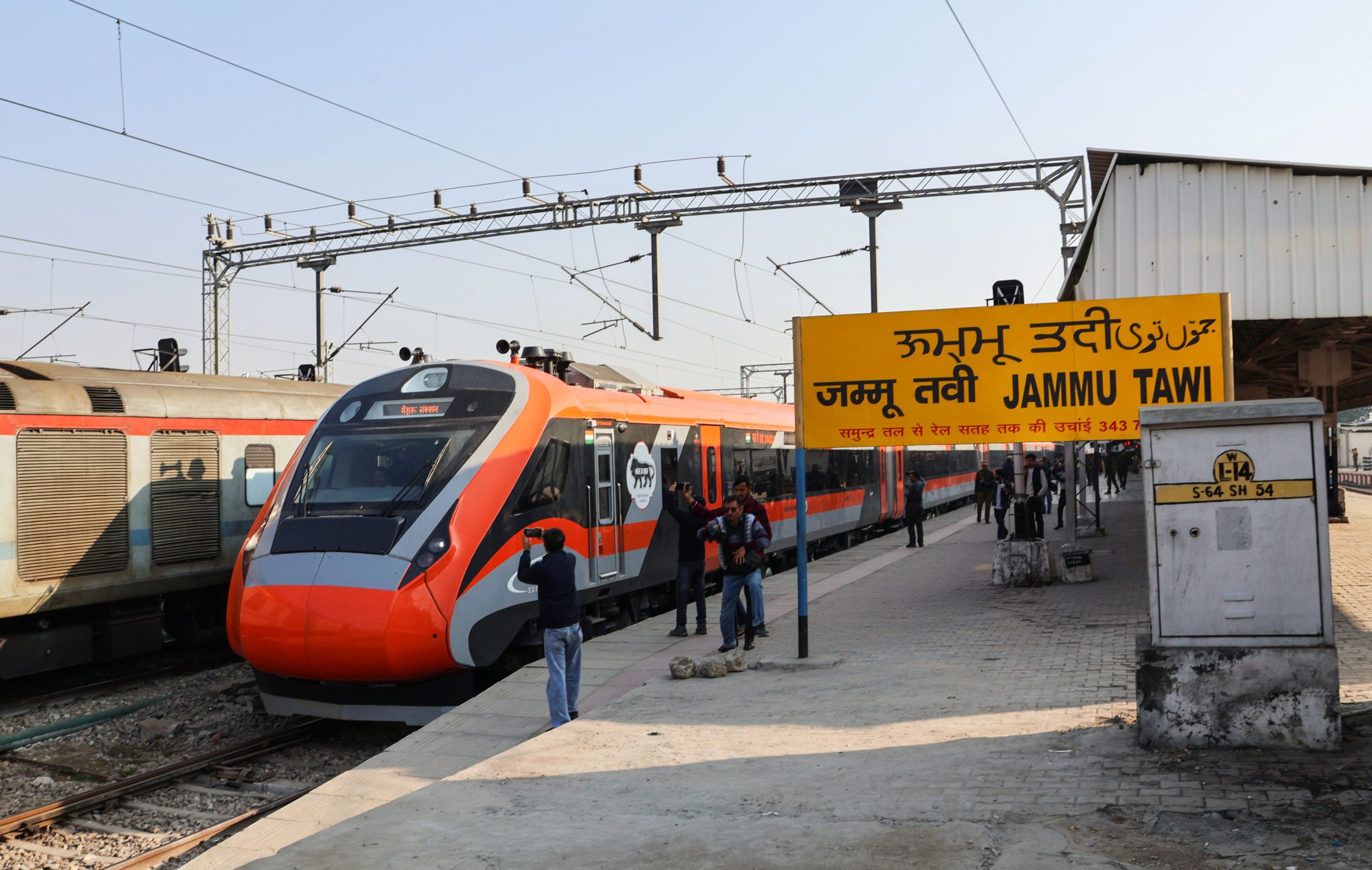
Rail services across the Jammu region remain heavily disrupted after torrential rains and flash floods triggered widespread damage to tracks and bridges, forcing the cancellation of 68 trains until the end of September. Officials said partial services have resumed to ease the plight of stranded passengers, but full restoration of connectivity will take weeks.
The Northern Railway confirmed that multiple sections of the Pathankot–Jammu line had suffered misalignment and breaches following days of relentless downpour. The Jammu division has seen no through-traffic for over a week, with operations confined to controlled shuttle runs. The decision has left thousands of passengers, including pilgrims bound for the Vaishno Devi shrine, grappling with uncertainty over travel. Jammu has recorded its heaviest rainfall since 1910, with meteorological data showing 380 mm of rain within just a few days. The unprecedented downpour caused flash floods and landslides, including one near Katra that claimed more than 30 lives. Officials said that while safety checks are underway, restoring full-scale operations requires complex engineering interventions to stabilise embankments and repair weakened track stretches.
To mitigate the crisis, the Railways has inducted four trains for short shuttle services between Jammu and Katra. These will run till mid-September, ensuring local travel and enabling pilgrims to complete their journeys. In addition, long-distance services including the Vande Bharat, Sampark Kranti, Trivandrum Express and Kolkata-bound trains are being selectively resumed. Officials said the first Vande Bharat will operate again from September 7, marking a step towards normalcy. So far, nearly 5,800 stranded passengers have been ferried out of Jammu using special trains. Railway staff have been working round the clock to manage passenger flows, provide food and water at stations, and restore disrupted services. Civic experts said the episode underscores how extreme weather events, increasingly linked to climate change, are putting fragile infrastructure under unprecedented stress.
Transport analysts noted that the repeated suspension of key rail routes highlights the urgency of climate-proofing national transport networks. They recommend accelerated investment in drainage upgrades, embankment reinforcement, and predictive monitoring systems to anticipate and manage the effects of heavy rainfall. Without such systemic resilience, they argue, regions like Jammu will remain vulnerable to disruptions that impact both livelihoods and the economy. For now, passengers remain dependent on limited shuttle services and road routes, many of which too have been hit by landslides. With the pilgrimage season ongoing, officials are balancing immediate relief with long-term reconstruction. However, the episode has reignited calls for integrated planning across railways, roads, and civic infrastructure to ensure safe, sustainable, and reliable mobility in disaster-prone areas.
Also Read : Nalasopara Unsafe Buildings Evacuated Immediately After Structural Pillars Develop Cracks
