


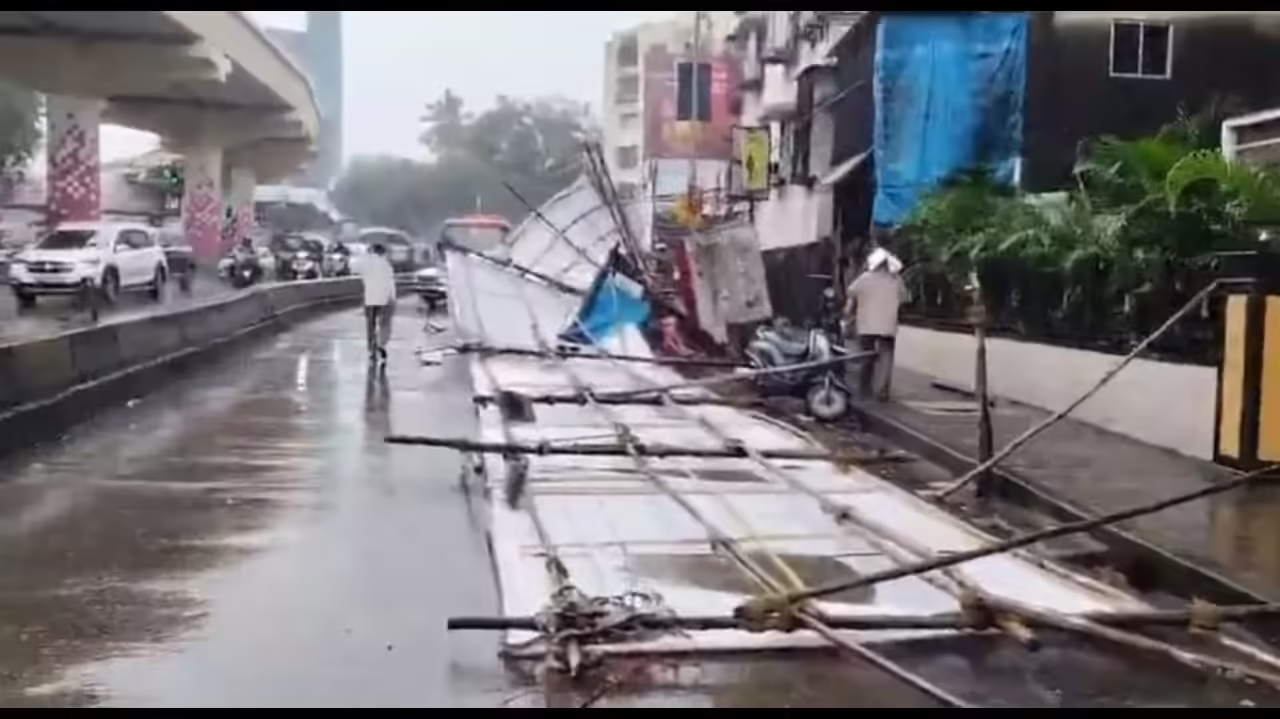
Mumbai’s festival season saw a stark reminder of the dangers posed by unauthorised hoardings when an illegal banner collapsed on the Jogeshwari–Vikhroli Link Road (JVLR) in Powai on Tuesday. The incident, which occurred amid gusty winds and light showers, fortunately caused no injuries but reignited civic concerns over the unchecked proliferation of banners and posters across the city.
Civic officials confirmed that the banner had been installed by local organisers preparing for the Ganesh festival. A formal case is being pursued against those responsible, underscoring the administration’s intent to hold violators accountable. Yet, the incident exposes a broader issue that has plagued Mumbai for years: illegal hoardings compromising public safety, aesthetics, and urban sustainability. The city is already witnessing a flood of temporary structures and promotional banners, with religious, political, and commercial groups taking advantage of festive crowds to advertise events or leaders. Between April and July 2025 alone, the municipal licence department reported dismantling 20,345 unauthorised banners and posters. Nearly half—about 48 per cent—were political, while 5,342 were commercial and 5,097 religious. Despite these removals, only 41 cases were registered, suggesting that enforcement remains inconsistent.
Civic activists argue that the real numbers are likely much higher, as many banners are quickly removed by organisers before inspectors arrive, making detection difficult. They caution that these temporary installations often use weak materials and precarious fittings, leaving them highly vulnerable to Mumbai’s monsoon winds. Beyond the immediate risk of collapse, illegal hoardings also disrupt traffic visibility, block pedestrian pathways, and contribute to visual pollution. Urban experts highlight that Mumbai’s ongoing struggle with unregulated hoardings points to a deeper governance challenge. While laws exist to regulate outdoor advertising, loopholes and lenient penalties have allowed political groups, religious organisers, and commercial advertisers to repeatedly flout norms. The recent Powai collapse illustrates how negligence can translate into a public safety hazard, especially when banners are mounted on arterial roads carrying heavy traffic.
Civic officials have pledged stricter monitoring during the ongoing Ganesh festival period, with patrols and spot checks being increased in vulnerable zones. Experts suggest that technology-enabled monitoring—such as drone surveys and AI-based detection—could help identify illegal hoardings faster and reduce reliance on manual inspections. As Mumbai gears up for weeks of festivities, the incident in Powai serves as a warning about the risks posed by unregulated celebratory displays. Ensuring citizen safety requires not only stronger enforcement but also a collective shift towards eco-friendly, regulated, and safer ways of marking cultural and political events. For a city striving towards sustainability, curbing the menace of illegal banners is as much about safety as it is about building equitable and liveable urban spaces.
Also Read : Mumbai Weather Brings Moderate Rain With High Humidity As AQI Stays Moderate
