


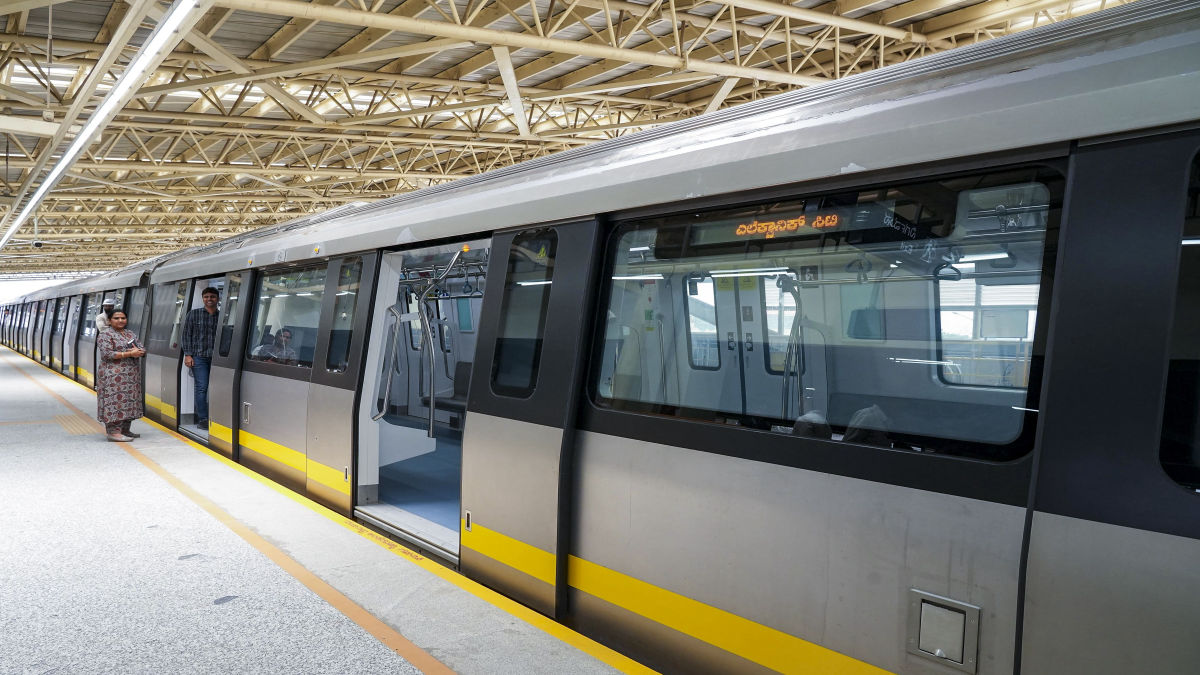
Bengaluru’s Namma Metro Yellow Line, operational since 10 August, has swiftly become a preferred travel mode for thousands of urban commuters. Stretching between RV Road and Bommasandra, the corridor has recorded an average daily ridership of nearly 60,000 passengers, according to transport officials. This sustained demand comes despite the line being served by only three trains every 25 minutes, highlighting the urgency for frequency expansion.
Officials admitted that the ridership surpassed expectations. Internal projections suggested numbers might taper off after the initial rush, possibly dropping to nearly half. Instead, daily usage has remained steady, particularly during evening hours when traffic congestion worsens. Analysts attribute this trend to a behavioural shift among working professionals, many of whom are based in Electronics City and surrounding industrial hubs. While cabs remain a morning option, commuters increasingly prefer the metro for their return journeys, given predictable travel times and affordability. The Yellow Line’s impact has also been felt on Bengaluru’s overburdened roads. Since the service began, arterial routes connecting Bommasandra and MG Road have witnessed visibly reduced congestion. Commuters report that travel times along the corridor have dropped by up to 30 minutes, reflecting the metro’s ability to ease urban gridlock. This reduction is particularly evident around Silk Board Junction and Electronics City—areas long associated with traffic snarls.
Transport experts underline that the upcoming addition of a fourth train, expected within weeks, will further strengthen ridership and reduce wait times. By offering more frequent services, the metro could not only sustain but potentially exceed current passenger levels, cutting deeper into private vehicle dependence. For a city battling rising vehicular emissions, the role of efficient mass transit is critical in supporting Bengaluru’s broader sustainability goals. The metro’s growth is also reshaping travel patterns in subtle but significant ways. Auto drivers in the vicinity confirm fewer requests from IT professionals who now choose the metro for end-of-day trips. This redistribution of demand signals the metro’s success in providing affordable alternatives, while also raising fresh questions about how feeder systems and last-mile connectivity will evolve to integrate with the expanding network.
The consistent ridership numbers highlight both Bengaluru’s pressing demand for mass transit solutions and the willingness of commuters to adapt when presented with viable options. For a city aiming to balance rapid growth with sustainable mobility, the Yellow Line’s early success offers a glimpse of what urban India’s transport future could look like—equitable, efficient, and less car-dependent.
Also Read : Mumbai Elevators To Get Metro-Style Automatic Locks In Major Facelift From December
