


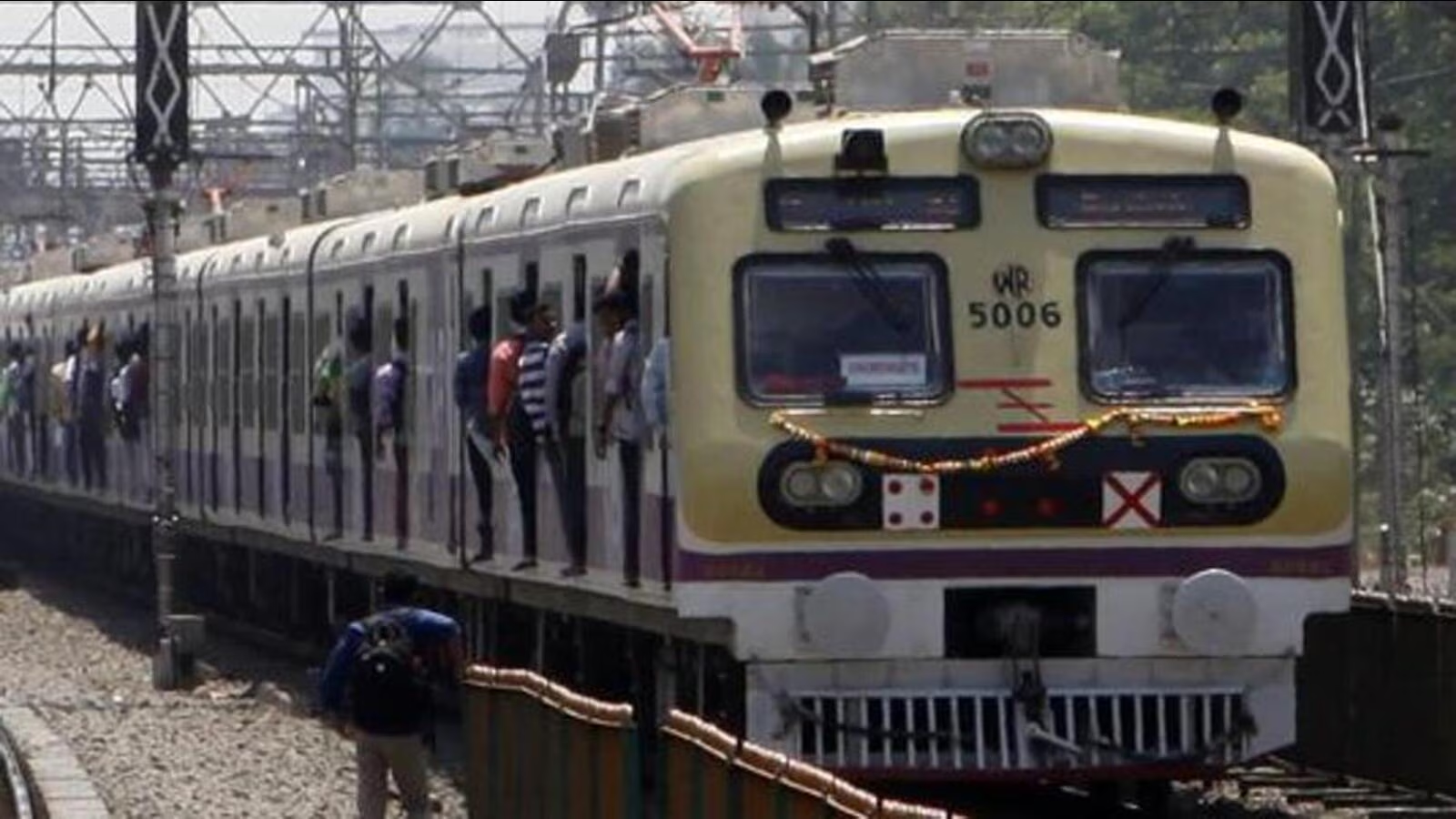
Western Railway (WR) aiming to equip all its locomotives with Kavach, the indigenous Automatic Train Protection system, by December this year. Officials confirmed that the technology has already been installed in 118 WR locomotives, while the Central Railway (CR) has introduced it in 50. Kavach is designed to prevent accidents by stopping trains from passing signals at danger, enforcing speed limits, and averting collisions.
It works by using radio communication to gather real-time signalling and location data, which is then processed to determine safe movement limits for each train. The system acts as an additional safety shield, automatically intervening when human error poses a risk. Across the Mumbai railway division, 730 locomotives under CR and 850 under WR are being fitted with the technology. While WR has set December as the deadline for full implementation, CR is yet to announce a fixed timeline. Officials said Kavach installation has reached a milestone on the Central Railway, with the 50th locomotive fitted as of August 31.
The rollout is being accompanied by large-scale trials. WR has already tested Kavach on 761 kilometres of its 795-kilometre network, proving the reliability of the system in operational conditions. CR has been conducting similar trials, ensuring that installation is integrated smoothly with daily services. Experts note that Kavach is a critical step in modernising India’s busiest railway corridors. The Mumbai network alone carries millions of commuters daily, and safety incidents, particularly those linked to overspeeding and signal lapses, have long been a challenge. A technology-driven safety shield, they argue, strengthens not only commuter confidence but also the city’s broader sustainability goals by ensuring rail remains the safest and most efficient form of urban transport.
Railway officials also underline that Kavach supports sustainable urban mobility. By reducing the risk of disruptions from accidents, it helps trains run more reliably, minimising delays that push commuters towards road-based transport and its associated carbon footprint. In a city battling congestion and air pollution, the ability to keep railways safer and more punctual plays a crucial role in building greener, more equitable mobility systems. As Mumbai edges closer to this technological leap, the full-scale adoption of Kavach is being seen as both a safety measure and an infrastructure modernisation imperative. For Western Railway, meeting the December deadline will mark a milestone in reinforcing India’s trust in its most vital mode of daily commute.
Also Read : Thane Officials Order Immediate Evacuation of 37 Buildings Housing 191 Families
