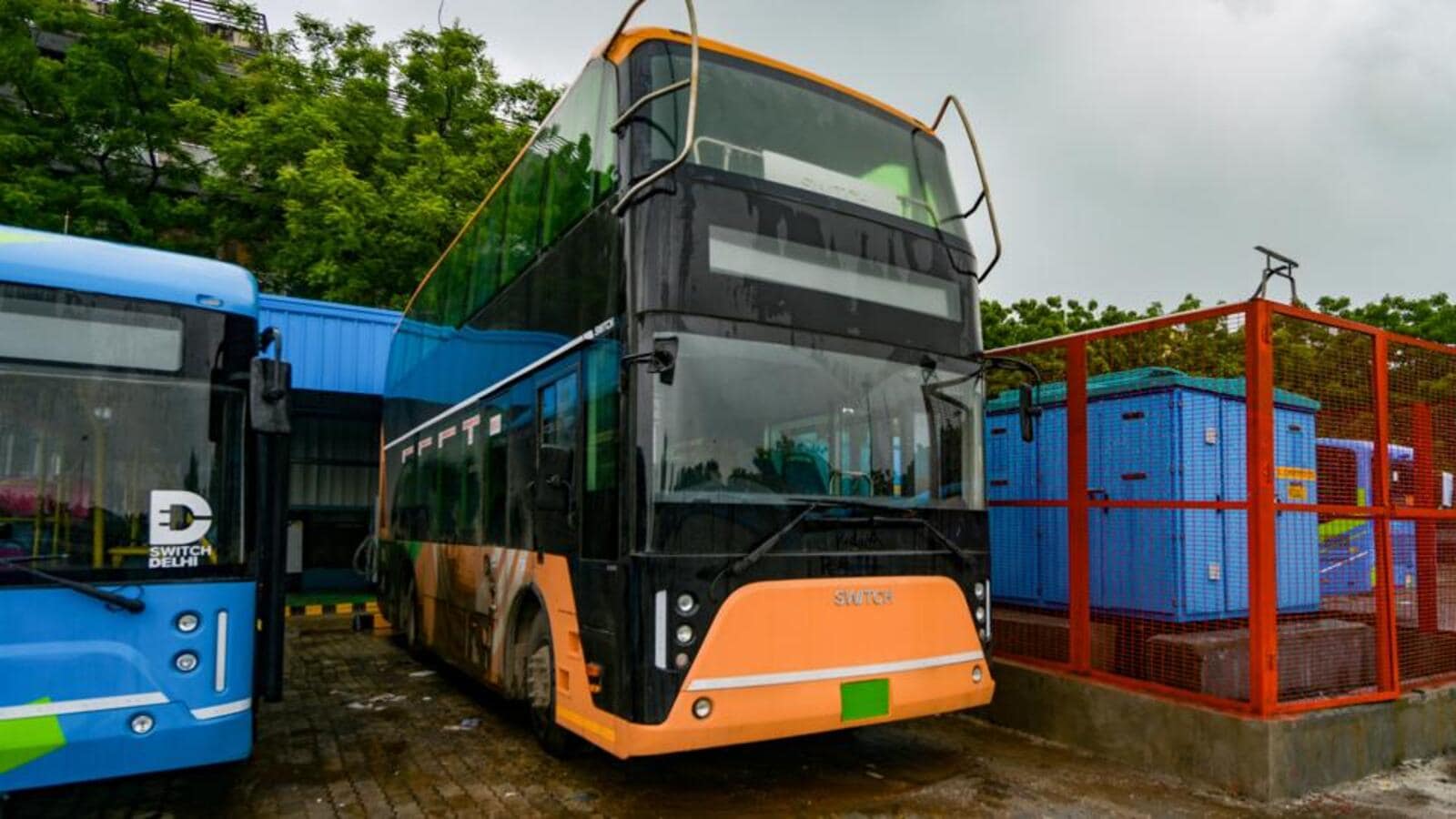
Delhi Revives Electric Double Decker Buses After 35 Years Gap
After more than three decades, the iconic double-decker buses are set to return to Delhi this time as sleek electric models designed to strengthen the city’s sustainable mobility plan. The Delhi Transport Corporation (DTC) has stationed the first vehicle at its Okhla depot and is preparing for trial runs across select routes to evaluate the feasibility of integrating such buses into the Capital’s crowded streets.
Transport officials confirmed that a pilot survey is underway to assess operational safety, route viability and passenger convenience. The trial will determine whether double-decker buses, once phased out in 1989 due to ageing fleets, can once again become a regular feature in Delhi’s public transport network.The buses have been provided under a corporate social responsibility initiative, with manufacturers aiming to demonstrate their potential for mass adoption. Officials have raised concerns over manoeuvrability, particularly with respect to vehicle height, weight and traffic congestion in central districts. The outcome of the pilot will dictate whether more units are procured for long-term service.
Urban transport experts argue that the reintroduction of electric double-deckers marks a crucial step towards reducing carbon emissions in the National Capital Region. They highlight that electrification of public transport aligns with Delhi’s larger goal of building a net zero, eco-friendly urban ecosystem. However, they caution that passenger flow efficiency remains a challenge, as the design requires commuters to move between decks, which could slow down boarding and alighting on short trips.According to transport specialists, success will depend on careful route planning, prioritising corridors with longer travel durations and sufficient vertical clearance to accommodate the taller vehicles. Routes with heavy footfall, such as those connecting business districts and educational hubs, are being examined as potential trial candidates.
The return of double-decker buses also carries a symbolic weight for the city. Once popular as “Suvidha buses” in the 1970s and 80s, they were phased out as the city modernised its fleet and transitioned to CNG buses. Their revival not only represents an investment in sustainable mobility but also an effort to revive an element of Delhi’s collective memory.For now, the city awaits the results of the pilot project. If successful, Delhi may well see its streets dotted with modern, electric double-decker buses, balancing nostalgia with a commitment to sustainable and inclusive transport for the future.