


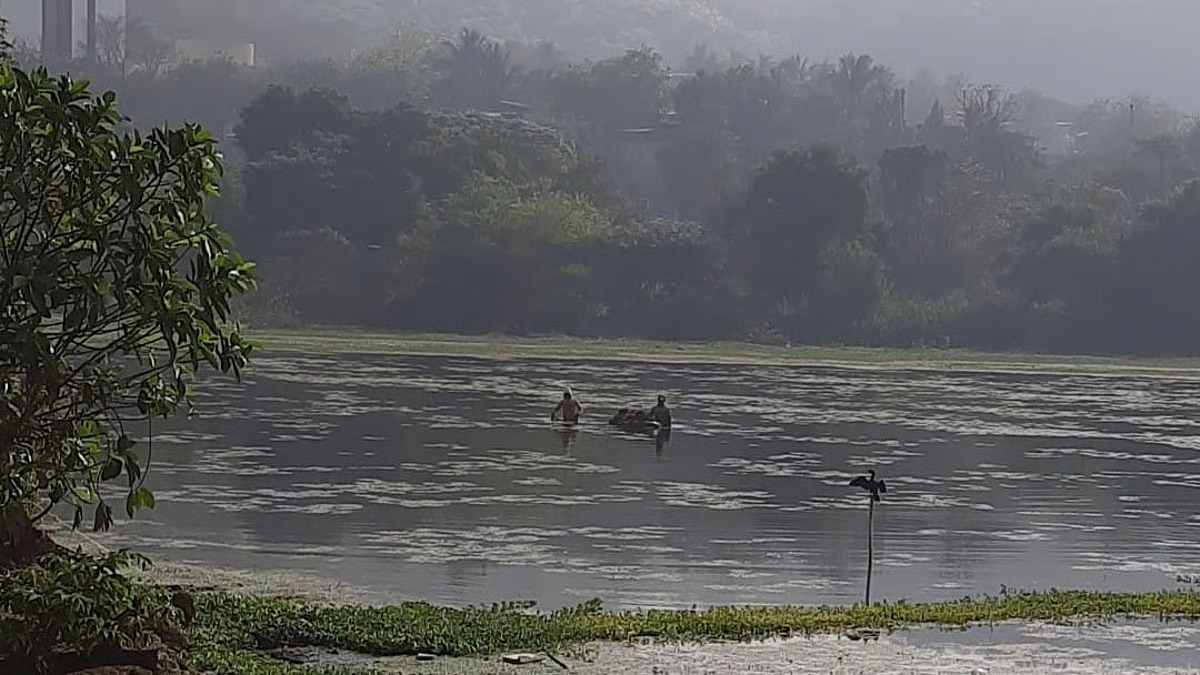
Maharashtra Environment Department has formally recognised Lotus Lake in Nerul as a wetland, overturning the claims of local development authority CIDCO. The confirmation, issued through a response to an RTI query filed by environmental advocacy groups, underscores the ecological importance of the lake and strengthens calls for its protection against encroachment.
According to the RTI response, a ground-truthing survey of Lotus Lake was conducted by the National Centre for Sustainable Coastal Management (NCSCM) as part of the state’s wetland notification process. The report, uploaded on the RTI portal on August 26, categorically refers to Lotus Lake as a “wetland,” marking a clear divergence from CIDCO’s earlier position that the waterbody was man-made. The final documentation will be submitted to the District Wetland Committee for official notification. CIDCO had previously argued that the lake could not be classified as a wetland, citing historical land allocation to Indian Airlines and suggesting the waterbody was artificial. Environmentalists have long challenged this position, pointing out that parts of the lake had been filled with debris from the Navi Mumbai International Airport construction site, prompting widespread concerns over ecological degradation.
Activists and conservationists have highlighted the urgency of notifying Lotus Lake as a wetland to prevent further encroachment and ecological loss. “Recognition of Lotus Lake as a wetland is critical, given CIDCO’s ongoing attempts to alter its landscape. Immediate notification and protective measures are essential to safeguard biodiversity and water management functions,” said a senior environmental official. The Union Environment Ministry (MOEFCC) has previously reiterated that CIDCO does not hold authority to determine wetland status. Following public complaints, the Ministry sought a detailed report from the state government, which has now clarified the lake’s status and initiated coordination with CIDCO and the Thane district collector for compliance.
As per the Ramsar Convention, wetlands include both natural and artificial waterbodies, whether permanent or temporary, with water that is static or flowing, fresh or brackish, up to six metres in depth. Lotus Lake meets these criteria, reinforcing the case for its official protection. Urban planners and ecologists note that recognising Lotus Lake as a wetland will influence future infrastructure projects in the area, ensuring development aligns with sustainable urban ecosystems. The lake’s designation is expected to enhance water retention, biodiversity, and recreational potential for Nerul and surrounding districts.
The Environment Department has now called for expedited notification, signalling a turning point in local environmental governance and a potential model for protecting wetlands in rapidly urbanising regions of Maharashtra.
Also Read : Tamil Nadu Central University Set For Rs 385 Crore Infrastructure Boost
