


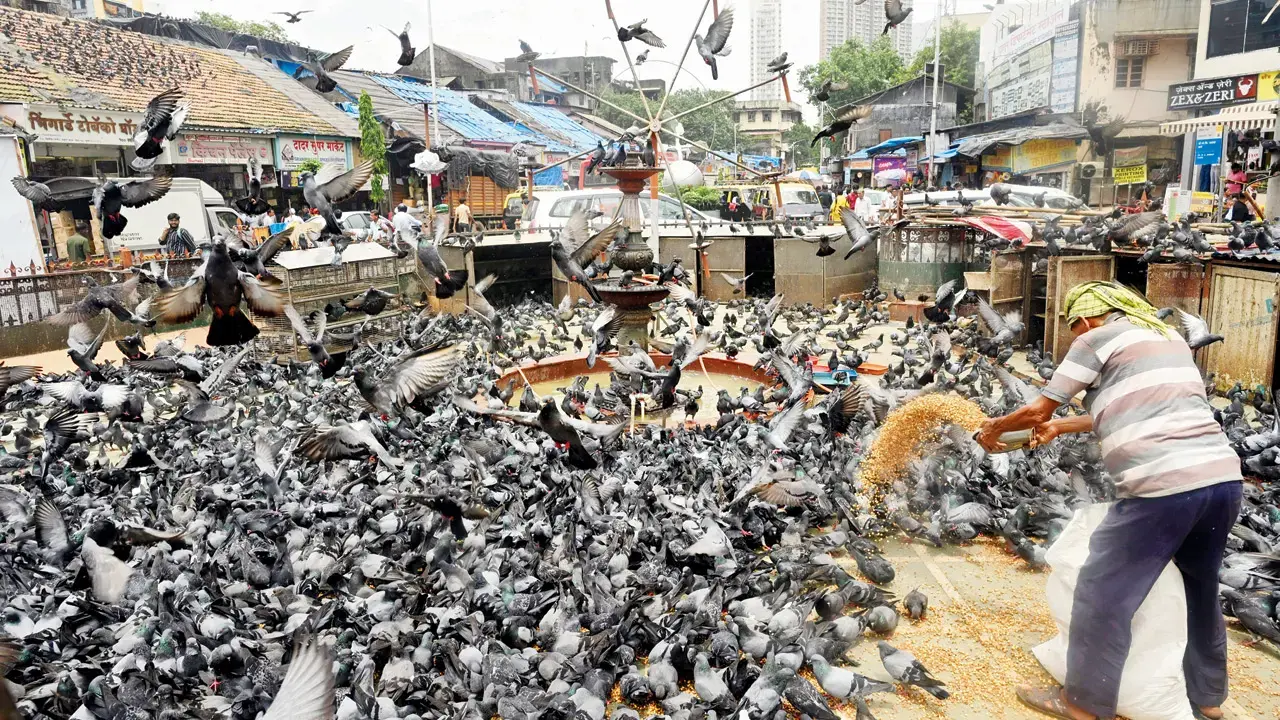
Mumbai’s civic authority on Friday closed public feedback on the contentious issue of pigeon feeding, triggering a heated divide between health advocates and religious or animal rights groups. The submissions, which ran into thousands, will now be reviewed by a government-appointed committee before a final decision is made.
On one side, activists presented detailed evidence linking pigeon droppings and feathers to serious lung ailments such as cryptococcosis, allergic alveolitis and Bird Fancier’s Lung. Citing rising cases of bronchitis and respiratory distress, they warned that in a city already struggling with air pollution, unchecked pigeon feeding represented a silent health crisis. A civic group even submitted records of deaths linked to infections aggravated by prolonged exposure to pigeon habitats. Officials added that vulnerable sections – including the elderly, children and pregnant women – remain most at risk. Public safety was also flagged as a pressing concern. Civic organisations argued that concentrated feeding points, particularly the kabutarkhanas across Mumbai, create hygiene hazards and road safety risks due to dense bird populations and erratic flight patterns. “Kindness to pigeons must not mean cruelty to citizens,” remarked one civic activist in a written submission.
Countering these arguments, religious and animal welfare groups mobilised significant public support. QR codes linked to petitions circulated in temples across the city reportedly generated more than one lakh emails to the civic body. Thousands of handwritten letters also demanded that pigeon feeding be protected as a humanitarian practice. Supporters argued that bans would amount to cruelty, leading to mass starvation of urban pigeons and forcing them onto busy roads in search of food, creating fresh risks of accidents. Advocates of partial or regulated feeding urged the city to adopt a balanced approach — identifying specific zones, ensuring daily sanitation, and creating isolated aviaries along coastal stretches. They maintained that with proper monitoring, cleanliness and compassion could coexist without jeopardising public health.
However, experts from the legal and civic fields dismissed the idea of “controlled feeding” as impractical and contrary to past court rulings. They pointed to the civic body’s inability to enforce existing bans, questioning whether any new model could be effectively implemented. A senior official in the health department confirmed that inputs are still being compiled and would be submitted to the municipal commissioner within days. The final outcome, officials said, must strike a balance between protecting citizens’ health and respecting cultural sensitivities, but the city cannot afford to overlook long-term environmental sustainability.
The debate reflects a larger challenge for Mumbai: how to reconcile urban traditions with public health, animal welfare, and sustainable city living. For now, the city waits for a verdict that may set a precedent for balancing ecological and cultural values in one of the world’s most densely populated metropolises.
Also Read: Mumbai Coastal Road To Feature Green Lungs As Nita Ambani Promises Development
