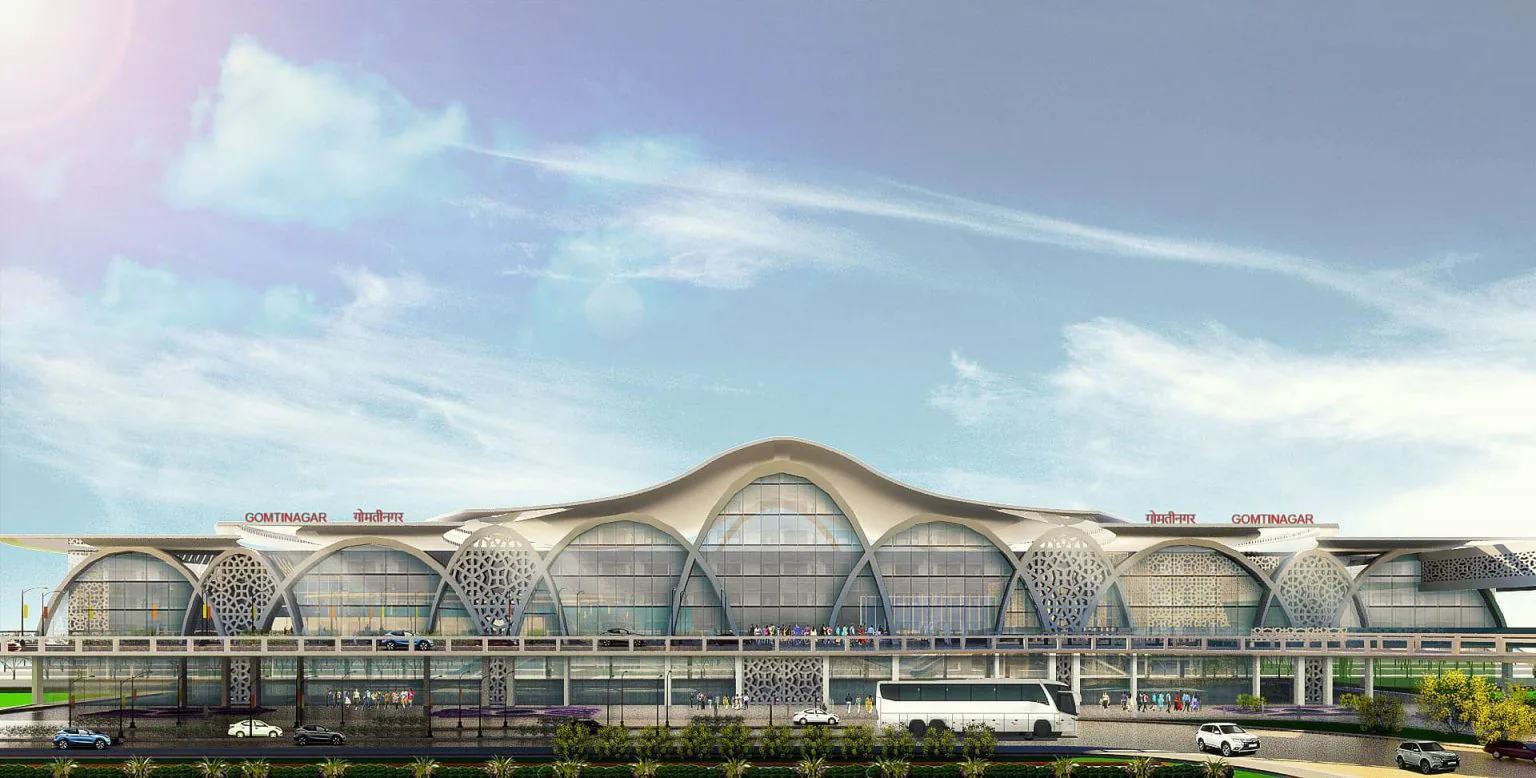
Lucknow Gomti Nagar station has become the first railway hub in Uttar Pradesh to move under private management, marking a decisive shift in how passenger services are delivered across India’s railway network.While train operations, ticketing and security will remain firmly under the control of Indian Railways, a private operator has now been granted rights to manage crucial passenger-facing services including cleanliness, catering, parking and overall station upkeep. The aim is to provide an airport-style passenger experience, a model that the Rail Land Development Authority (RLDA) is now piloting for wider adoption.
Under the terms of the agreement, the private licensee will manage Gomti Nagar station for nine years, with a possible three-year extension. Revenue-sharing has been structured to ensure that 85 percent of earnings return to Indian Railways, while RLDA retains 15 percent. Officials describe this approach as a balanced model that allows operational modernisation without adding to the direct management burden of the state-run railway body. The decision to select Gomti Nagar as the first station for this initiative was strategic. The station handles around 76 trains daily, linking major destinations such as Gorakhpur, Chhapra and Barauni. With six platforms, solar panels, escalators, lifts and existing commercial spaces, the infrastructure was already primed for higher-quality service delivery. This foundation now allows private management to test ways of improving efficiency, particularly in the areas of waste handling, sustainable energy use and modernised food services.
For passengers, the most visible changes are expected in hygiene, catering diversity and parking efficiency. Officials emphasise that the model draws inspiration from airports, where passenger comfort and efficiency are prioritised. Enhanced services could also open opportunities for local businesses and eco-friendly practices, including renewable energy adoption and regional cuisine integration into catering systems.However, questions remain around transparency and pricing. Experts warn that without stringent oversight, passengers could face hidden service costs, undermining the equitable intent of the model. Regulatory checks will be essential to ensure the project benefits all segments of society, including daily commuters and lower-income passengers, not just premium travellers.
Chandigarh station is reportedly next in line for this model, underlining Indian Railways’ commitment to scaling the experiment nationwide. For cities, this could mean more sustainable, passenger-friendly hubs that mirror airport standards without compromising affordability.If successful, the Gomti Nagar experiment could become a blueprint for building greener, more efficient and inclusive transport hubs in India’s rapidly urbanising landscape.