


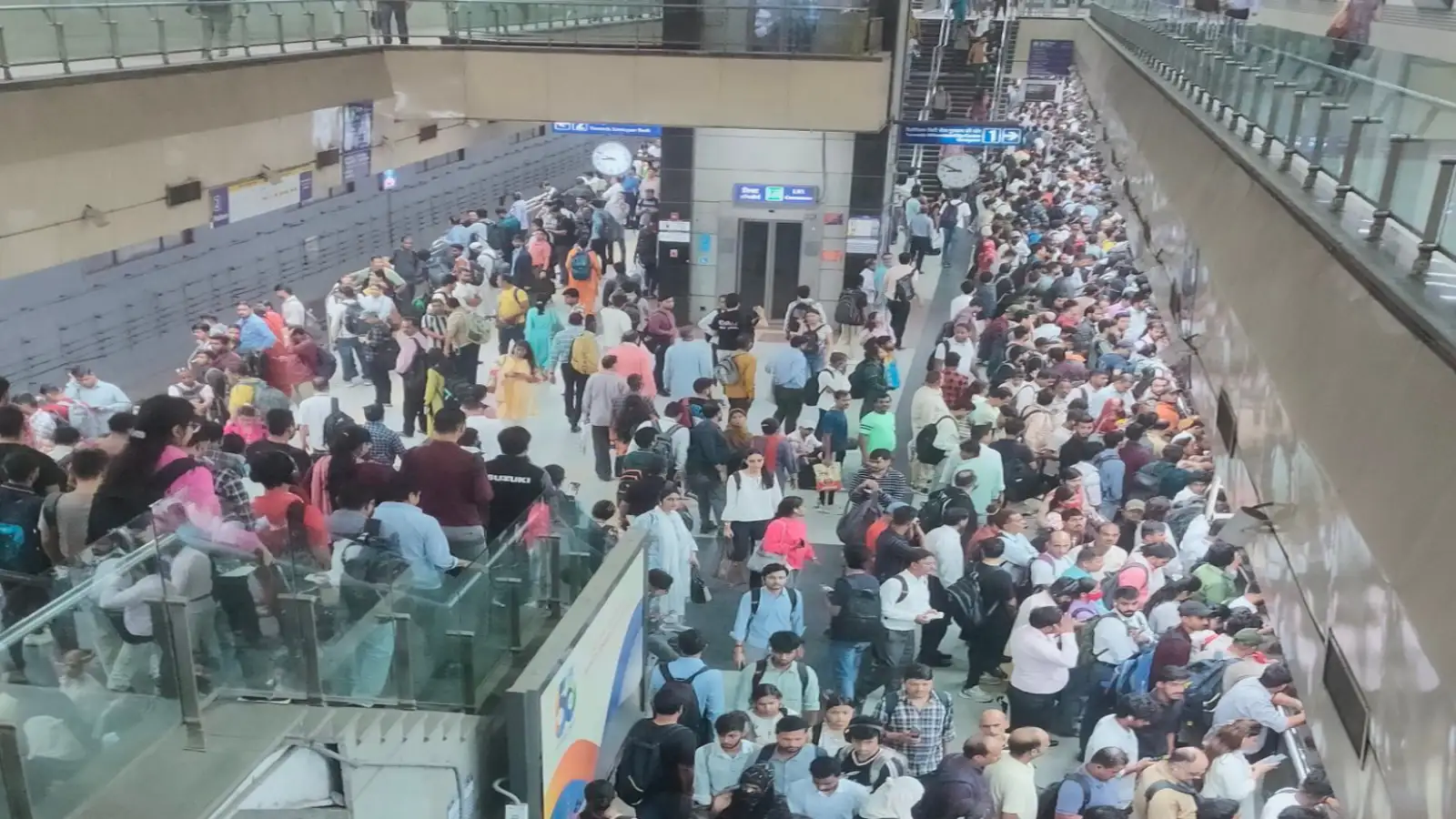
Heavy rainfall across Delhi-NCR on Friday morning disrupted metro services on the Yellow Line, affecting thousands of commuters during peak office and school hours. The affected stretch, between Vishwavidyalya and Central Secretariat stations, saw significant delays as trains operated below normal frequency, while services on other corridors remained unaffected.
According to an official statement from the Delhi Metro Rail Corporation (DMRC), operations on the affected section were gradually being restored, with technical and operational teams working to ensure commuter safety and minimise disruption. The delay on this key corridor extended travel time from Vishwavidyalya to GTB Nagar from the usual few minutes to nearly 50 minutes, causing widespread inconvenience. Commuters reported difficulties reaching offices and educational institutions on time. “The delay has caused major disruption to daily schedules,” said one official representing commuter welfare in Delhi. The incident highlights the vulnerability of urban transit systems to extreme weather events, emphasising the need for proactive planning to ensure resilience and continuity of public transport.
DMRC officials indicated that the disruption was primarily due to waterlogging at critical track sections and operational caution necessitated by heavy rainfall. “Passenger safety remains our top priority. Efforts are underway to normalise services as quickly as possible while maintaining stringent safety protocols,” said an official from DMRC operations. Experts on urban transport and disaster management noted that the intensifying monsoon patterns across Delhi-NCR, coupled with inadequate urban drainage, often exacerbate delays in mass transit. “Integrated city planning that addresses both stormwater management and transport resilience is crucial for ensuring uninterrupted metro services during heavy rainfall,” an official from the city’s transport department stated.
The incident comes amid heightened monsoon activity across northern India, where the India Meteorological Department (IMD) has issued red and yellow alerts for several regions, including Noida, Ghaziabad, and parts of Delhi. Authorities continue to monitor weather developments and have advised commuters to plan travel accordingly. While DMRC works to stabilise operations, the disruption underscores the importance of adaptive infrastructure planning, particularly for sustainable and eco-friendly urban mobility. Enhancing drainage systems, monitoring water levels near metro tracks, and implementing advanced alert systems are key strategies that city planners and transit authorities can adopt to mitigate such weather-related challenges.
The Delhi Metro Yellow Line disruption serves as a reminder of the intersection between climate variability and urban transit systems, highlighting the need for resilient, gender-neutral, and sustainable mobility solutions that prioritise commuter safety and convenience.
Also Read : Delhi NCR Faces Intense Rainfall With Red Alert Issued For Noida Ghaziabad
