


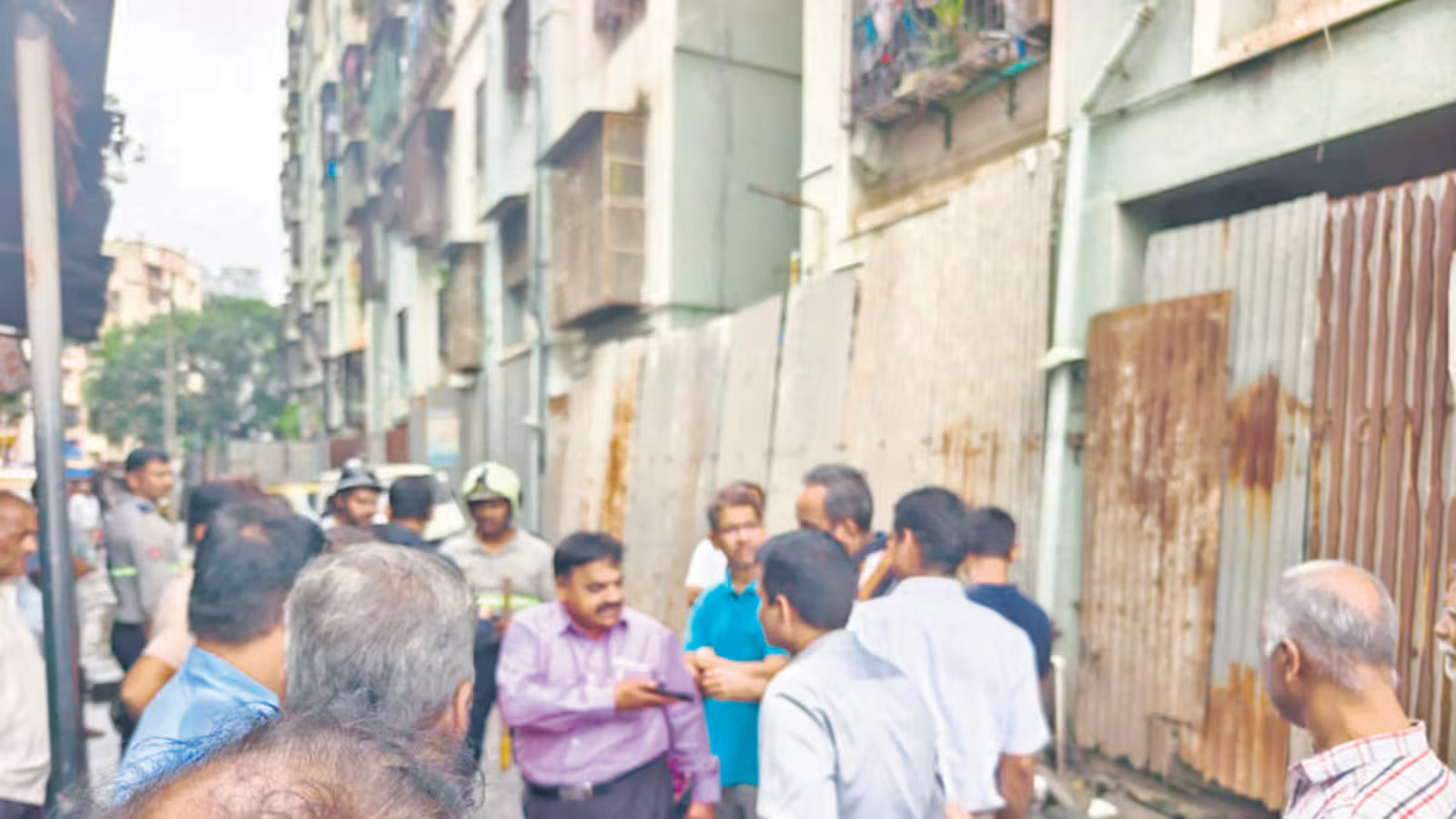
For over a decade, residents of a housing society in Sion’s Pratiksha Nagar have waited in vain for a compound wall that could secure their premises. Despite repeated assurances from housing authorities and even a formal directive earlier this year, disputes with surrounding slum dwellers and delays in execution have left families vulnerable to trespassing, property damage and insecurity.
The society, home to more than 100 families, was allotted flats under a state housing scheme in 2013. Since then, residents have petitioned civic and housing officials to complete the missing boundary wall, which they say is essential for safety, regulated access and dignified urban living. In the absence of this infrastructure, residents have been forced to erect temporary tin sheets against the building to prevent intrusion and park vehicles outside, often at personal risk. Officials from the state housing authority had in July instructed a contractor to begin construction of the wall, recognising the long-pending grievance. The directive specifically acknowledged repeated complaints by residents and noted the compromised security of the estate. However, when the contractor attempted to initiate pre-construction work, they were obstructed by slum dwellers claiming ownership of the adjoining land.
Behind the society, a slum redevelopment project is underway, complicating the matter further. Slum residents contend that constructing the compound wall would limit their road access, while society members suspect attempts to subsume their rightful compound into the redevelopment plan. Housing officials had even advised that police protection be arranged to facilitate the work, but no visible progress has followed. Urban experts argue that such conflicts reflect the fault lines of Mumbai’s housing ecosystem, where redevelopment pressures often clash with planned housing schemes. Without clear demarcation of land and consistent enforcement of housing rights, middle-income and affordable housing projects risk being undermined, eroding trust in state-led housing models.
The prolonged wait has become more than an issue of convenience; residents voice concern about structural damage to their buildings from heavy construction vehicles moving across their exposed premises. They fear that inaction could worsen urban stress, compromise safety and escalate tensions between communities already pressed for space in one of the world’s most congested cities. Civic officials maintain that they remain committed to resolving the issue. But with political and redevelopment interests intertwined, the stalemate has left citizens in limbo. For families who have invested their savings in the promise of secure housing, the absence of a basic boundary wall symbolises both institutional apathy and the urgent need for a more equitable urban development framework.
Until decisive action is taken, Mumbai’s aspiration to build inclusive, safe and sustainable neighbourhoods will remain at odds with ground realities faced by residents of Pratiksha Nagar and many similar estates across the city.
Also Read: Mumbai Struggles With Illegal Hoardings During Ganeshotsav Celebrations
