


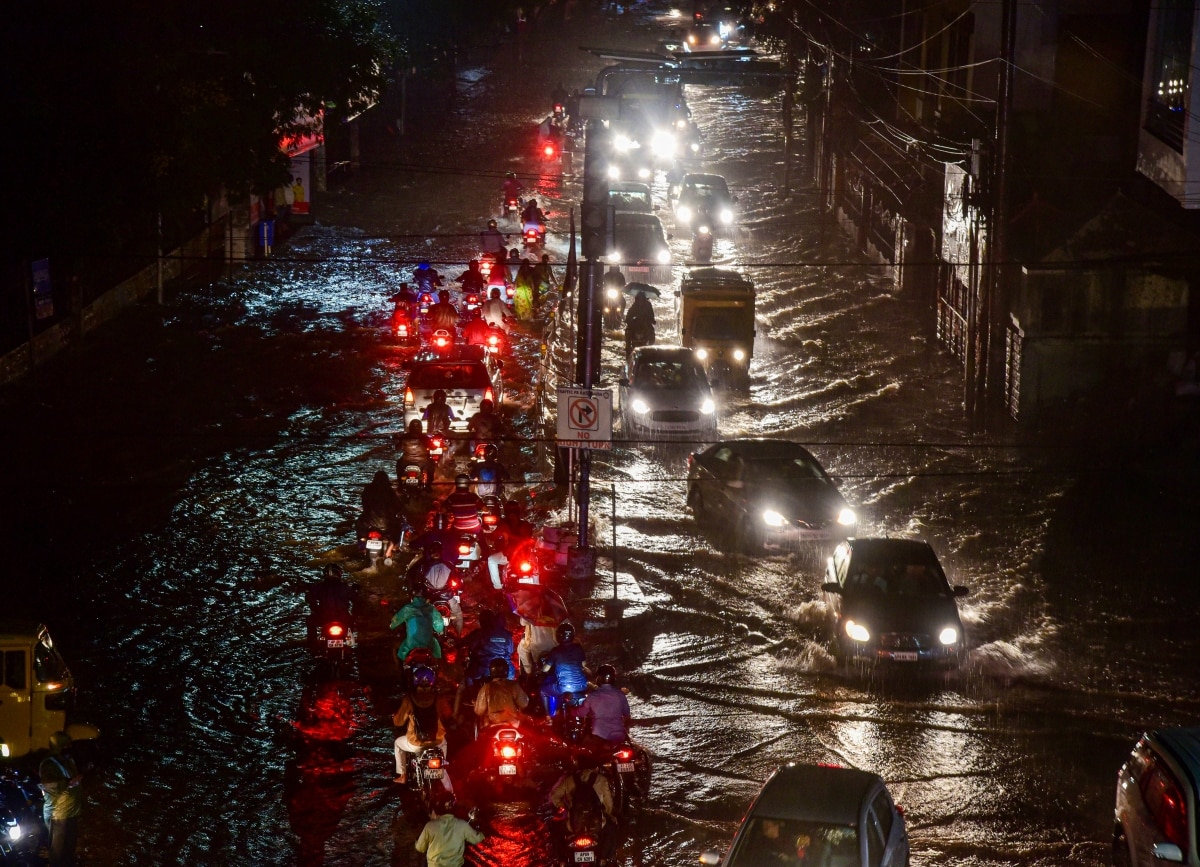
Hyderabad’s most critical road link, National Highway 44, was submerged this week after heavy rainfall left vast stretches resembling a riverbed. The highway, which connects Kashmir to Kanyakumari and is often hailed as India’s longest arterial route, ground to a halt near Narsingi, paralysing traffic between Hyderabad and Nizamabad. Stranded vehicles lined the submerged road as authorities advised commuters to stay away from the inundated stretch.
The flooding of NH44 has sparked a larger debate over the quality of construction and accountability in India’s infrastructure development. Experts argue that while rainfall acted as the trigger, the scale of the damage points to systemic lapses in highway engineering and maintenance. Several sections of the highway reportedly caved in, raising concerns about whether the nation’s most celebrated road projects can withstand the pressures of climate change and extreme weather.
Also Watch: An Exclusive Interview with Sanjeev Jaiswal (IAS), CEO MHADA
The collapse of portions of NH44 also underlines the economic costs of weak infrastructure. Cargo trucks carrying essential goods were left stranded for hours, with perishable commodities at risk of spoilage. For many, the disruption has meant mounting financial losses and delays, compounding the frustration of road users already grappling with fuel price increases and high toll charges.Infrastructure experts have pointed out that poor drainage systems, inadequate soil compaction, and rushed construction timelines often result in highways that are unable to withstand monsoon fury. They argue that in a rapidly urbanising country, resilience must be built into every aspect of planning, from materials to long-term maintenance. Without this, India’s dream of world-class highways risks collapsing under its own weight.
Commuters and environmentalists alike are demanding accountability, urging authorities to prioritise durable construction over headline-driven projects. Many argue that sustainable design, rainwater harvesting systems, and eco-sensitive planning must become the cornerstone of future road development. The current state of NH44 demonstrates how poorly executed projects can turn into life-threatening hazards, eroding public trust in the system.The flooding has also reignited discussions on whether climate adaptation is adequately factored into infrastructure planning.
