


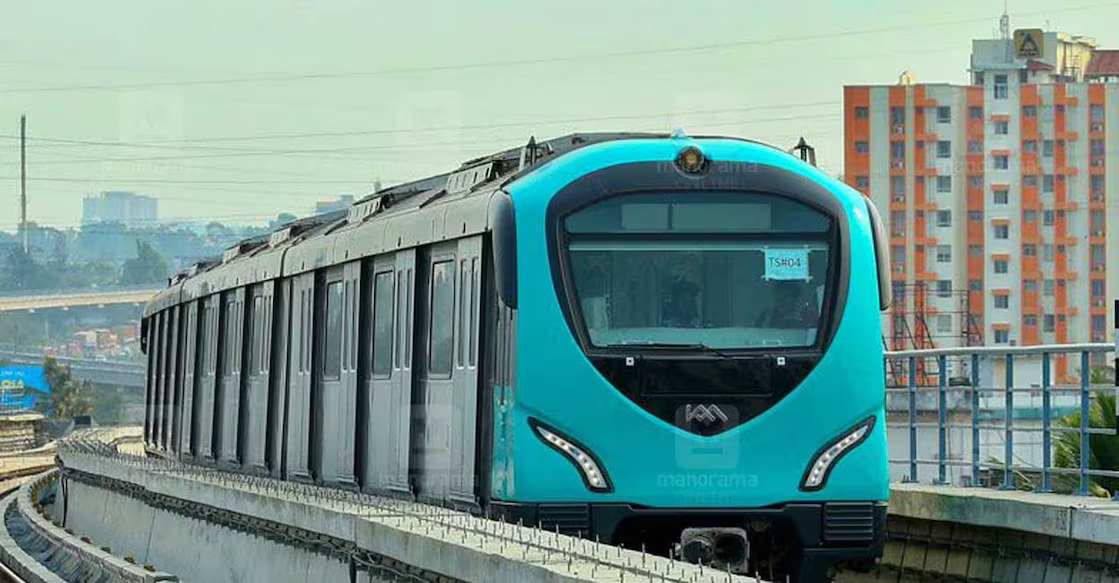
Kochi Metro’s ambitious expansion plans are moving a step closer to reality as the Detailed Project Report (DPR) for Phase 3 has officially commenced. The extension from Aluva to Angamaly, passing through the city’s airport, aims to strengthen regional connectivity and provide world-class commuting facilities. Experts say this development underscores the city’s commitment to sustainable, low-carbon urban mobility while enhancing economic growth in the northern suburbs.
Haryana-based Systra MVA Consulting India Pvt Ltd has been commissioned for the DPR preparation at a cost of Rs 1.03 crore, with the report expected within six months. Officials stated that the DPR will incorporate field investigations, engineering surveys, and feasibility studies to ensure technical and financial robustness of the extension. The Phase 3 corridor spans 17.5 kilometres, with the majority of the line elevated and approximately three kilometres planned underground. This approach balances cost-efficiency with minimal disruption to urban infrastructure while maintaining high service quality and safety standards. Funding for the DPR comes under the Union Ministry of Housing and Urban Development’s Central Financial Assistance Scheme, reflecting the government’s support for environmentally sustainable transit solutions.
In parallel, Kochi Metro Rail Limited (KMRL) has floated tenders for the installation of ballastless standard gauge track on the Pink Line, stretching from JLN Stadium to Infopark Phase 2 station. The Rs 127.91 crore project covers design, supply, installation, testing, and commissioning of the track, with partial funding from the Asian Infrastructure Investment Bank (AIIB). Officials indicated that the selected contractor will have 16 months to complete the work post-award, with subcontracting allowed up to 50 percent of the contract value. Urban transport experts emphasise that Phase 3 will be a game-changer for commuters travelling between Aluva, the airport, and Angamaly. “This corridor will not only reduce travel times but also integrate regional and airport connectivity with the city’s metro network, encouraging a modal shift from private vehicles to public transport,” said a senior transport official.
The Phase 3 extension aligns with Kochi’s broader vision of gender-neutral, eco-friendly, and accessible urban mobility. With rising vehicle congestion and carbon emissions in the city, experts view metro expansions as critical interventions for sustainable growth. Moreover, linking key economic hubs such as the airport and Infopark enhances the corridor’s potential for commercial development and urban revitalisation. With the DPR under preparation and key infrastructure contracts underway, Kochi Metro is on track to expand its reach significantly. Officials stress that this phase, once completed, will provide commuters with reliable, rapid, and eco-conscious transit options, reinforcing Kochi’s position as a model for sustainable metropolitan transport.
Also Read : Mumbai Metro Monorail Nears 10 Lakh Daily Riders New Lines to Boost Network
