


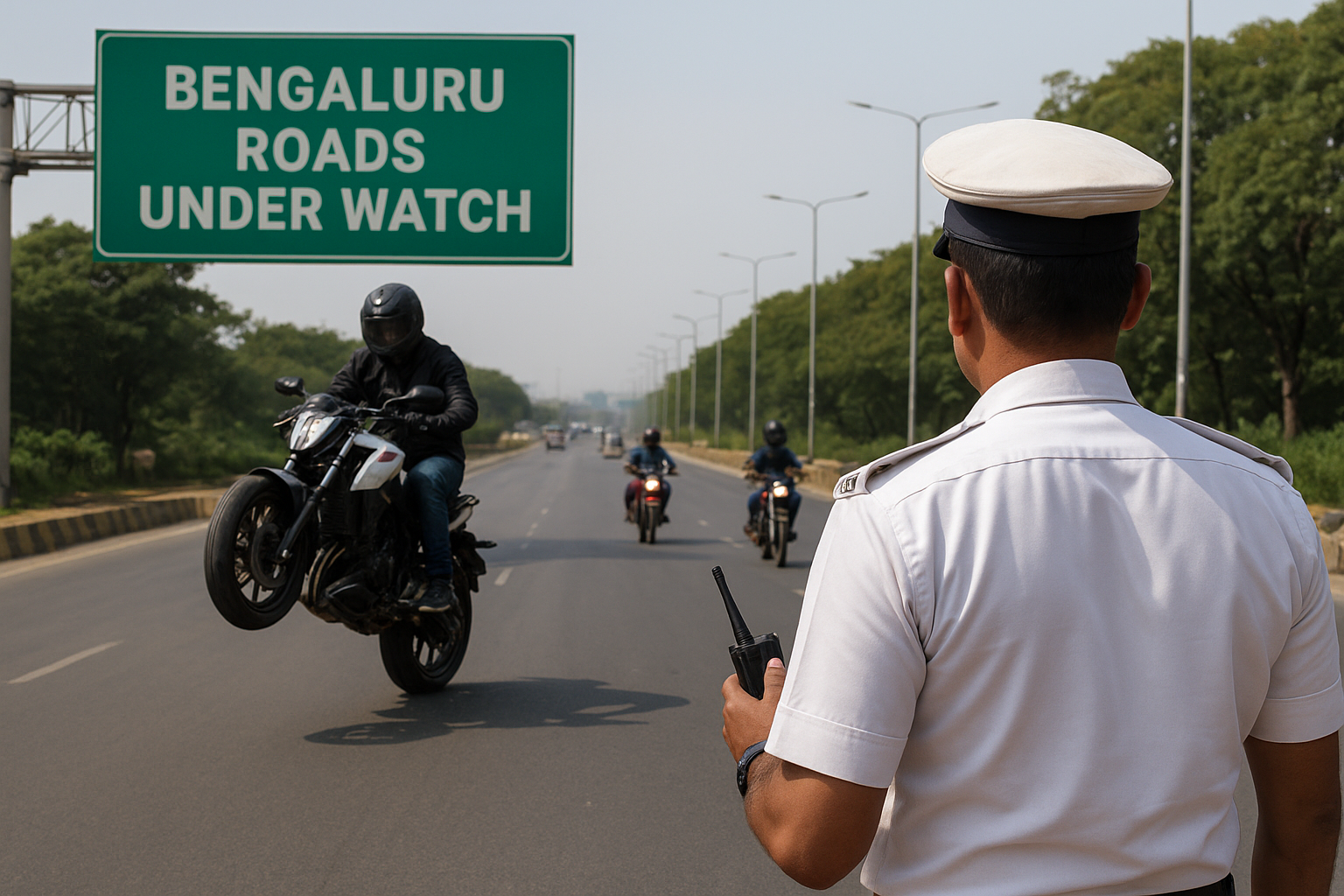
Bengaluru’s notorious wheelie culture is facing an unprecedented crackdown as traffic police intensify their surveillance across 37 identified hotspots in the city. The move comes amid mounting concerns over road safety, rising accident numbers, and repeated calls for stronger enforcement to curb reckless biking practices.
Data presented by officials reveals a sharp surge in offences, highlighting how dangerous stunts are no longer limited to isolated stretches but have seeped into the city’s core. While 404 cases were booked in 2022, the figure climbed to 392 in 2023. The real spike came in 2024, when cases doubled to 822. This year alone, over 700 violations were reported in just seven months, suggesting that the menace is rapidly escalating.
Also Watch: An Exclusive Interview with Sanjeev Jaiswal (IAS), CEO MHADA
Officials note that wheelies are most commonly attempted between midnight and 5 a.m., when arterial roads and flyovers remain relatively empty. The 37 hotspots identified include sections of the Outer Ring Road and several central Bengaluru corridors, which are now under constant monitoring by specialised enforcement teams. The initiative marks a new phase in the city’s traffic management strategy, blending surveillance with deterrent measures.Authorities have gone beyond booking criminal cases to impose stricter penalties. Driving licences of offenders are being suspended, and in more severe cases, Regional Transport Offices are cancelling the registration certificates of vehicles used for stunts. Records show that 27 licences were suspended in 2023, 57 in 2024, and another 25 already this year. Vehicle deregistrations rose even more steeply, from 85 in 2023 to 195 in 2024, with 142 cancellations reported this year to date.
Experts argue that these steps are essential not only for public safety but also for building a culture of responsible mobility in a rapidly growing city. Reckless driving contributes to sound pollution, road accidents, and unsafe conditions for pedestrians, particularly women, senior citizens, and schoolchildren. A sustainable and equitable city must therefore enforce safer streets as part of its larger urban planning framework.The judiciary too has weighed in, observing that existing laws remain insufficient to curb such high-risk behaviour. Legal experts have suggested amendments to the Motor Vehicles Act and the Indian Penal Code to provide stronger tools for enforcement. Meanwhile, civil society voices have urged that prevention should go hand in hand with awareness campaigns, stressing that young riders often underestimate the risks of wheelies.For Bengaluru, a city already battling road congestion, air pollution, and inadequate pedestrian infrastructure, the rise of dangerous biking culture adds another layer of challenge. Strong enforcement, coupled with legal reform and civic awareness, may prove pivotal in ensuring that the city’s roads remain safe, inclusive, and future-ready.
