


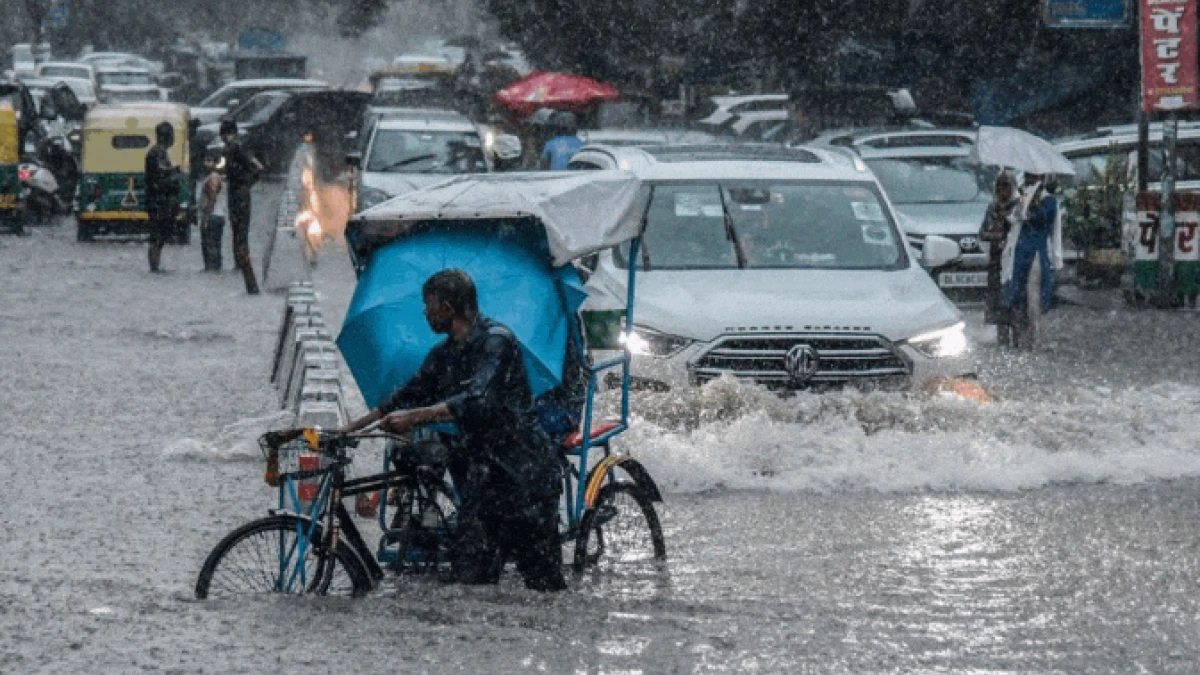
Delhi NCR braces for heavy showers as northern hill states reel under a relentless spell of monsoon fury that has triggered floods, landslides and widespread disruption across Himachal Pradesh, Jammu and Kashmir, Uttarakhand and Punjab.The Indian Meteorological Department (IMD) has issued a rain alert for the national capital and adjoining Uttar Pradesh, forecasting heavy rainfall in Delhi-NCR on 26 August. Light to moderate showers are expected to continue for four to five days, adding to concerns around urban flooding, traffic chaos, and waterlogging in the capital region.
While Delhi watches the skies, the real brunt of the monsoon is being borne in the hill states, where continuous downpours have paralysed normal life. Himachal Pradesh remains the epicentre of the crisis, with hundreds of landslides, blocked highways and river systems in spate. Authorities confirmed that pilgrims en route to the Manimahesh shrine remain stranded, forcing the suspension of the yatra once again. Local administrations have declared a red alert in several districts, keeping schools and Anganwadi centres shut as a precautionary measure.
Also Watch: An Exclusive Interview with Sanjeev Jaiswal (IAS), CEO MHADA
Punjab, already battling rising water levels, is seeing the fallout of upstream deluge. Swollen rivers from Himachal and Jammu and Kashmir have spilled over into multiple districts, triggering flooding in low-lying areas. Experts have warned that the situation could intensify unless rainfall subsides over the next 48 hours.In Himachal’s Seraj Valley, a slow-moving landslide in Bali Chowki engulfed shops and homes overnight. Though advance evacuation prevented casualties, the scale of property loss underlines the fragile state of Himalayan terrain in the face of changing climate. Experts say the repeated sinking of slopes is a warning sign of ecological distress driven by deforestation, haphazard construction, and unregulated tourism, which collectively heighten landslide risks.
The Chandigarh-Manali highway, a key arterial route for commerce and tourism, remains blocked at multiple locations. With goods transport and local livelihoods already strained, prolonged closures could dent the region’s fragile economy further. In Jammu and Kashmir too, heavy rainfall has disrupted connectivity in multiple districts, leaving residents vulnerable in remote pockets.For cities like Delhi and Chandigarh, the continuing monsoon volatility has rekindled debate on resilience planning.
Experts argue that the frequency of extreme weather underscores the urgency of building climate-adaptive cities ones that prioritise sustainable drainage, eco-friendly construction, and equitable disaster preparedness. Without systemic intervention, annual monsoon disruptions will continue to compound both urban distress and rural vulnerability.As India edges deeper into an era of unpredictable climate patterns, the unfolding crisis across north India is a stark reminder of the urgent need to reconcile growth with sustainability. For millions in Delhi-NCR and the hills alike, the rain may be seasonal, but its consequences are becoming alarmingly perennial.
