


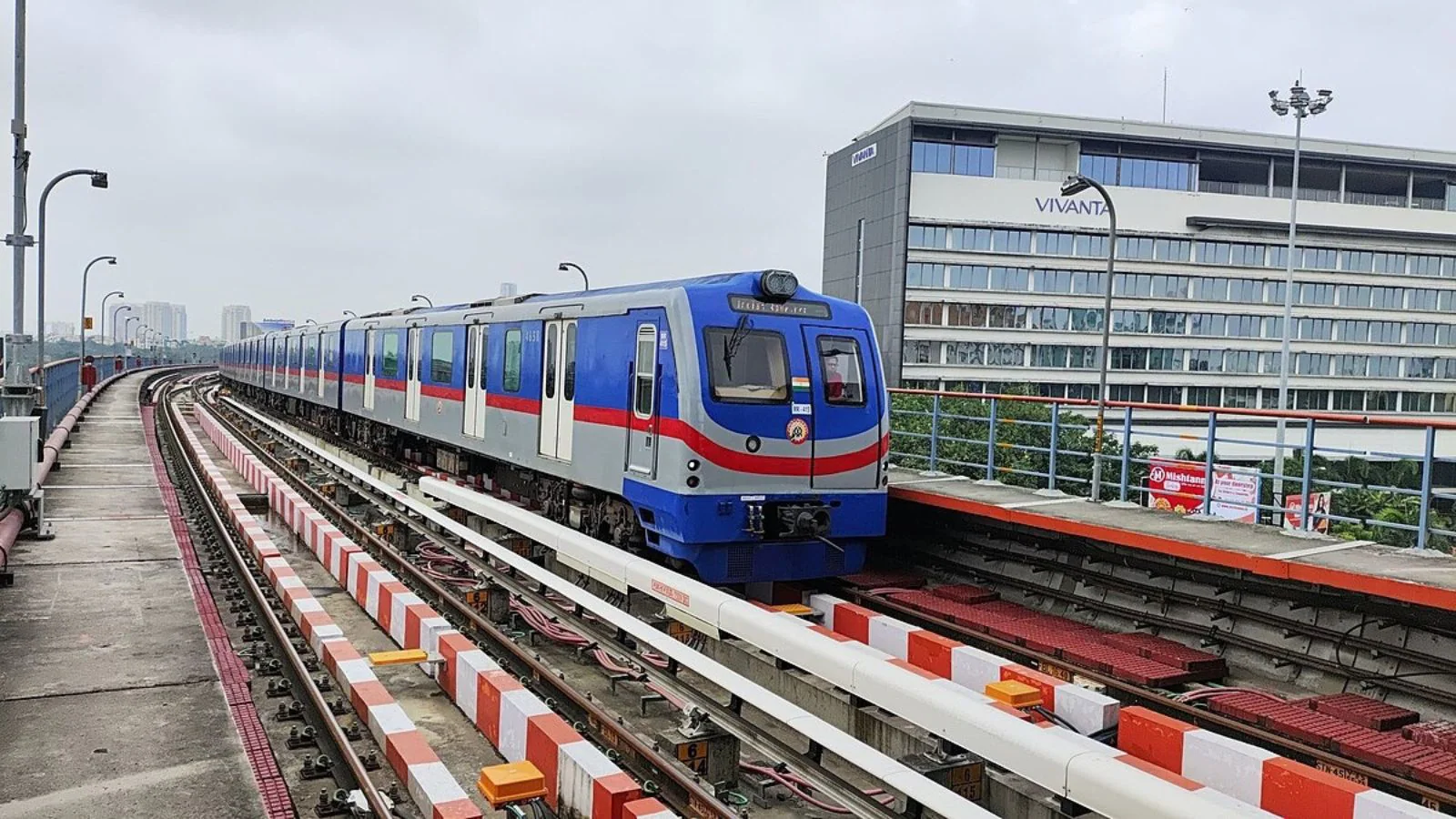
Kolkata Metro commuters are set for a historic week as the city’s three newly inaugurated metro corridors undergo their first weekday trial, promising a dramatic shift in urban mobility. Officials say this expansion marks a defining step towards creating a modern, accessible, and sustainable transport backbone for the metropolis.
On Friday, the entire East-West Metro corridor became operational, but from Monday onwards, three new stretches — the Esplanade-Sealdah link on the Green Line, the Noapara-to-airport Yellow Line, and the Orange Line along EM Bypass — will serve weekday commuters for the first time. Transit experts describe this as the single largest leap in Kolkata’s metro expansion in recent years, designed to alleviate mounting congestion and reduce travel times across the city. The showpiece of the rollout is the 2.6km Esplanade-Sealdah section of the East-West Metro, which now allows seamless movement across the 16.6km route between Howrah Maidan and Sector V. With its alignment touching employment hubs and civic centres such as Karunamoyee and Mahakaran, the corridor is expected to draw as many as six lakh daily riders — on par with the long-standing North-South (Blue Line), often described as the city’s first mass-transit lifeline.
The Blue Line itself will also see a boost, with 22 additional weekday services, signalling greater integration of networks. Metro authorities believe this dual lifeline — Green and Blue — will spread passenger load, particularly during peak hours, and strengthen last-mile connectivity through feeder services. Equally transformative is the debut of the Yellow Line, linking Noapara with the city’s airport via a 6.7km stretch. For the first time, Kolkata will have a direct metro service to Jai Hind (airport) station, with fares as low as ₹20. Planners note that this will not only ease access for air travellers but also reduce vehicular pressure on already congested arterial roads.
Meanwhile, the Orange Line between New Garia (Kavi Subhash station) and Metropolitan (Beleghata) spans 10km and is expected to ease commutes along the city’s critical EM Bypass corridor. This section promises to serve thousands of daily commuters from southern and eastern neighbourhoods, enhancing connectivity with existing lines. Urban mobility analysts argue that this multi-corridor rollout will not just reduce dependence on private vehicles but will also contribute to lowering the city’s carbon footprint. By encouraging greater metro adoption, Kolkata could cut fuel consumption, improve air quality, and enhance equity in transport access. Officials stress that the success of these projects lies not only in infrastructure but also in sustained operational efficiency, integration with other transit modes, and public acceptance.
For Kolkata, which has lived with the limitations of a single metro line for decades, the new expansion signals a long-awaited transformation. Whether these fresh links can meet the expectations of lakhs of commuters will be closely watched this week — but there is little doubt that the city is stepping into a new chapter of public transport.
Also Read : Maharashtra Govt Plans 3,500 Smart Intelligent Villages Development Targeted For 2030 Completion
