Himachal Highway Collapse Impacts Tourism And Farming Economy
The Kiratpur–Manali National Highway, once projected as the backbone of Himachal Pradesh’s tourism and agriculture, has now turned into a fractured corridor. The vital Mandi–Kullu stretch has been left vulnerable to recurrent landslides and flooding, paralysing movement during the monsoon and stranding both visitors and farmers who rely on the road.
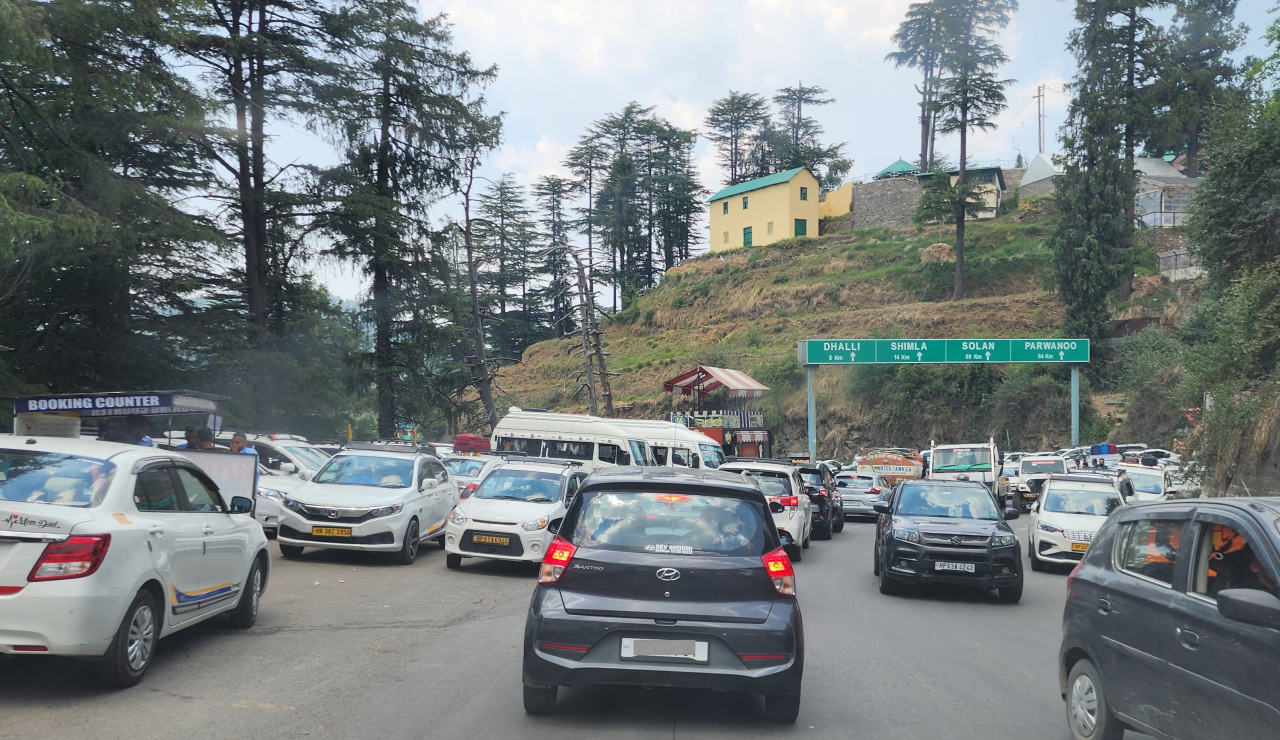
The four-lane project, built to offer seamless connectivity from Chandigarh to Manali, initially fuelled optimism. Tourist inflows to the Kullu–Manali and Lahaul–Spiti valleys surged, and growers benefited from faster transport of apples and vegetables to major markets. The region briefly witnessed a growth cycle, where local economies expanded on the promise of infrastructure. That promise began to unravel in 2023 after torrential monsoon rains swelled the Beas river, severely damaging the highway. Sections between Mandi and Kullu were washed away, while slope-cutting during construction weakened the terrain further. Since then, road collapses have become a seasonal certainty, with commuters bracing for endless jams, unsafe conditions, and sudden closures.
Tourism, a sector that supports thousands of livelihoods in Himachal, is among the hardest hit. Hoteliers report mass cancellations whenever rains lash the valley, with travel times stretching from hours into days. Many small establishments that rely solely on peak-season bookings are under acute financial pressure. “The unpredictability of the road has undermined confidence in Himachal as a safe destination,” an official from a hospitality body observed.
The agricultural economy has also borne the brunt. Growers transporting apples, peas, and vegetables complain of trucks stuck for days in landslide zones, causing perishables to spoil before reaching markets. Experts note that this recurring loss erodes farmers’ incomes and undermines Himachal’s reputation as a key horticulture hub. The stress on growers is mounting as they balance rising input costs with declining margins caused by logistical breakdowns. The National Highways Authority of India continues to restore connectivity after each disruption, but the structural fragility of the region remains. Engineers acknowledge that traditional repairs cannot withstand the recurring landslides. Discussions around constructing protective galleries or tunnels in the most unstable stretches have gained momentum, but cost and execution timelines remain barriers.
Sustainable infrastructure experts argue that resilient road design is essential for mountain economies facing climate-linked disasters. They advocate eco-sensitive engineering that uses slope stabilisation, controlled cutting, and climate-adaptive planning to ensure roads remain viable in the long term. Without this shift, both tourism and agriculture—the twin pillars of Himachal’s rural prosperity—face prolonged uncertainty. For now, the Kiratpur–Manali highway, once a symbol of progress, remains a cautionary tale of fragile infrastructure in an era of extreme weather. The future of the region’s economy depends on whether India can engineer roads that coexist with its mountains rather than cut through them.