


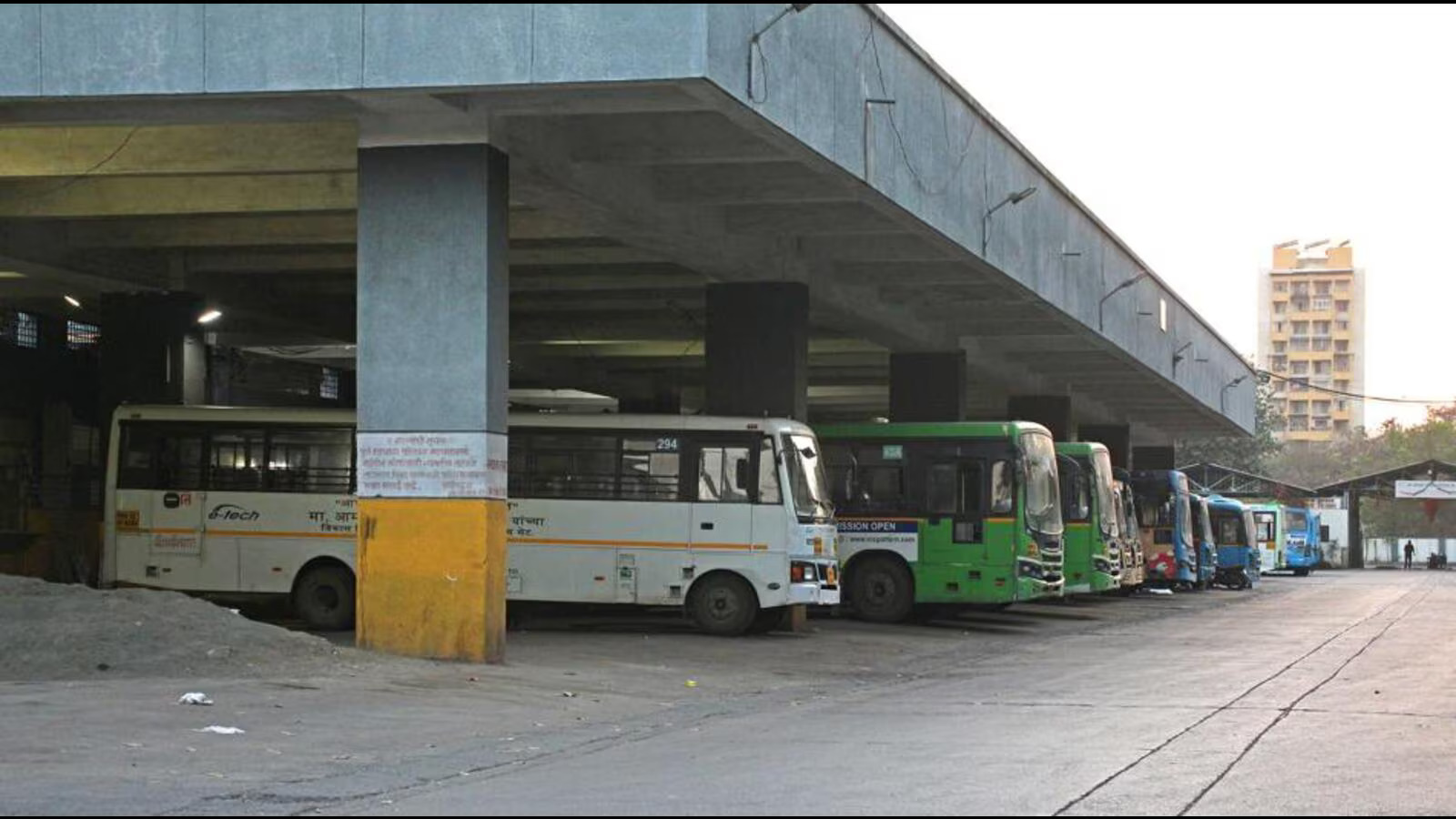
Pune’s public transport authority has blacklisted a contractor for erecting bus stops without mandatory permissions, exposing glaring lapses in civic oversight. The Pune Mahanagar Parivahan Mahamandal Limited (PMPML) confirmed that the contractor constructed structures without approvals from the municipal road department and installed advertisements without clearances from the sky signs division. The disciplinary action comes as citizens and officials alike call for stronger accountability in managing the city’s urban infrastructure.
The matter surfaced when objections were raised about unauthorised construction on public land. Evidence revealed that the contractor, entrusted with building bus shelters on a Build-Operate-Transfer (BOT) model, bypassed key procedures and allegedly caused financial loss to the Pune Municipal Corporation (PMC). In response, PMPML initiated proceedings to blacklist the firm while simultaneously transferring a senior official within the transport body. Officials confirmed that the BOT agreement had originally permitted the contractor to develop nearly 500 stainless-steel bus shelters across Pune and Pimpri-Chinchwad, with rights to recover investments through advertising revenue. However, investigations indicated that the firm illegally carried out digging on footpaths and secured electrical connections without licences. This has not only undermined public trust but also highlighted the absence of stringent monitoring mechanisms within the system.
Transport experts argue that the incident is emblematic of broader challenges facing Indian cities where infrastructure projects, often outsourced to private players, are marred by weak enforcement and lack of transparency. Such lapses risk undermining efforts to create sustainable, equitable and environmentally friendly urban mobility networks. A senior PMPML official, speaking on condition of anonymity, admitted that the case reflected coordination gaps between agencies. The official stressed that while the contractor is facing punitive measures, reforms are needed to strengthen institutional checks. “The authority is working on tighter monitoring and ensuring all future projects undergo stricter scrutiny,” the official stated.
Civic activists in Pune have demanded not only blacklisting but also financial penalties commensurate with damages, warning that leniency would encourage repeat violations. They argue that municipal officers who failed to detect or prevent the irregularities must also be held accountable, as weak governance undermines public confidence in city services. The episode has reignited debate on how Indian cities structure public-private partnerships. Urban mobility specialists emphasise that while BOT models can ease the financial burden on civic agencies, poor oversight can lead to misuse of public resources. As Pune grapples with rapid urbanisation, ensuring transparency, accountability and sustainability in infrastructure development remains critical for building equitable and eco-friendly transport systems.
The PMPML’s swift action has been welcomed as a corrective step, but the larger lesson lies in addressing systemic weaknesses. Without stronger governance frameworks, urban projects risk falling short of the promise of accessible, safe and sustainable public transport that Indian cities urgently need.
Also Read: IMD Raises Alarm With Heavy Rainfall Alerts Across Delhi To Mumbai, Multiple States
