


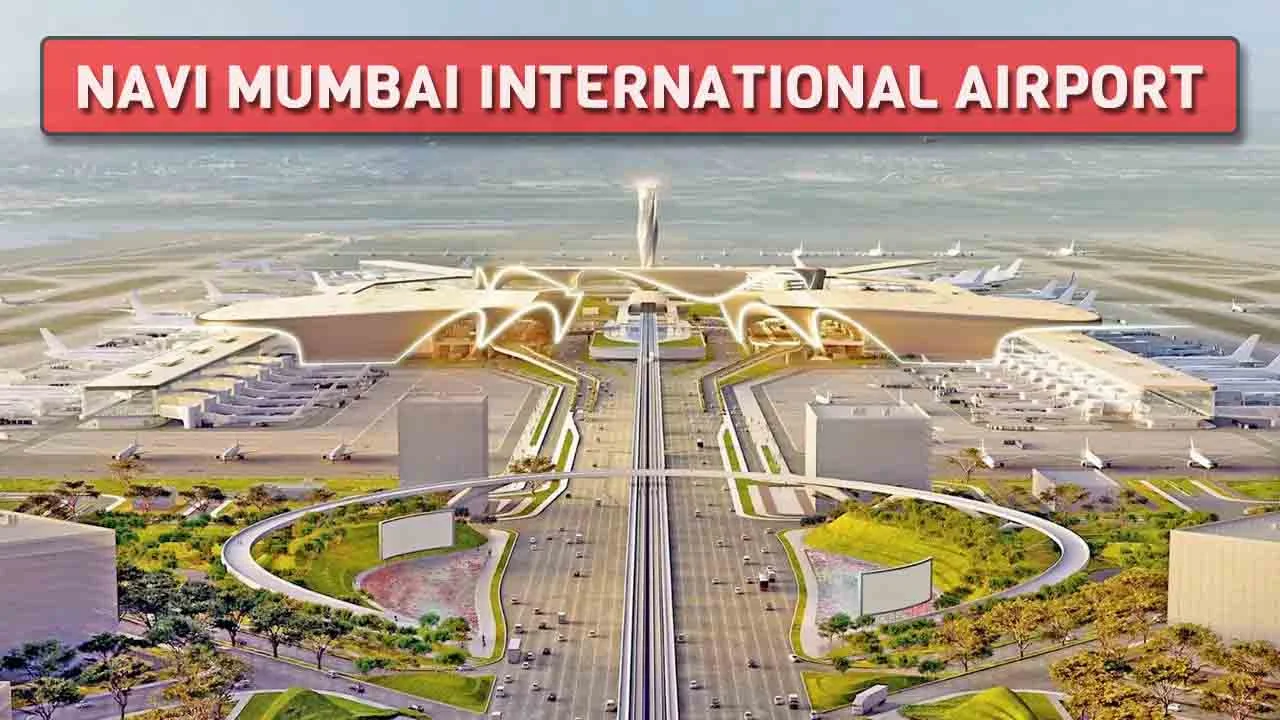
Mumbai, long constrained by the capacity crunch at its single-runway international airport, is preparing for a transformational shift in aviation with the upcoming Navi Mumbai International Airport. Positioned near Panvel, this new hub is expected to redefine air travel capacity, improve connectivity, and enhance passenger experience for one of India’s busiest metros.
The current Chhatrapati Shivaji Maharaj International Airport (CSMIA) handles more than 55 million passengers annually but operates with just one active runway at any given time, making it the world’s busiest single-runway airport. Expansion is impossible due to land limitations and dense urban sprawl. Experts argue that the new airport is not just a relief project but a necessity to sustain Mumbai’s role as a global gateway.In its first phase, Navi Mumbai International Airport (NMIA) will manage 20 million passengers and 0.30 million tonnes of cargo annually. By 2040, with four terminals and two parallel runways, capacity will expand to 90 million passengers and 2.6 million tonnes of cargo. Aviation experts note that such capacity will place Mumbai among global leaders in air infrastructure, on par with hubs like London and New York, which operate multiple airports to share load and enable future growth.
Also Watch: An Exclusive Interview with Sanjeev Jaiswal (IAS), CEO MHADA
The new facility is being designed with sustainability and efficiency at its core. Authorities are emphasising multi-modal access to reduce road congestion and carbon emissions. Connectivity plans include the Atal Setu sea bridge, upgraded highways, coastal roads, direct metro links, and even proposed water taxi services from South Mumbai. Such integrated planning is expected to bring commute times to parity with the existing airport, ensuring that travel convenience is not compromised by distance. Low-cost carriers, including leading domestic airlines, have already announced large-scale operations from NMIA. From its first day, daily departures are expected to cover major domestic destinations, expanding rapidly to international routes by 2026. Industry experts highlight that additional slots at NMIA will give airlines flexibility, improve competition, and potentially lower ticket fares for passengers.
At the same time, CSMIA is undergoing redevelopment of its Terminal 1, expanding capacity by 42 per cent. Together, the two airports will function as a dual system absorbing growing traffic and reducing operational stress on airlines and travellers. The airport project has faced delays, with its launch now expected in September. Officials emphasise that aviation safety requires absolute readiness, from customs to ground handling, before commercial flights can begin. While challenges remain, the broader vision is clear: Mumbai’s air travel future depends on balancing expansion with sustainability, urban accessibility, and equitable growth.For a city that fuels India’s global ambitions, Navi Mumbai International Airport symbolises not just infrastructure development but a blueprint for resilient, low-carbon urban connectivity.
