


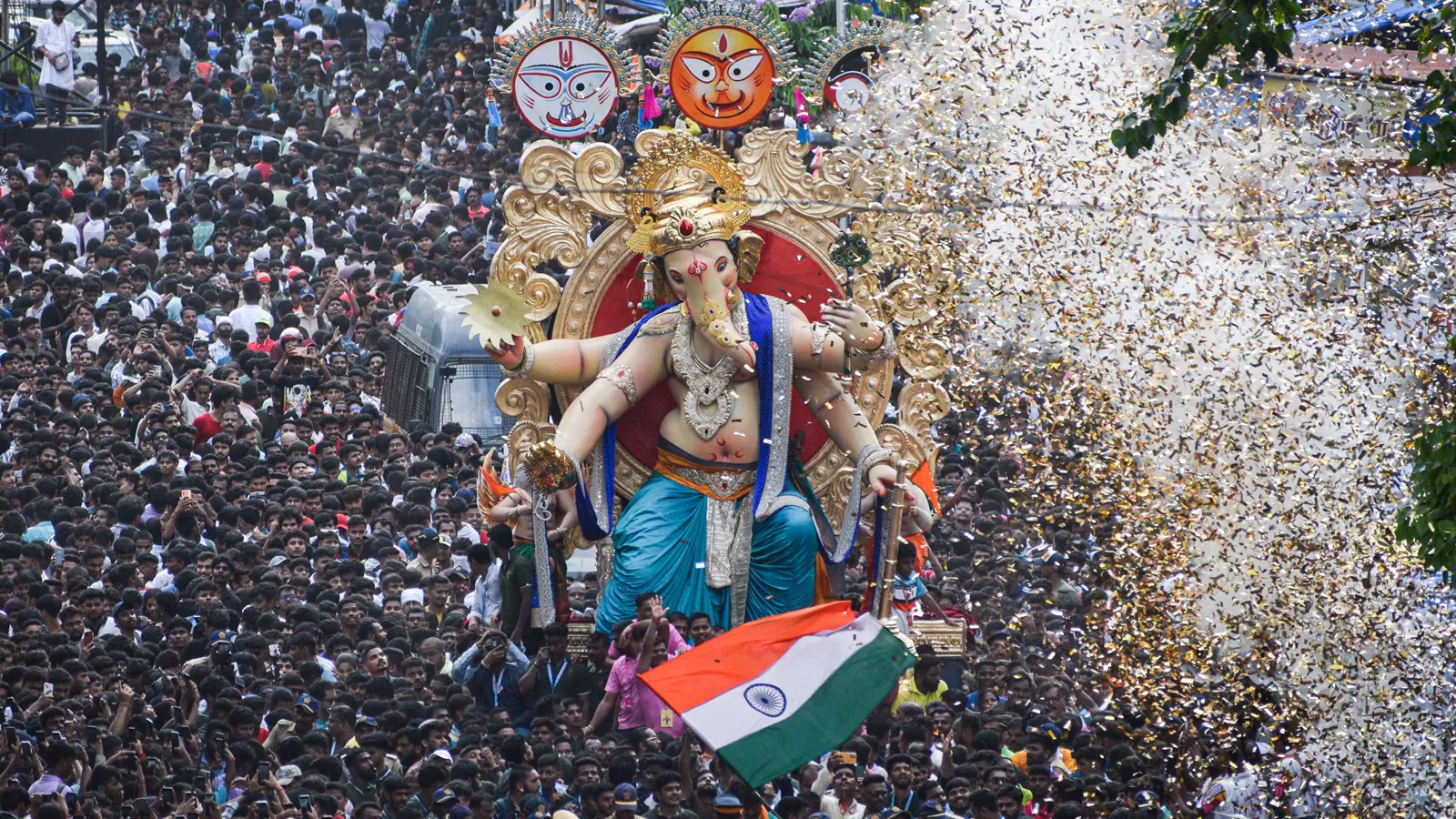
As Mumbai readies for Ganeshotsav 2025, its civic administration has prioritised safety over celebration. For the sixth consecutive year, the city’s municipal body has announced restrictions on 12 bridges deemed structurally weak, prohibiting the use of loudspeakers, music systems, and dancing during the festive processions. The decision, timed ahead of the 10-day festival beginning on August 27, is a precautionary step to protect millions of citizens who participate in the celebrations.
According to civic officials, the listed bridges many built over railway tracks are structurally fragile and cannot withstand heavy loads during large public gatherings. The warning, first issued in 2019, continues to remain in force as repair and reinforcement works progress in phases. Officials reiterated that while these bridges are not fully damaged, preventive measures are critical to ensure safety during a festival that draws some of the largest crowds in the city each year.Bridges such as Curry Road Station Bridge, Sane Guruji Marg Bridge, Chinchpokli Station Bridge, and the P.S. Mandlik Bridge in Byculla are among those facing load restrictions of up to 16 tonnes. Pedestrians, devotees, and vehicles are advised not to halt on these structures for rituals or celebrations but instead to cross swiftly. A senior civic officer noted that these guidelines are designed to avert any risk of collapse, especially under the pressure of music, dancing, and the surge of human movement.
Also Watch: An Exclusive Interview with Sanjeev Jaiswal (IAS), CEO MHADA
The restrictions are being enforced jointly by civic and police authorities. Police deployment will be intensified near the bridges during major processions to ensure compliance and smooth passage. The move is not only about preventing accidents but also about instilling civic discipline during a festival where the energy of celebration often overrides caution.Structural assessments by the Veermata Jijabai Technological Institute, commissioned after the Mumbai Metropolitan Region Development Authority transferred control of the bridges to the municipal corporation, have highlighted urgent and long-term repair needs. Civic authorities confirmed that tenders for repairs have already been floated, and works are progressing in phases due to the scale and complexity of the task. Until permanent solutions are completed, temporary restrictions are considered essential.
Safety experts argue that these recurring advisories reflect a broader challenge in Mumbai’s urban infrastructure. Rapid urbanisation, ageing public assets, and delayed upgrades expose residents to risks during high-density events. While Ganeshotsav embodies cultural unity and community spirit, the festival also underscores the need for resilient city planning that ensures both safety and sustainability. For now, Mumbai’s devotees are being urged to cooperate with restrictions and view them as safeguards for the well-being of the city. The balancing act between celebration and safety may test patience, but it reinforces a vital truth resilient infrastructure is central to the spirit of sustainable and equitable urban life.
