


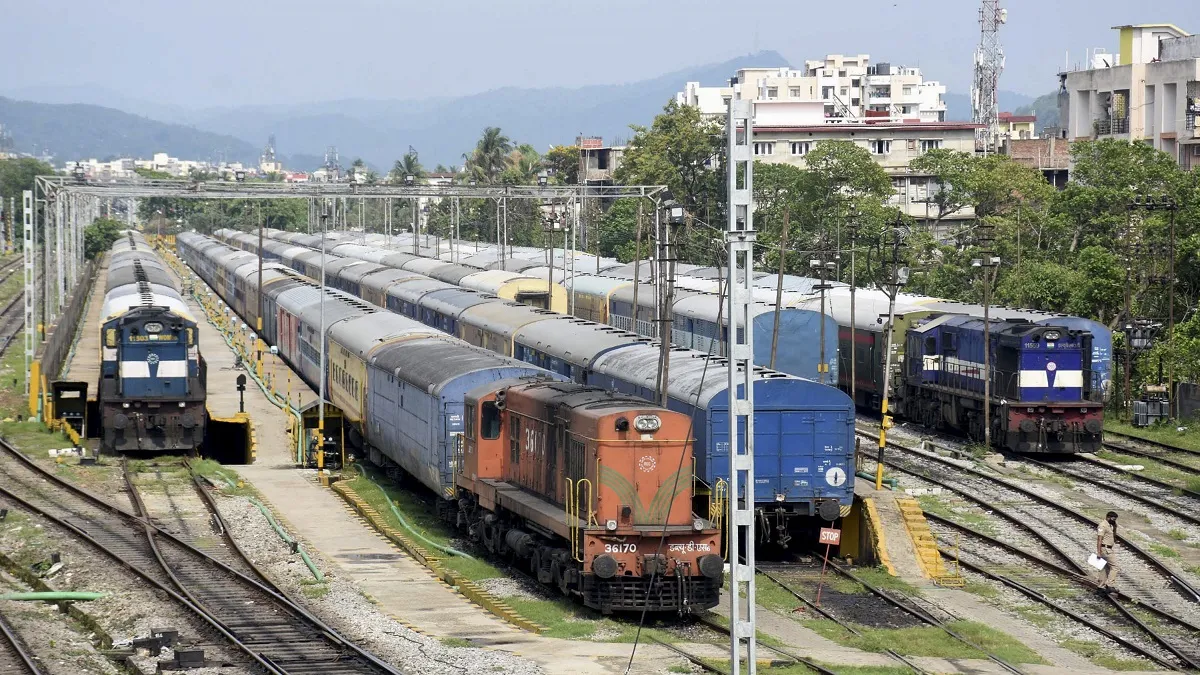
Indian Railways is preparing for the year’s busiest travel season with a major reshuffle of services from New Delhi and Old Delhi railway stations. In anticipation of the surge in passenger footfall during Diwali and Chhath, authorities have proposed relocating 14 trains to alternate terminals, a move designed to decongest the capital’s central hubs while enabling smooth station redevelopment works.
Also Watch: An Exclusive Interview with Sanjeev Jaiswal (IAS), CEO MHADA
Officials confirmed that the proposal has been forwarded to the Railway Board for clearance. If approved, the changes will take effect ahead of the peak festive period. The planned shift will see trains to destinations such as Barauni, Darbhanga, Hisar, Shri Ganganagar, Bathinda, Narwana, Jakhal, and Kurukshetra being rerouted to stations like Safdarjung and Shakur Basti.The relocation strategy is not merely about crowd management. It is also part of a larger vision to transform major rail terminals into modern, sustainable transport hubs. By redistributing passenger volumes, authorities aim to minimise pressure on central Delhi’s century-old stations while ensuring that redevelopment projects can proceed without service disruptions.
An official closely linked to the project stated that the February overcrowding incident at New Delhi station served as a wake-up call. The sheer influx of passengers during peak travel days highlighted the urgent need to rework operational planning. “The immediate goal is safety and comfort, but the long-term outcome will be modernised, green, and resilient railway stations,” the official explained.This is the second phase of Indian Railways’ decongestion plan. The first stage saw several long-distance trains relocated to Anand Vihar and Hazrat Nizamuddin. The current phase now brings Safdarjung and Shakur Basti into the fold, dispersing travel loads across the National Capital Region. The move is expected to not only improve passenger experience but also reduce traffic bottlenecks around New Delhi and Old Delhi stations, which are often overwhelmed by festival crowds.
