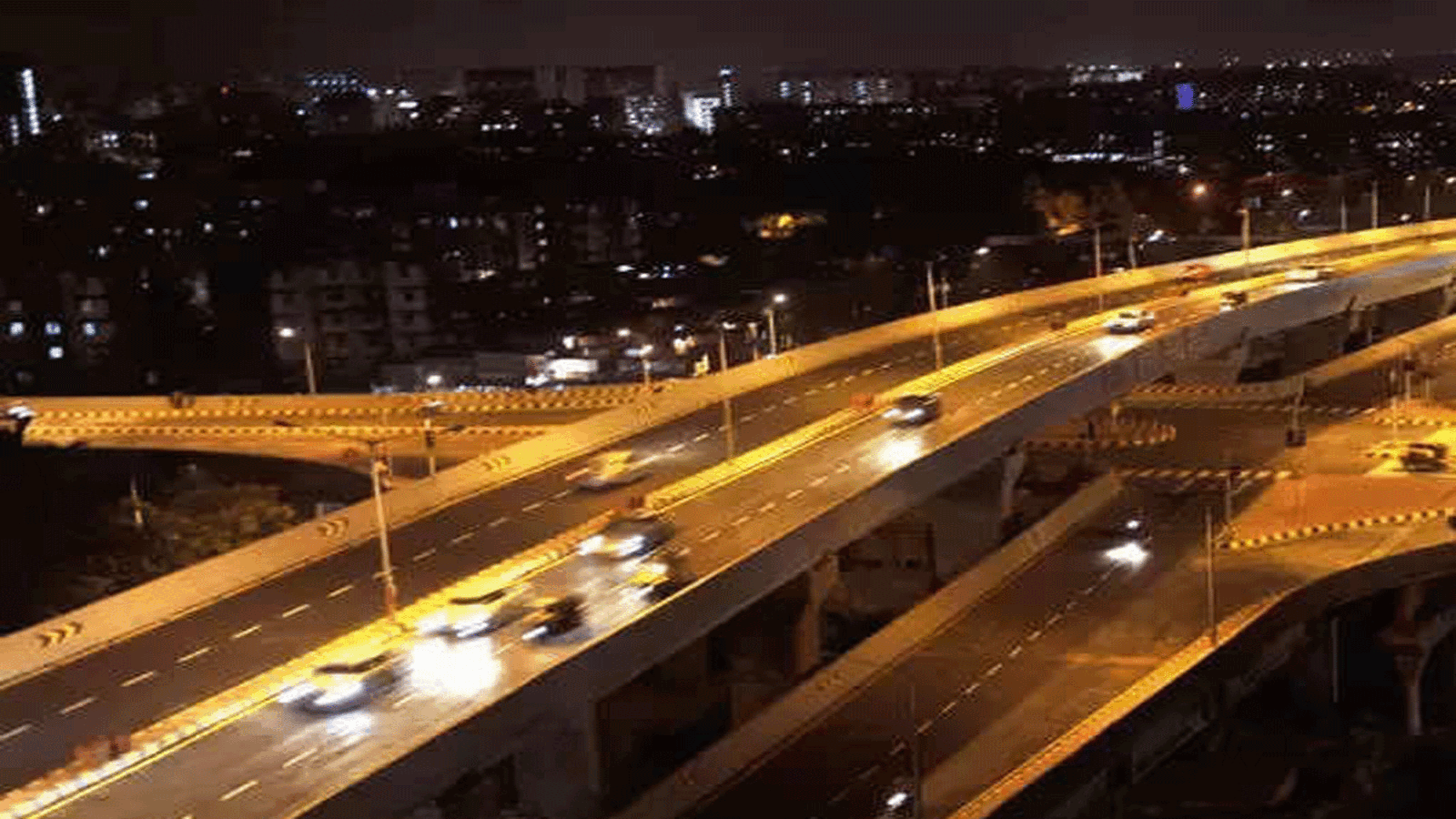
New Delhi Drives $5 Trillion Vision With World Class Roads
New Delhi has reinforced its ambition of building a $5 trillion economy by expanding world-class infrastructure that promises to reshape mobility, trade and industry. Officials highlighted that the push towards modern expressways, sustainable fuels and advanced transport systems is central to India’s strategy of becoming the world’s third largest economy within the decade.
At a global business forum on Friday, the Ministry of Road Transport and Highways outlined multiple initiatives that aim to accelerate construction while keeping the focus on sustainability. The expansion of access-controlled expressways, development of green fuels, and cost-efficient public transport are seen as crucial pillars for reducing logistics costs and improving competitiveness.
Authorities stressed that India’s highway network is on course to become the largest in the world. With a decade of rapid expansion behind it, the emphasis is now on building corridors that cut travel time, reduce emissions, and generate economic opportunities for communities along their routes. The model aims to deliver ripple effects across tourism, real estate and industrial clusters. Experts note that logistics already accounts for nearly 10 per cent of India’s economic cost structure, and efforts are under way to bring it down further to align with global standards. Lower costs, combined with faster travel times, are expected to make Indian exports more competitive and attract new investments into manufacturing and supply chain hubs.
Transport planners emphasise that this transformation is not limited to highways. The automobile sector, one of the largest contributors to national growth, is also evolving towards alternative fuels, electric mobility and flex engines. Industry leaders see this as a chance for India to establish global leadership in cleaner, cost-efficient vehicles, creating jobs for millions while reducing reliance on fossil fuels. Economists argue that infrastructure is more than just a growth enabler; it is also a social equaliser. Expanding connectivity ensures smaller towns and rural regions are linked with urban centres, unlocking new opportunities for employment and entrepreneurship. Officials have underscored that transparency, speed of execution and cost efficiency will remain benchmarks in project delivery.
The integration of biofuels and renewable energy into transport is being positioned as both an environmental and economic imperative. By encouraging farmers to diversify crops into energy resources, policymakers believe rural incomes can rise alongside national progress. Such measures also align with the broader goals of reducing carbon footprints and building resilient, equitable cities. Observers caution, however, that the success of this vision will depend on consistent execution and strong regulatory oversight. While ambitious targets have been set, timely delivery and safety enforcement on expressways remain pressing concerns. Nonetheless, the convergence of infrastructure, clean mobility and industrial expansion provides India with a rare opportunity to define the blueprint for sustainable economic growth in the 21st century.