Mumbai Goa Highway Video Sparks Public Outrage Online
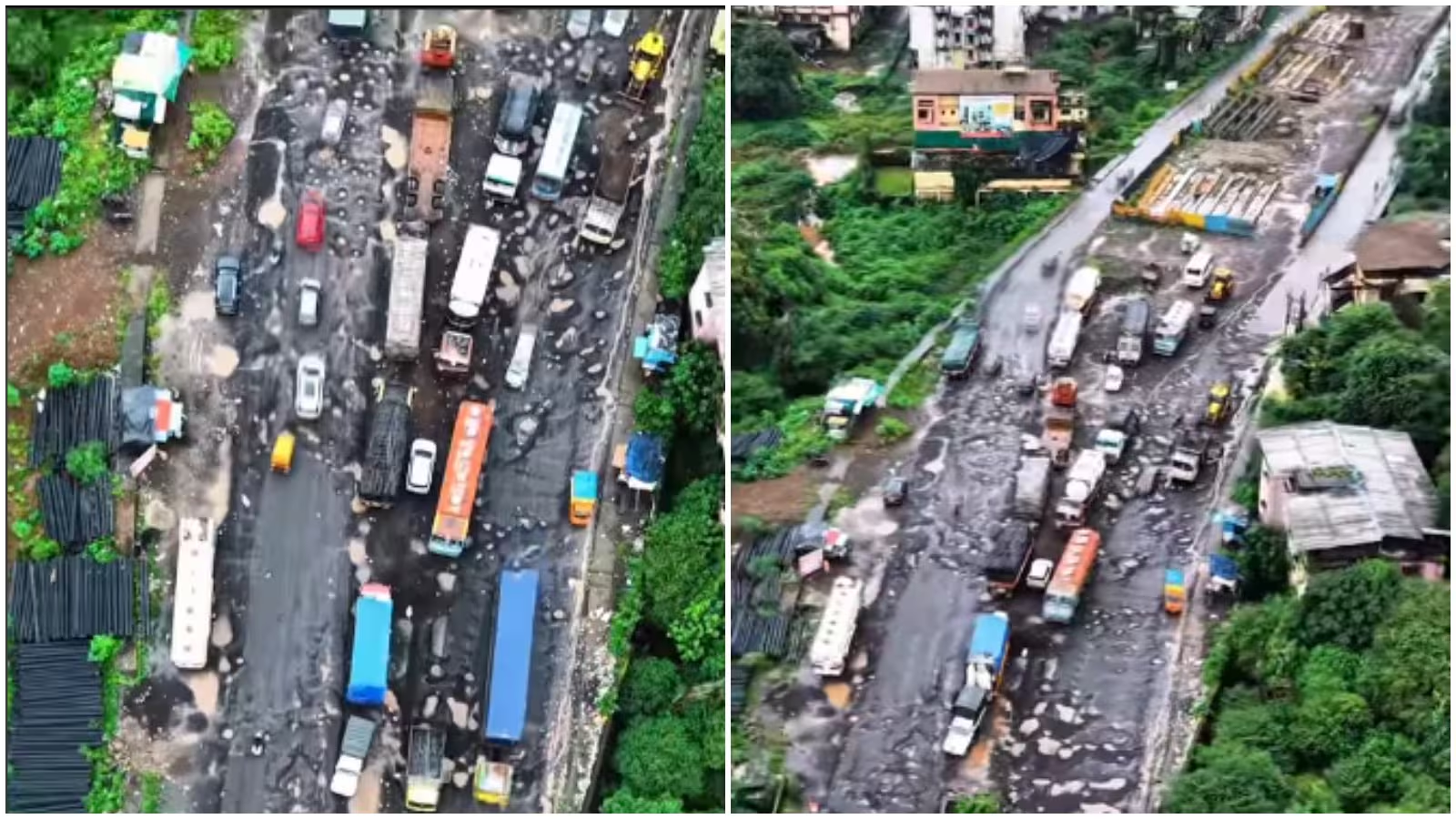
A drone video showing crater-like potholes on the Vashishti bridge in Chiplun, part of the busy Mumbai–Goa highway, has ignited public anger and renewed debate on India’s road infrastructure. The footage, widely shared online, compares the highway’s surface to the moon, highlighting the severe risks for travellers on one of the country’s most popular tourist and freight corridors.
The video revealed trucks parked near the bridge divider, narrowing the path for smaller vehicles and forcing dangerous manoeuvres. Motorists and social media users described the road as unsafe and unfit for travel, questioning how such a critical route could be left in disrepair. Many also tagged senior government officials, demanding urgent intervention.
While the outrage spread online, the National Highways Authority of India (NHAI) issued a clarification distancing itself from responsibility, stating that the section of road near the Vashishti bridge is under the maintenance of the state’s Public Works Department (PWD). This clarification shifted focus to the accountability gap between central and state authorities, which often delays timely repairs on national routes. Experts say the condition of the Mumbai–Goa highway reflects a wider issue of fragmented responsibility in infrastructure management. Highways that cross multiple jurisdictions often suffer when agencies debate over budgets, clearances, or ownership of repairs. Analysts warn that such lapses not only erode public trust but also increase fuel consumption, emissions, and accident risks—issues that run counter to India’s commitments on sustainability and road safety.
Environmentalists argue that recurring road damage also underscores the failure of temporary patchwork methods that are neither cost-effective nor eco-friendly. Poor construction quality, inadequate drainage, and heavy vehicle pressure are known to accelerate pothole formation. Experts suggest that investment in durable, climate-resilient road materials and stricter contractor accountability would be more sustainable than repeated short-term fixes. For commuters, the immediate concern remains safety and predictability. The Mumbai–Goa corridor is vital for both tourism and freight movement, linking urban centres with coastal towns. Frequent disruptions and unsafe patches not only delay economic activity but also discourage domestic travel. Transport specialists highlight that the failure to maintain such arterial routes could undermine regional development plans.
Public responses online have turned the spotlight on accountability, with questions raised over whether responsibility rests with the ministry, state officials, or local contractors. Observers say this anger reflects a growing demand for transparency in infrastructure governance and a shift in public expectations towards sustainable, equitable, and safe mobility solutions. As the debate continues, the viral video has become a symbol of public frustration with urban and intercity transport systems that lag behind rising mobility needs. While authorities continue to shift responsibility, citizens are calling for a durable solution—one that prioritises safety, sustainability, and efficiency over patchwork promises.