


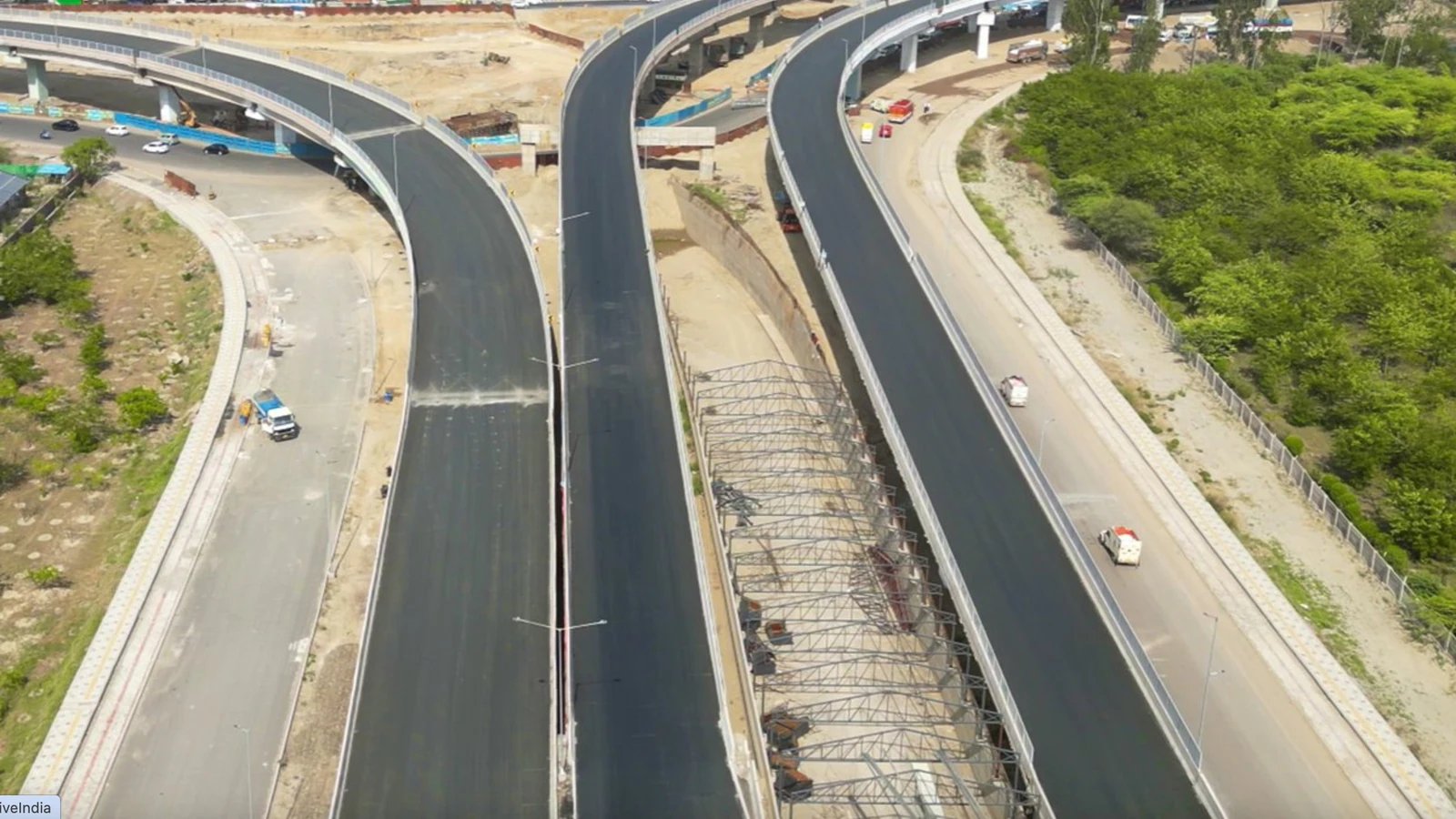
Delhi’s Urban Extension Road-II (UER-II), one of the capital’s most ambitious transport corridors, is being positioned not merely as a congestion-buster but as a benchmark in road safety and sustainable infrastructure. At a high-level coordination meeting, officials stressed that the emphasis must remain on enforcement, surveillance, and commuter-friendly systems to make the new expressway a model of secure and modern mobility.The six-lane corridor, which forms part of the National Highways Authority of India’s network, is expected to significantly ease traffic flow by diverting vehicles away from Delhi’s saturated arterial roads.
However, with higher speed capacity and growing vehicular movement, authorities highlighted that safety measures need to match the scale of construction. Plans are already underway for smart signages, awareness campaigns, and enhanced traffic enforcement across the route. Officials confirmed that surveillance cameras, patrol vans, and well-staffed safety units will be deployed along the stretch. Ambulances will be stationed at fixed intervals to ensure rapid emergency response. The intention, they said, is to provide a seamless travel experience without compromising commuter welfare.
Also Watch: An Exclusive Interview with Sanjeev Jaiswal (IAS), CEO MHADA
Another critical focus area is local accessibility. Service roads are being prioritised so that neighbouring settlements have safe and direct entry points to the highway without causing bottlenecks. This measure, according to infrastructure experts, will also reduce the pressure on main carriageways while improving inclusivity for residents in adjoining areas. Flooding risks, a chronic concern for Delhi during monsoons, are also being addressed. Departments have been tasked with implementing robust drainage systems in vulnerable stretches such as Karala–Kanjhawala, Mundka–Karala, and the Barwala region. Officials have emphasised that permanent drainage structures, not temporary fixes, will be essential to ensure uninterrupted connectivity during peak monsoon months.
Energy requirements for the corridor, particularly in its Package 5 zone, are also being mapped. Power agencies are expediting transformer installations to support street lighting, safety devices, and electronic monitoring equipment, ensuring that UER-II maintains international standards of road safety and environmental sustainability. Experts attending the review meeting noted that coordinated inter-departmental action is key to delivering this infrastructure on schedule. With agencies from public works, traffic enforcement, power distribution, urban planning, and water management collaborating, the corridor is being positioned as a symbol of how integrated governance can redefine city planning.
Beyond traffic relief, UER-II represents a test case for Delhi’s future urban design one that balances rapid mobility with eco-friendly and human-centric infrastructure. Analysts argue that if successfully executed, the corridor could set a precedent for climate-resilient and safe infrastructure in Indian cities grappling with rising population and vehicular density.For now, safety remains the central promise of UER-II, reflecting the capital’s push to redefine infrastructure around sustainable, secure, and inclusive urban mobility.
