


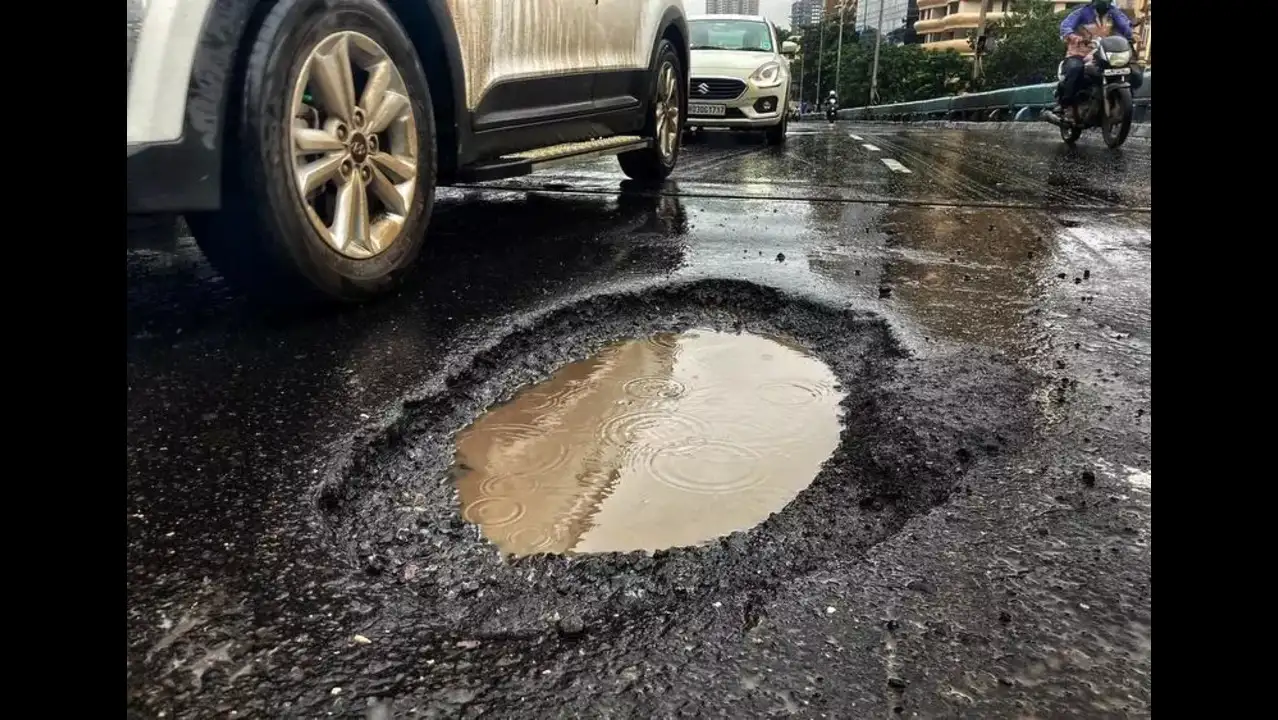
Navi Mumbai’s motorists are once again grappling with crumbling roads as persistent rains have left arterial stretches riddled with potholes, leading to traffic bottlenecks, vehicle breakdowns and commuter distress. Key routes such as the Sion-Panvel highway, Thane-Belapur road, and the new Airport Road between Belapur and Ulwe have been worst affected, leaving residents frustrated at what they describe as administrative apathy.
The poor condition of these roads has turned everyday travel into a test of endurance. Motorists complain that crater-sized potholes slow traffic to a crawl, with heavy jams becoming routine. The worsening road surface has heightened the risk of accidents, while public buses and smaller vehicles struggle to navigate broken stretches. Commuters waiting at bus stops like Uran Phata near Nerul face additional inconvenience, often having to walk further to catch buses that can no longer stop at regular points. Locals fear that the upcoming festive season will exacerbate the chaos. Many households worry about transporting idols for Ganesh Chaturthi through damaged roads. “The bumpy stretches are unsafe and risky, especially during processions. It feels like every year the same story repeats itself,” said a resident. For many citizens, this reflects not just infrastructural decay but also a lack of political accountability.
Officials, however, blame the relentless rain for the delay in repairs. According to city engineers, patchwork could not be carried out as wet weather makes resurfacing ineffective. They have assured that as soon as rainfall subsides, urgent repair work will be undertaken across pothole-prone corridors. While such explanations provide temporary reassurance, residents argue that sustainable long-term solutions are consistently overlooked. Urban planners note that poor road engineering, coupled with over-reliance on patchwork instead of durable reconstruction, makes Navi Mumbai especially vulnerable during monsoons. Experts emphasise that sustainable urban mobility depends on climate-resilient infrastructure, including high-quality roads capable of withstanding heavy rainfall without collapsing year after year. The cycle of repeated breakdowns not only drains public funds but also undermines the city’s ambition of positioning itself as a planned and sustainable urban hub.
As Navi Mumbai grows into a residential and commercial magnet, its transport network plays a pivotal role in defining quality of life. Civic bodies now face mounting pressure to rethink road contracts, improve monitoring, and deploy eco-friendly, long-lasting surfacing technologies. For commuters, however, the immediate concern is simple: smoother and safer rides without having to brace for yet another season of pothole-induced delays. The recurring crisis underscores the urgent need for accountability and investment in resilient infrastructure. Unless Navi Mumbai fixes its road-building approach, residents fear that every monsoon will remain synonymous with traffic snarls, damaged vehicles and frayed tempers.
Also Read : Monorail Services Disrupted Again As Overcrowding Forces 50 Passengers To Deboard
