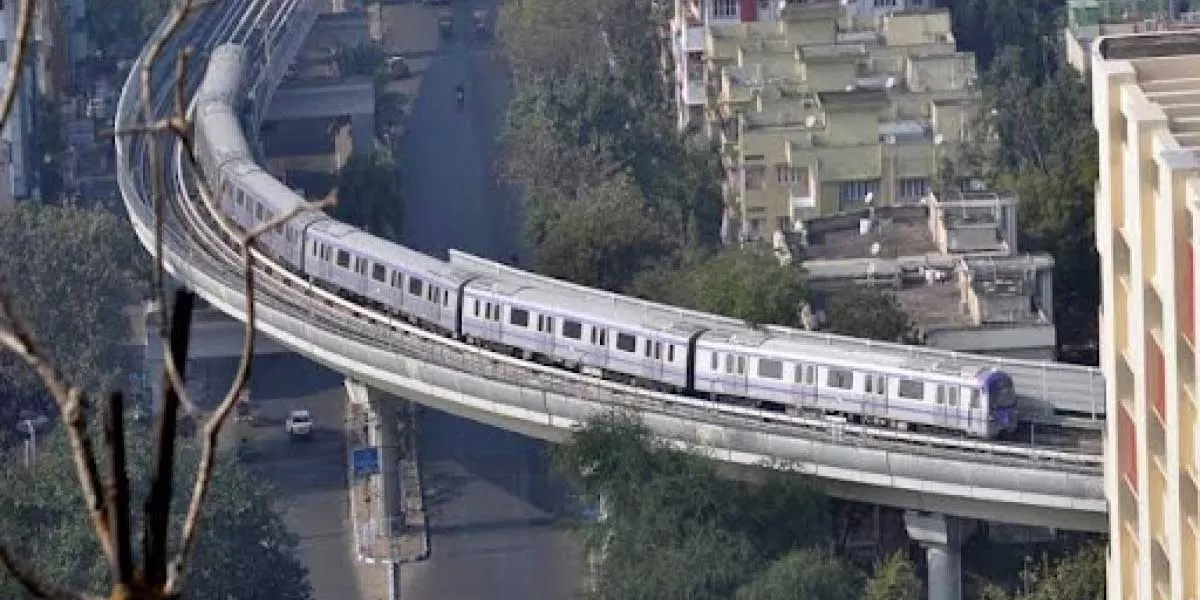
Kolkata is set for a major infrastructure upgrade as new metro corridors open this week, promising faster, greener, and more equitable mobility. The launch of newly built sections covering over 13 kilometres marks a critical step towards reshaping the city’s public transport system and curbing dependence on private vehicles, a move seen as vital for reducing congestion, emissions, and travel stress.
The fresh stretches include the Noapara–Jai Hind Bimanbandar metro service, which will directly connect the northern suburbs to the airport, significantly easing travel for both commuters and travellers. The Sealdah–Esplanade line, another critical addition, will shrink the existing 40-minute commute to just 11 minutes, underlining the efficiency that rapid transit can bring to daily urban life. A third corridor, linking Beleghata with Hemanta Mukhopadhyay, will extend metro access to the city’s expanding IT hub, improving employment connectivity while offering a sustainable alternative to road-based transport.Experts highlight that these routes are more than engineering milestones—they symbolise an urban transition towards equitable and low-carbon mobility. By integrating multiple modes of public transport and reducing dependence on fuel-based travel, the metro expansion aligns with national commitments to cut carbon emissions. For daily passengers, particularly those from working-class communities, the reduced travel time translates into higher productivity, better work-life balance, and improved air quality.
Also Watch: An Exclusive Interview with Sanjeev Jaiswal (IAS), CEO MHADA
At Howrah, a newly constructed subway is being inaugurated, designed to ease multimodal transfers at one of the busiest junctions. Urban planners point out that such integration is crucial for sustainable cities, where seamless connectivity between trains, buses, and non-motorised transport ensures inclusive mobility.Alongside the metro rollout, a six-lane elevated expressway of 7.2 kilometres is being launched in Howrah. Built at an investment of over ₹1,200 crore, the expressway is expected to decongest traffic bottlenecks, reduce fuel wastage, and boost regional trade. However, experts caution that while roads ease commercial movement, long-term sustainability lies in prioritising mass transit over private car expansion.
In Bihar, a parallel set of infrastructure projects worth nearly ₹13,000 crore are being launched. Key among them is a new 8.15-kilometre bridge on the Ganga, enhancing connectivity between Patna and Begusarai while cutting freight detours by more than 100 kilometres. The state also gains new road upgrades, railway services, and a thermal power plant, alongside a cancer hospital and modern water management systems. Collectively, these projects reflect a push towards balanced regional development, blending economic growth with improved quality of life.As cities like Kolkata and regions like Bihar undergo infrastructure overhauls, the challenge remains ensuring that growth is equitable, inclusive, and ecologically sustainable. Mass transit investments such as metro expansion not only reshape urban mobility but also stand as decisive steps towards future-ready, climate-conscious Indian cities.
Kolkata metro expansion launched with three new routes, airport link strengthened