


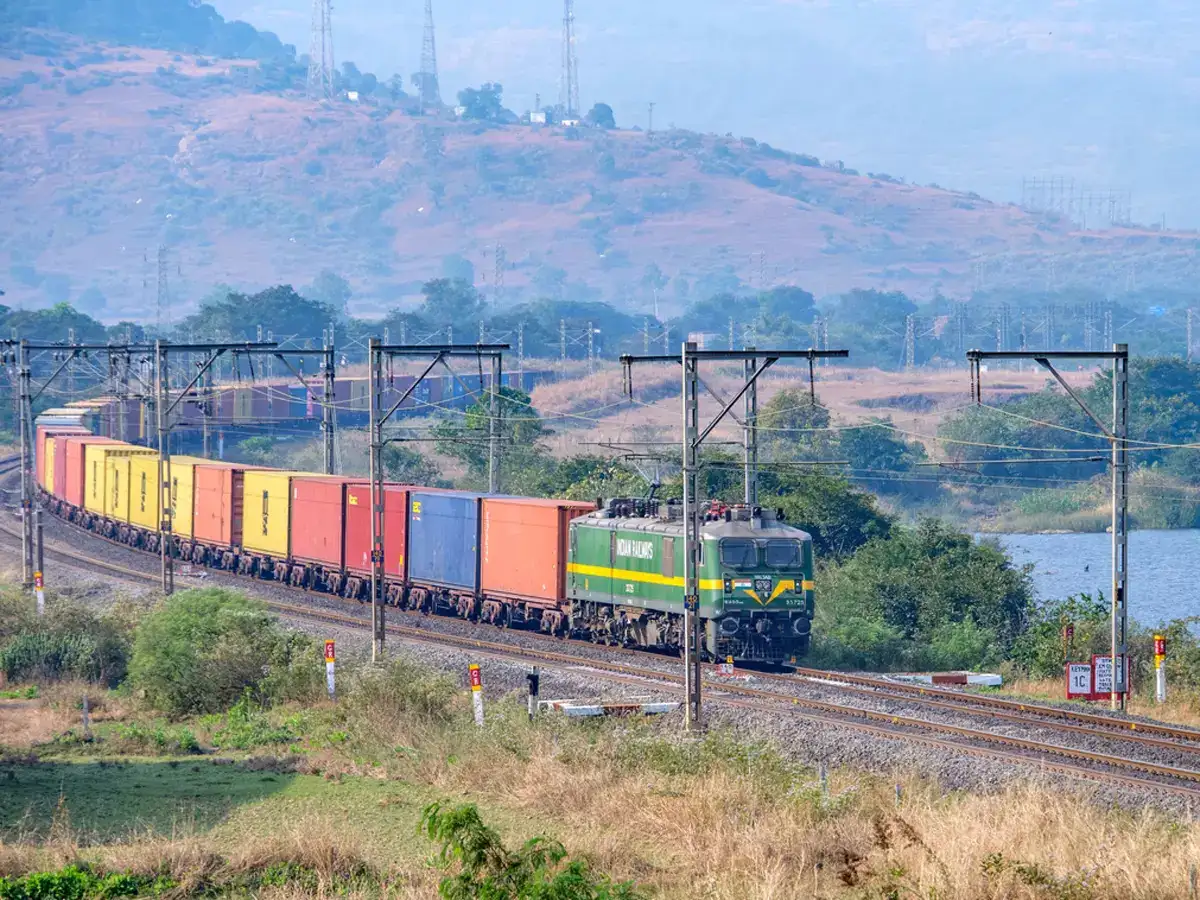
Indian Railways has approved a dedicated daily parcel train service linking Budgam in the Kashmir Valley with Adarsh Nagar in Delhi. Officials confirmed that the service, to be operated under the Joint Parcel Product–Rapid Cargo Service (JPP-RCS), will significantly reduce travel time for perishable and high-value goods from Jammu and Kashmir to the national capital.
The service will run on a pilot basis for the first year, deploying a train with eight parcel vans and an additional Seating-cum-Luggage Rake (SLR). Authorities stated that the average journey time will be around 23 hours—almost half the time taken by road freight—making it a more efficient, eco-friendly, and economical alternative for businesses. Security cover will be provided by state police at both ends to ensure the safe passage of consignments. The initiative has been designed with a dual objective: strengthening the share of railways in India’s fast-growing courier and logistics business, and simultaneously creating a lifeline for Kashmir’s small and medium enterprises. According to senior railway officials, facilities for loading and unloading will also be provided at Bari Brahmana station to support local traders.
Experts highlighted that the train is expected to be a game-changer for agricultural producers and artisans of the Valley. Products such as apples, walnuts, saffron, pashmina shawls, carpets, and other handicrafts will now reach larger domestic markets more swiftly, enhancing competitiveness against imported goods. Officials emphasised that Kashmiri traders stand to benefit from reduced freight costs, faster delivery timelines, and better connectivity to pan-India supply chains. Industry observers also see the development as aligned with India’s broader sustainability agenda. By shifting cargo from road to rail, the service could reduce carbon emissions, road congestion, and dependence on fuel-intensive trucking. The initiative underscores how green logistics can not only support local economies but also contribute to national climate commitments.
Officials further explained that the Joint Parcel Product model is a virtual aggregation platform designed to attract greater private sector participation in freight transport. Lower registration fees have been introduced to encourage businesses, particularly small traders, to adopt this service. For Kashmir, where trade has often faced logistical bottlenecks due to terrain and seasonal disruptions, this development offers fresh hope. With consistent connectivity to Delhi and beyond, the new parcel train could reimagine the way the region’s produce and artisanal goods are marketed nationally and internationally.
By bridging distance with efficiency, the Budgam–Delhi parcel train sets the foundation for a greener, fairer, and more resilient economic future for the Valley’s business community.
Also Read : Mumbai Weather Update: Mild Conditions With Humid Air And Rain Likely Today
