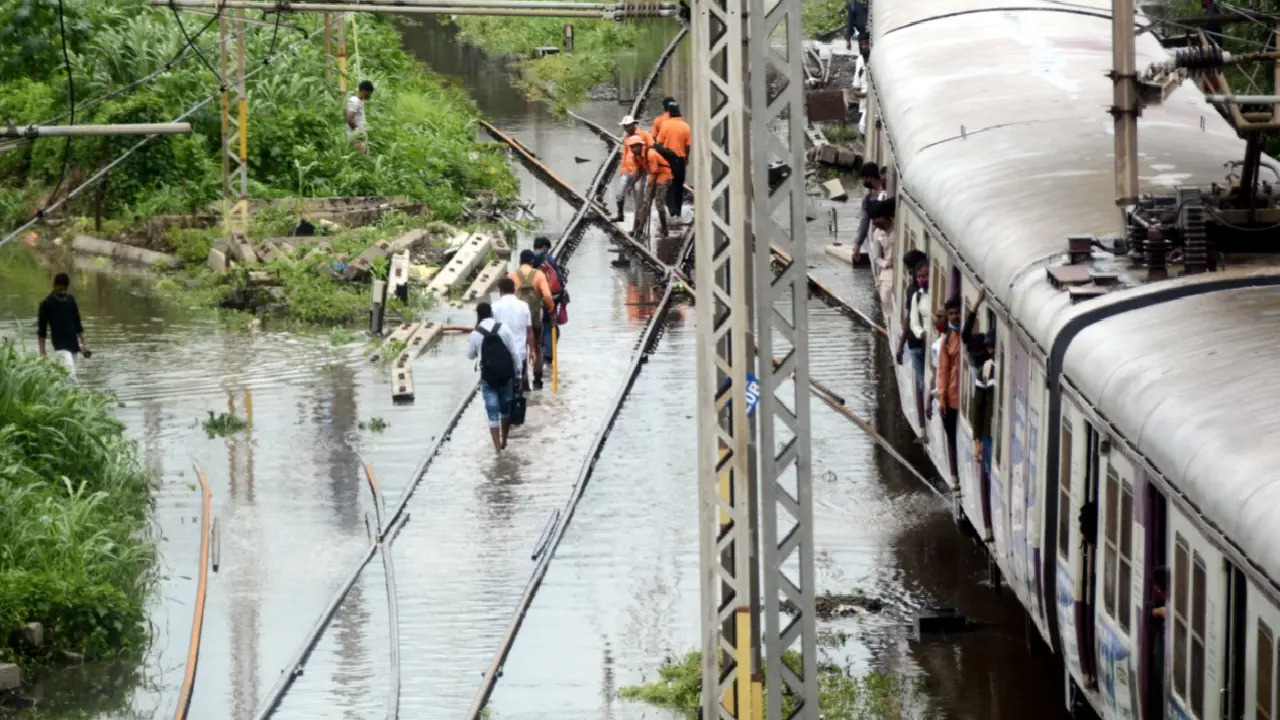
Nashiks Rail Link to Mumbai Stalled by Monsoon Rains
Nashik commuters face severe disruptions to their daily lives and economic activities as heavy monsoon rains bring the city’s transport network to a standstill. The twin lifelines connecting Nashik to the financial hub of Mumbai—the rail network and the Mumbai-Agra Highway—are grappling with significant challenges, including widespread delays, cancellations, and physical damage. This unprecedented disruption highlights the urgent need for resilient urban infrastructure, capable of withstanding the increasing intensity of climate-related events, and underscores the economic vulnerability of a city highly dependent on seamless connectivity.
The Nashik Road Railway Station, a crucial transit point for hundreds of thousands of passengers and freight, has become a nexus of uncertainty. While a handful of local services have managed to maintain their schedules, the majority of long-distance trains arriving from Mumbai are running significantly behind schedule. Several services have been cancelled entirely, leaving passengers stranded and disrupting travel plans for thousands. Experts have pointed to the cascading effect of delays, where a single disruption in one section of the network can impact the entire system. Railway officials are working tirelessly at the station to address the flood of queries from anxious passengers, offering what limited information they can. This situation exposes the fragility of a network designed for standard conditions, not the extreme weather events now becoming commonplace.
Compounding the crisis is the state of the Mumbai-Agra Highway, the main arterial road link. A recent landslide in the Kasara Ghat section has left commuters navigating a precarious path, with highway police keeping only one lane open. This a temporary measure, with warnings that the entire road could be closed if rains persist. This forces a potential diversion of traffic, which will likely result in a logistical nightmare for commercial and private vehicles alike. The cascading disruptions on both road and rail transport have a profound ripple effect on local businesses, supply chains, and the livelihoods of a large segment of the population. From daily commuters to essential goods carriers, the city’s economic rhythm is severely hampered.
This transport paralysis serves as a stark reminder of the broader challenges posed by climate change on urban infrastructure. The city of Nashik has received a significant amount of rainfall in a short period, leading to waterlogging in various localities and a dramatic rise in the water level of the Godavari River. The discharge from the Gangapur Dam has also increased, further complicating the situation. These events are not isolated; they are part of a larger pattern of extreme weather that cities must now plan for. Building a resilient, zero-net-carbon, and sustainable urban infrastructure is no longer an abstract goal but an immediate necessity. It requires investment in climate-proof transport systems and urban planning that accounts for higher rainfall and potential flooding.
The city’s response to this crisis, while commendable in its immediate efforts to manage the situation, must now turn to long-term strategic planning. This includes not only strengthening physical infrastructure like roads and railway tracks but also integrating nature-based solutions to manage rainwater and prevent urban flooding. This event highlights that the well-being of a city and its citizens is inextricably linked to the resilience of its infrastructure. The focus must shift from merely repairing damage to proactively building a city that can withstand and thrive in the face of future climate challenges, ensuring equitable access and safety for all residents, regardless of their gender or socioeconomic status.