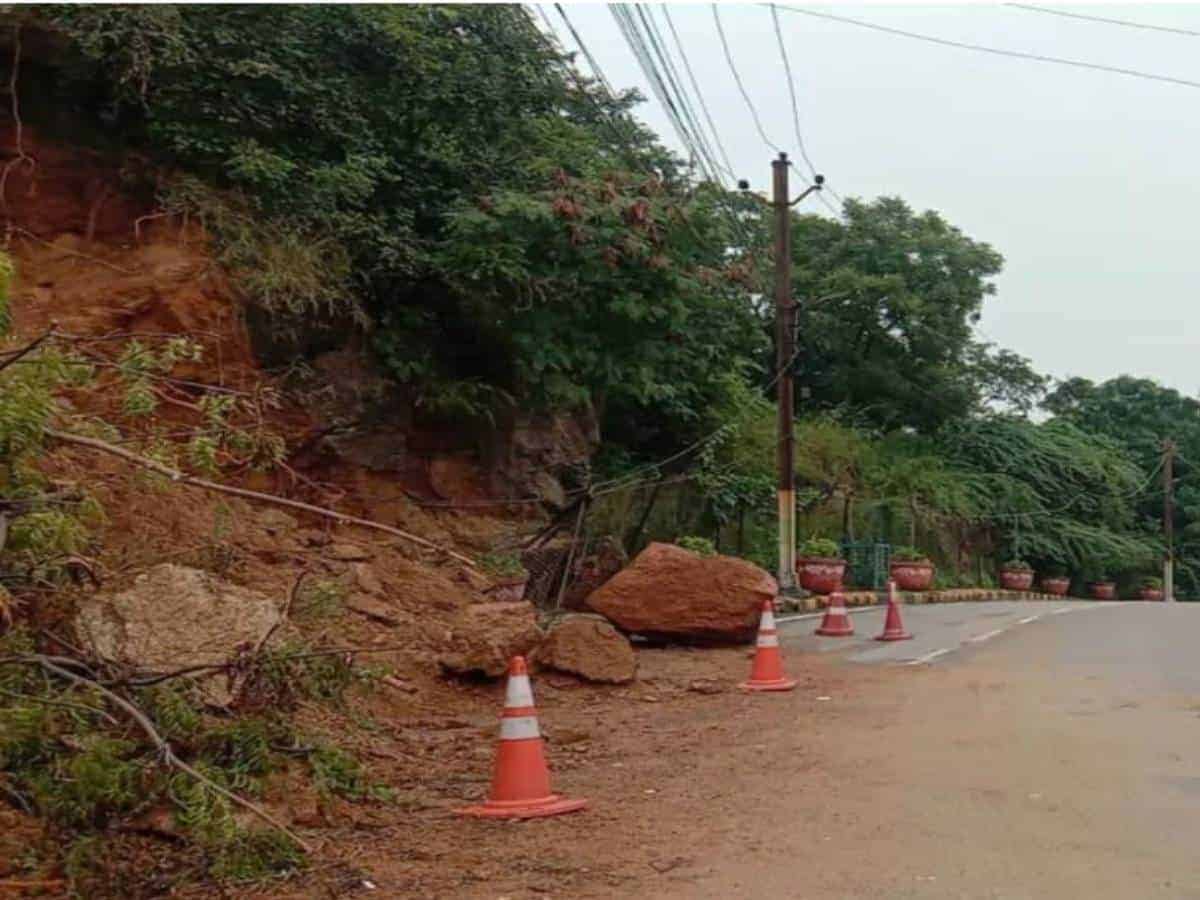
Hyderabad traffic disrupted as landslide blocks Srisailam ghat road
Traffic on the busy Srisailam-Hyderabad route was disrupted for several hours on Tuesday after a landslide struck the ghat section near the Srisailam reservoir dam viewpoint in Nandyal district. Heavy rains loosened the hill slopes, sending large rocks and boulders crashing onto the road, forcing a complete suspension of vehicle movement through the morning. Authorities later restored normalcy after clearing the debris and assured pilgrims that travel was safe.
The incident triggered anxiety among devotees and locals, particularly as the ghat road serves as a lifeline for pilgrims heading to the Srisailam temple, one of the most visited shrines in southern India. Panic deepened after unverified rumours of multiple landslides spread across the area. Officials confirmed that no casualties or injuries were reported, and temple staff, along with police, coordinated with local agencies to remove the debris.
Experts attributed the landslide to continuous rainfall that destabilised the terrain. The fragile slopes of the Nallamala forest zone, where the ghat road is carved, have long been prone to erosion and landslip during the monsoon season. Officials stressed that such incidents highlight the urgent need for a long-term disaster mitigation strategy, particularly as pilgrim footfall to the temple continues to rise year after year.Local administrators revealed that precautionary measures are being taken, including real-time monitoring of vulnerable slopes, installation of warning systems, and coordination with disaster response teams. Environmental specialists argue that unchecked deforestation, construction pressure, and climate variability have further weakened natural buffers in hill regions. The event underscores the larger environmental challenge of balancing infrastructure growth with ecological sustainability.
For thousands of pilgrims and residents, the Srisailam ghat road is not only a travel corridor but also an emotional and spiritual link to the temple town. Temporary closures and landslide risks directly impact livelihoods, tourism, and local commerce. Officials urged devotees not to panic, assuring that the road had been fully restored and is safe for travel. At the same time, experts call for forward-looking planning that reduces reliance on short-term clearing operations and invests in climate-resilient infrastructure.While the immediate crisis has been resolved, the event acts as a reminder of how climate patterns are reshaping urban and regional safety in India. As cities and districts expand, experts suggest that adopting eco-sensitive engineering solutions, enforcing strict slope stability studies, and enhancing forest cover could reduce the risk of future disruptions. For now, Nandyal’s swift response has prevented major fallout, but recurring incidents could test the resilience of both governance systems and communities in the region.