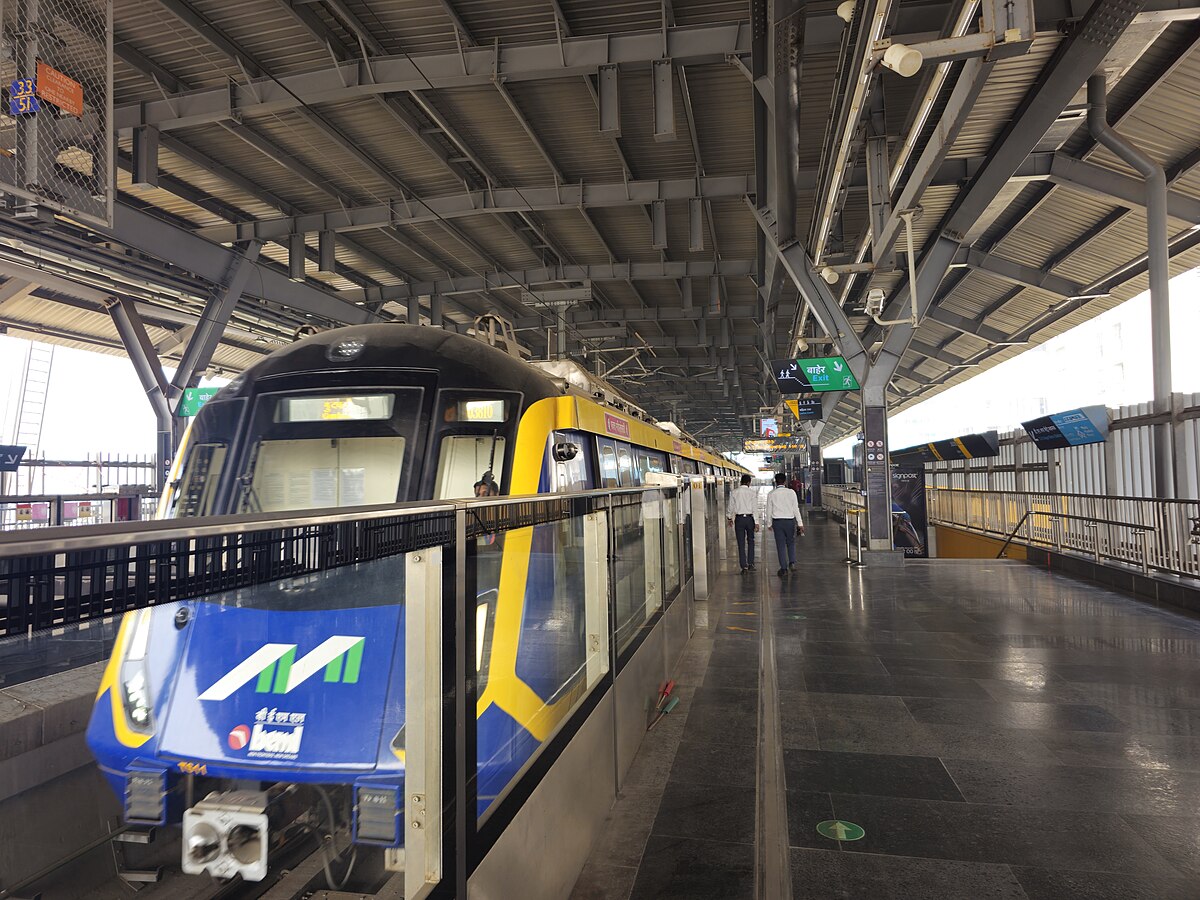
Mumbai approves Thane airport corridor and underground Metro Line 11
Mumbai’s transport landscape is set for a dramatic transformation after the state government approved a new elevated corridor linking Thane with Navi Mumbai International Airport and an underground metro line from Wadala to the Gateway of India. Both projects, cleared by the Cabinet Committee on Infrastructure, mark a major push towards sustainable mobility and modernisation of the region’s creaking transport network.
The 25-km elevated corridor between Thane and the upcoming international airport will provide a direct high-speed link for commuters and businesses in the Mumbai Metropolitan Region. Officials said the project is expected to reduce travel times significantly while easing road congestion, creating a backbone for regional economic activity.Equally significant is the clearance of Metro Line 11, a 16-km underground corridor connecting Wadala Depot to the Gateway of India. The Rs 24,000 crore project, to be funded with assistance from the Japan International Cooperation Agency, will run entirely underground, with stations planned at key locations such as Shyama Prasad Mukherjee Chowk and Horniman Circle. Authorities believe the project will not only enhance last-mile connectivity but also revitalise south Mumbai by reducing traffic pressure on heritage precincts.In addition, the government has sanctioned new railway infrastructure on the Pune-Lonavala stretch, a move expected to ease the mounting travel demand in the city. With Pune’s rapid industrial and residential growth, additional lines are seen as crucial to support commuters and logistics needs.
Urban transport modernisation also received a boost under the Mumbai Urban Transport Project (MUTP) phases 3 and 3A. The state has approved the procurement of 268 fully air-conditioned local train coaches with automatic doors, replacing the ageing open-door rakes. Officials confirmed that despite the upgrade, passenger fares would remain unchanged.Beyond Mumbai and Pune, the state also cleared the development of a new township and ring road in Nagpur to accommodate urban expansion. In Pune, the first phase of the metro project will now extend to new stations at Balajinagar, Bibwewadi, Swargate and Katraj, strengthening east-west connectivity.
Experts view the approvals as a coordinated attempt to overhaul Maharashtra’s public transport ecosystem. They argue that the projects collectively represent a shift towards climate-resilient infrastructure combining high-speed rail, metro corridors, and sustainable urban expansion. However, urban planners stress the importance of timely execution and integration, warning that delays could erode the intended benefits.For Mumbai, where inadequate infrastructure has long struggled to keep pace with population growth, the new approvals are seen as pivotal. By connecting Thane directly to the airport and bringing underground metro services to the city’s historic core, the state has set the stage for a new era in urban mobility one that could make travel faster, cleaner, and more equitable.