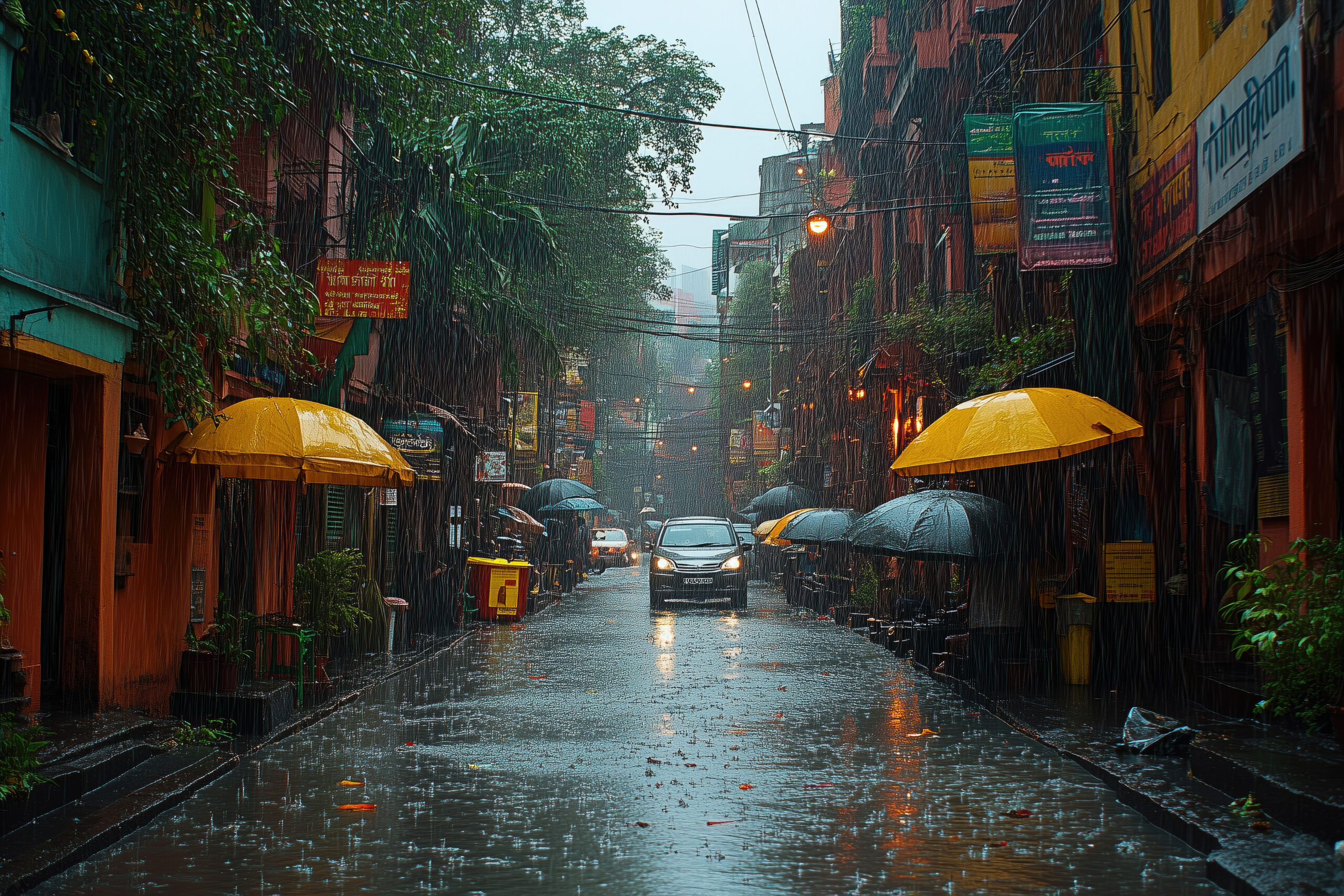
Mumbai Rains Disrupt Flights Power Supply And Bus Services Across City
Mumbai’s heaviest August rainfall in five years has thrown the city’s transport network into chaos, disrupting flights, halting buses, and paralysing daily commute. With airlines issuing advisories and road traffic at a standstill, the crisis has once again exposed the fragility of the metropolis against extreme weather.
The city recorded 891 mm of rain this month, far above the August average of 560 mm, according to the India Meteorological Department (IMD). In just five days, Mumbai received over 837 mm, surpassing rainfall totals for both June and July combined. Experts note that the intensity and duration of this spell point to a changing monsoon pattern linked to climate variability.
At the city’s airport, one of the busiest in the country, flight operations were severely affected. Airlines reported diversions, go-arounds, and delays of nearly an hour, leaving passengers stranded. Carriers warned that further disruptions are possible as more rain is forecast. The cascading delays hit evening flights hardest, highlighting the mounting challenge of operating air traffic under volatile weather conditions. The disruptions extended far beyond the airport. The Brihanmumbai Electric Supply and Transport (BEST) had to divert 135 bus routes, one of the largest diversions in recent years, due to extensive waterlogging. Meanwhile, taxi and auto services largely withdrew from flooded stretches, worsening commuter hardship. The city also suffered widespread power outages, with substations in suburbs shutting down and thousands of families facing prolonged blackouts.
Neighbouring regions in the Mumbai Metropolitan Region — including Thane, Vasai and Navi Mumbai — also recorded heavy showers. Chincholi in Malad logged 361 mm in a single day, one of the highest tallies of the season. In many areas, rainfall exceeded 200 mm within 24 hours, pushing already overburdened drainage systems to breaking point. Urban planners argue that the rain emergency underscores the urgent need to build climate-resilient infrastructure. Despite decades of investment pledges, Mumbai’s stormwater network remains inadequate to handle intense downpours, leaving low-lying areas inundated year after year. Experts suggest integrating green corridors, rainwater harvesting, and sponge city concepts to help absorb extreme rainfall while reducing urban heat and carbon footprints.
For residents, however, the impact is immediate. Slow-moving traffic, flooded roads, and unpredictable flight schedules have disrupted daily life, with many stranded for hours. Officials caution that relief may come only later this week, as forecasts indicate that rain intensity could reduce after Wednesday. The unfolding crisis once again demonstrates the pressing need for sustainable urban planning in one of the world’s densest cities. While nature’s fury may not be controlled, its impact can be mitigated by building a future-ready city prepared for extreme climate events.