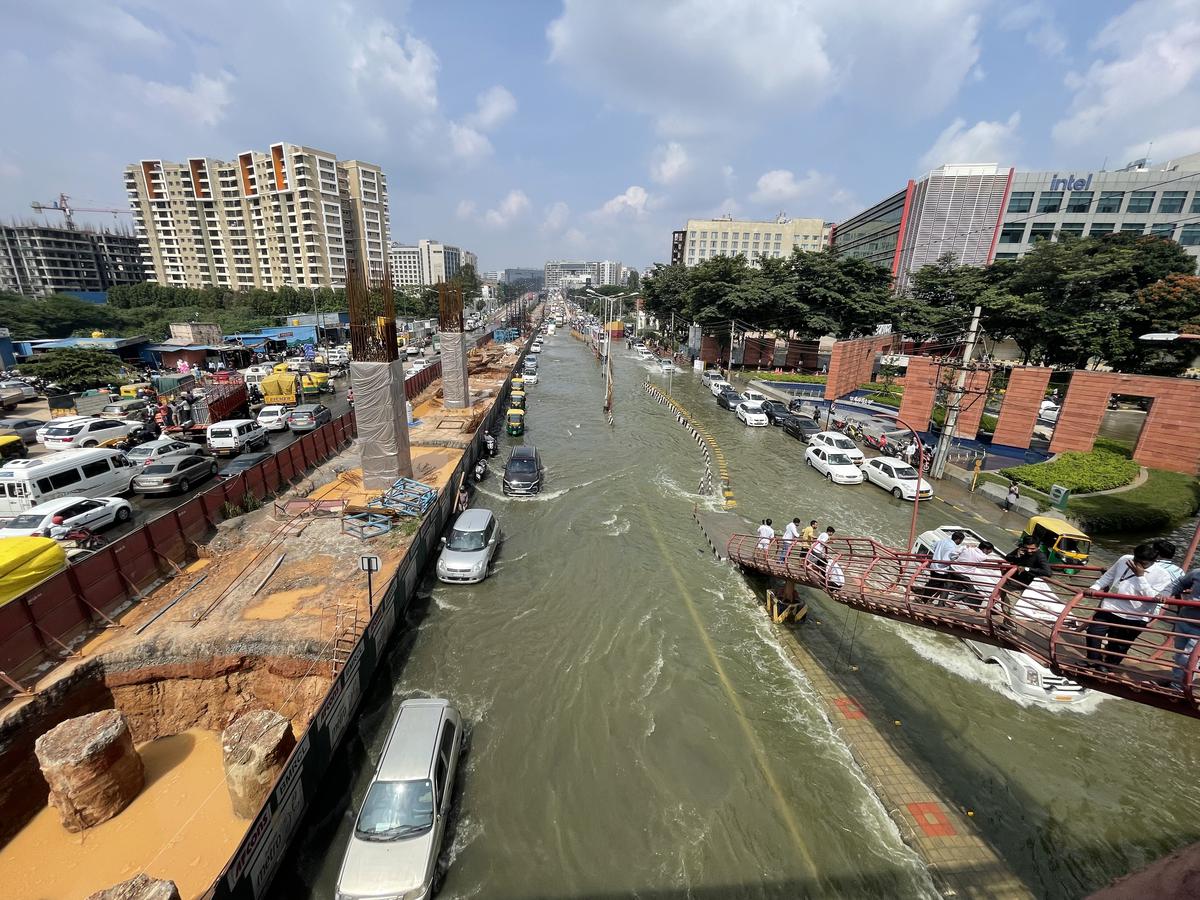
Bengaluru’s monsoon has once again unmasked the frailties of the city’s urban infrastructure, with several arterial roads turning into waterlogged stretches riddled with potholes. Residents and commuters, particularly two-wheeler riders, are grappling with daily risks as uneven and crater-filled roads leave the city battling mobility, safety, and civic credibility. The crisis underscores years of underinvestment, lack of accountability, and an absence of sustainable planning in India’s technology capital.
Across East Bengaluru, visuals of flooded streets and pothole-ridden surfaces have gone viral, prompting outrage among citizens. Many shared their frustration on social media, describing roads as “ponds with potholes” and accusing civic authorities of turning public infrastructure into hazards. Such images of bikers losing balance and pedestrians wading through dirty waters have become symbolic of civic neglect during every monsoon season.Experts argue that Bengaluru’s road crisis is not merely the outcome of heavy rainfall but a reflection of poor governance and inadequate planning. Despite assurances from the Bruhat Bengaluru Mahanagara Palike (BBMP) that the city was prepared for the monsoon, stretches in Whitefield, Outer Ring Road, and residential corridors remain perilous. Civic engineers and contractors continue to be criticised for prioritising short-term patchwork over long-term sustainable solutions.
Urban policy specialists point out that Bengaluru contributes significantly to India’s knowledge economy, yet its infrastructure lags behind global standards. Poor drainage design, lack of rainwater harvesting structures, and substandard road construction have worsened the climate vulnerability of the city. For citizens, this translates into not only longer commute times and higher vehicle repair costs but also broader economic inefficiencies that hinder Bengaluru’s global competitiveness.Residents also link the issue to corruption and inefficiency in civic contracts. Questions have been raised on how projects worth crores of rupees fail to deliver resilient infrastructure. Several citizens allege that political promises on road modernisation remain unfulfilled, leaving taxpayers burdened with recurring inconveniences. With mobility already strained due to metro expansion works, deteriorating roads add another layer of disruption to daily life.
Sustainable city planners argue that Bengaluru needs a decisive shift from reactive road repair to proactive infrastructure design. This includes permeable road surfaces, scientifically designed stormwater drains, and climate-resilient construction that aligns with India’s net-zero commitments. Unless systemic reforms are undertaken, experts warn, India’s innovation hub risks losing its reputation to recurring images of potholes and waterlogged streets.For now, the rains have again placed civic authorities under sharp scrutiny. While officials maintain that monsoon preparedness drives are underway, citizens remain sceptical, demanding accountability and structural reforms. Bengaluru’s roads have become a litmus test for governance, and their condition will determine whether India’s tech capital can truly transform into a sustainable, liveable, and equitable urban centre.