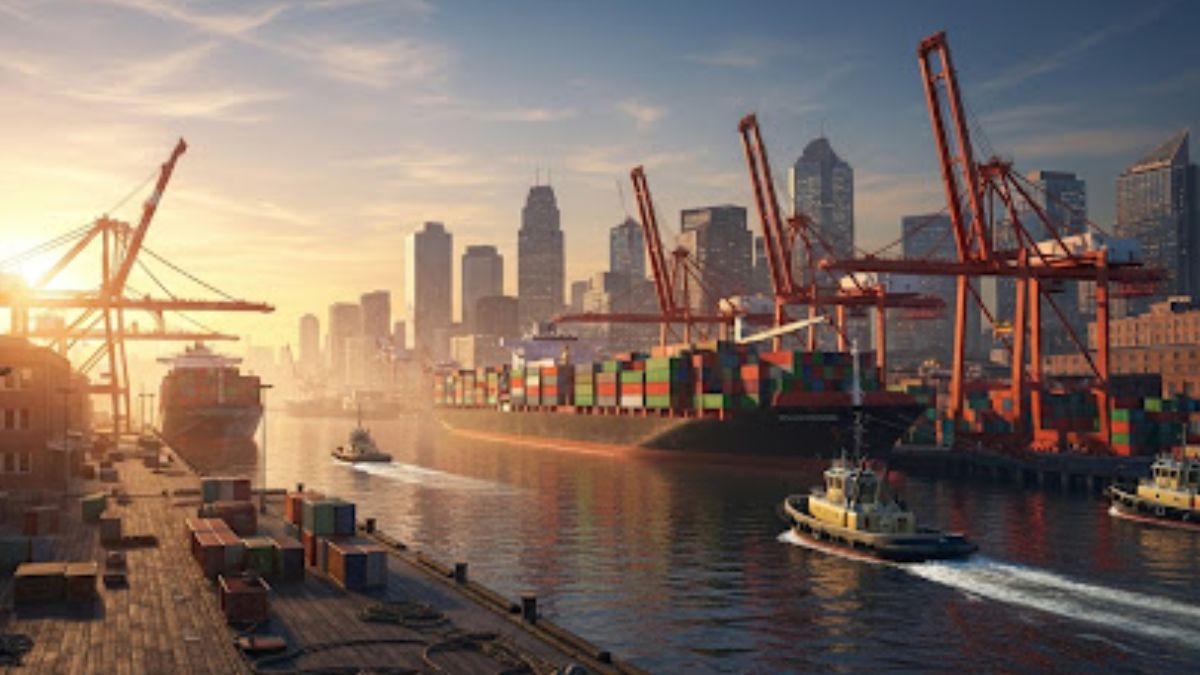
Indian Ports Bill 2025 to modernise maritime sector
India has taken a decisive step towards modernising its maritime economy with the passage of the Indian Ports Bill, 2025 in the Rajya Sabha. The legislation, which replaces the century-old Indian Ports Act of 1908, marks one of the most significant structural reforms in independent India’s port governance and is expected to strengthen the country’s position in global trade.
The new framework seeks to establish a modern, transparent, and sustainable governance system for the nation’s ports. With its approval by both houses of Parliament, the Bill now awaits Presidential assent before it becomes law. Officials described the measure as a milestone in India’s efforts to shed colonial-era regulations and align with international practices, thereby enabling ports to serve as engines of growth and hubs for sustainable development.
Over the past decade, India’s maritime sector has witnessed rapid expansion. Cargo handling at major ports has grown by nearly 47 percent in ten years, while capacity has almost doubled. The turnaround time for vessels has reduced to globally competitive levels, and coastal shipping along with inland waterways has seen unprecedented growth. Despite these advances, experts had long argued that the outdated 1908 law was inadequate for a sector critical to India’s trade ambitions. The Indian Ports Bill, 2025 introduces the Maritime State Development Council as a statutory body to coordinate port development between the Centre and coastal States. This mechanism is expected to encourage federal cooperation, ensuring that both levels of government contribute to port-led growth. In addition, States will be empowered to create their own maritime boards, bringing uniformity in governance across India’s more than 200 ports.
The Bill also strengthens dispute resolution by setting up sector-specific committees to deliver timely redressal, a long-standing demand of industry stakeholders. Environmental sustainability is a core component, with provisions mandating compliance with international conventions such as MARPOL. Ports will be required to maintain emergency response systems and adopt green practices, positioning India’s maritime infrastructure as both competitive and eco-conscious. Digitalisation is another central feature, with a proposed Maritime Single Window and advanced vessel traffic systems designed to improve efficiency, reduce congestion, and lower operational costs. These initiatives aim to attract private investment, enhance investor confidence, and place India’s ports on par with global leaders in maritime technology.
Industry experts note that the reform represents more than just a change in law; it signals India’s ambition to become a global maritime power by 2047. The new legislation is expected to embed sustainability, efficiency, and inclusivity into the heart of port development, ensuring that the maritime sector supports national economic growth while addressing climate goals. With this reform, India is poised to enter a new era of port-led prosperity, balancing modernisation with sustainability, and reinforcing its role as a rising maritime leader in the Indo-Pacific.