


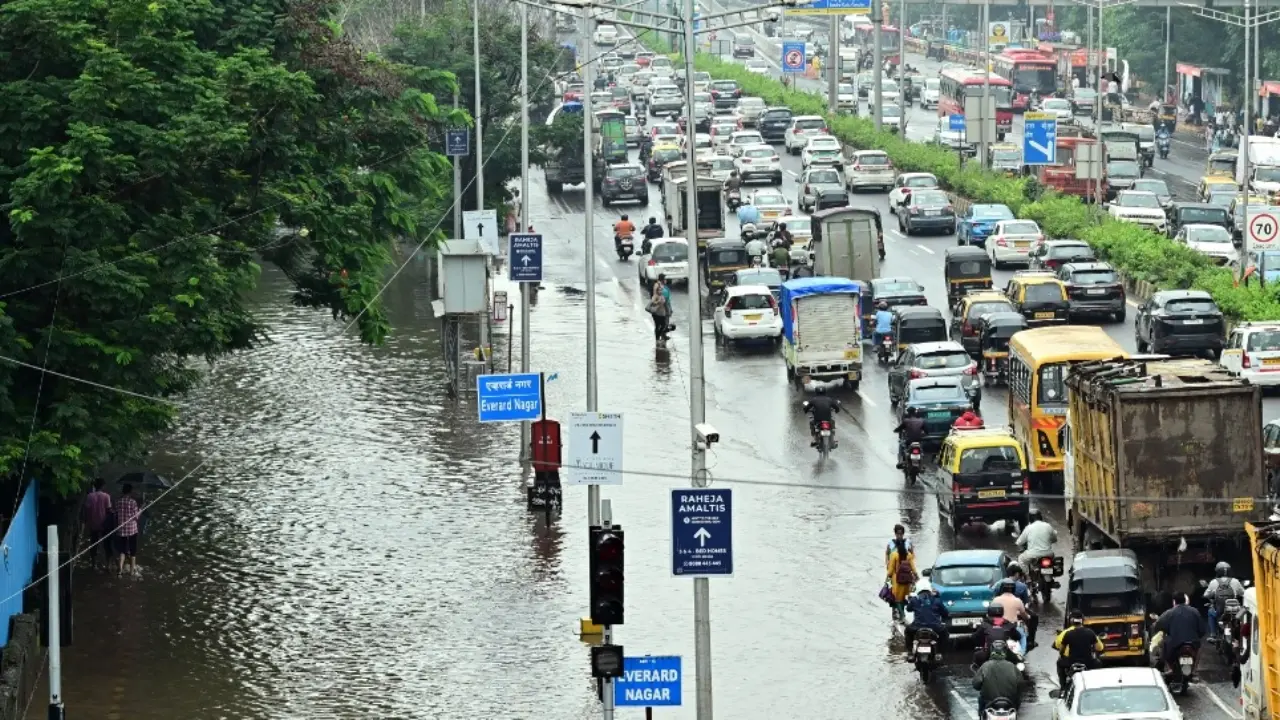
Heavy rains on Monday paralysed traffic across Pune, leaving commuters stranded in long snarls that stretched for hours. From Ganeshkhind Road and Sinhagad Road to Yerawada and Katraj Chowk, arterial routes turned into bottlenecks, with waterlogging worsening the gridlock during peak office hours.
Officials from the traffic department admitted that continuous rainfall since early morning strained the city’s already overburdened road network. Vehicles crawled bumper-to-bumper, with many two-wheelers forced to navigate through waist-deep water near low-lying junctions. Authorities said that efforts were underway to ease the situation, but the scale of congestion revealed how vulnerable Pune’s transport infrastructure remains to heavy rainfall events. The disruption has reignited concerns about the city’s inadequate drainage system and unplanned urban growth. Experts noted that poor stormwater management and unchecked construction along natural water channels are amplifying flooding incidents. The lack of dedicated bus lanes and integrated public transport further exacerbates the situation, forcing more private vehicles onto roads and deepening congestion during adverse weather.
Citizens expressed frustration as routine commutes stretched far beyond normal travel times. A working professional travelling from Sinhagad Road said her usual 40-minute journey took more than two hours, adding that waterlogging at critical junctions left motorists with no alternate routes. Such disruptions, residents stressed, highlight the need for sustainable mobility planning that prioritises pedestrians, cyclists, and efficient public transport. Authorities have urged citizens to allow additional travel time and adhere strictly to lane discipline to prevent further chaos. While temporary diversions were put in place, officials acknowledged that only long-term solutions such as strengthening drainage infrastructure, decongesting central corridors, and expanding public transport can prevent repeated gridlocks during monsoon spells.
The rainfall, expected to continue in the coming days, is testing Pune’s resilience as a growing urban centre. Experts argued that climate-resilient planning must move from policy documents to on-ground action if the city is to adapt to increasingly erratic weather. Prioritising eco-friendly, low-carbon mobility models and investing in better rainwater harvesting and drainage solutions are essential steps in building an equitable, sustainable Pune. For now, the city’s commuters remain caught between unpredictable monsoon downpours and fragile road systems. While officials continue to monitor major routes and deploy additional personnel, the pressing need for a comprehensive urban mobility overhaul has become clearer than ever. Pune, a city aspiring to modernise rapidly, must reconcile growth with sustainable infrastructure if it is to ensure safe and efficient mobility for its citizens during extreme weather events.
Also Read : Delhi Yamuna River Water Level Crosses Danger Mark
