


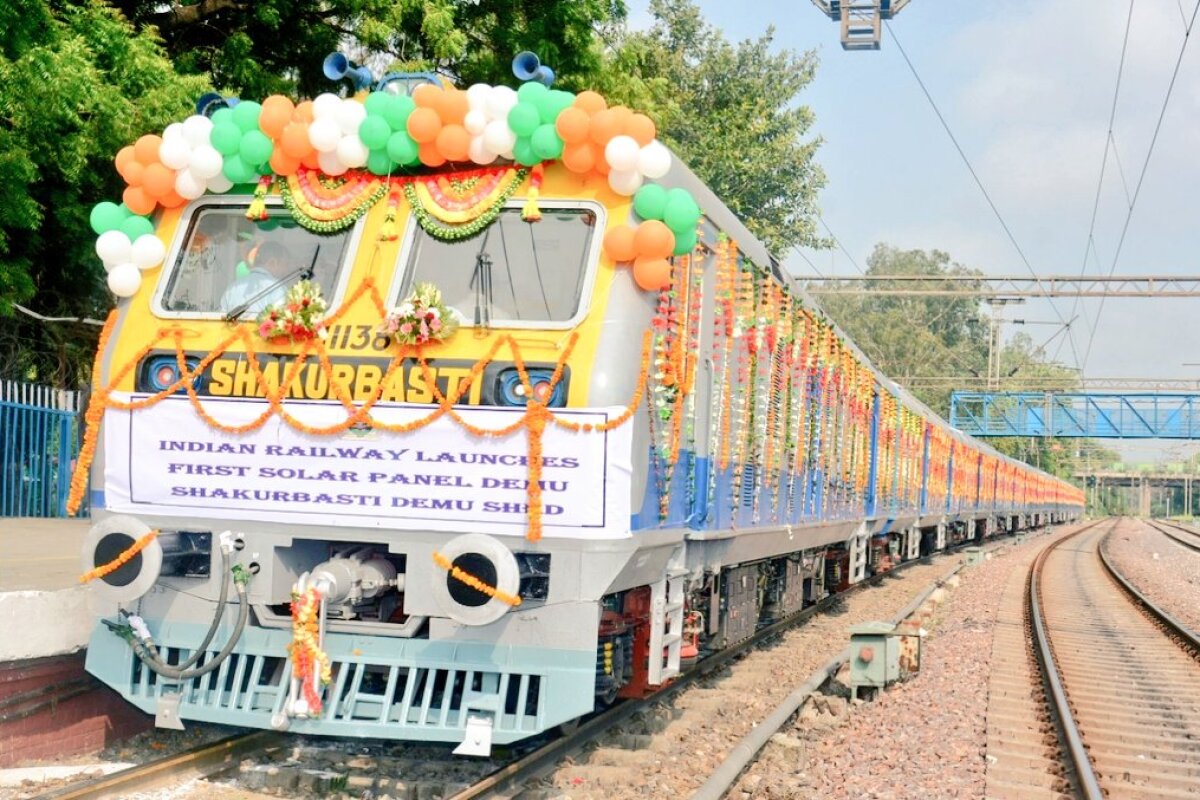
Varanasi has emerged as a testing ground for Indian Railways’ sustainability drive with the commissioning of the country’s first removable solar panel system between railway tracks. Installed at Banaras Locomotive Works, the 70-metre structure not only generates clean power but also showcases innovative design that allows for operational flexibility. Alongside this, freight expansion and new electrification systems highlight a multi-pronged push towards greener, more efficient railway infrastructure.
The newly commissioned solar system spans 70 metres and hosts 28 removable panels generating 15 kilowatts peak (kWp) of power. According to officials, this initiative has been designed to provide clean electricity without obstructing track operations, ensuring that sustainability efforts align seamlessly with operational efficiency. The ability to remove panels when required also ensures safety during maintenance, marking an engineering advancement with long-term potential for scaling.
Also Watch: An Exclusive Interview with Sanjeev Jaiswal (IAS), CEO MHADA
Railway authorities emphasise that the project is part of a wider mission to cut the sector’s reliance on fossil fuels and drive towards a net-zero carbon footprint by 2030. Transport analysts note that the pilot project at Varanasi could pave the way for similar deployments across congested urban rail corridors, where land for renewable projects remains limited.Parallel to green energy adoption, Indian Railways has intensified efforts to expand freight capacity. In a recent development, the first industrial salt-loaded rake from Sanosara in Gujarat’s Bhuj–Naliya section to Dahej was flagged off earlier this week. Officials reported that the consignment carried nearly 3,852 tonnes over 673 kilometres, generating earnings of more than Rs 31 lakh.
