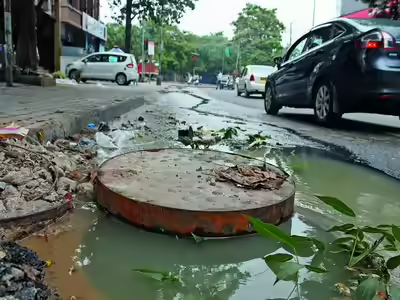
Bengaluru Plans AI Powered System To Modernise Overflowing Manholes Citywide
Bengaluru is preparing for a major technological shift in urban sanitation, as the Bangalore Water Supply and Sewerage Board (BWSSB) introduces robotic cleaners and artificial intelligence (AI) monitoring to address the city’s recurring problem of overflowing manholes. The initiative, designed to ensure safer and faster cleaning, aims to reduce reliance on manual labour while building a more sustainable sanitation system.
The scale of the task is formidable. BWSSB manages over 11 lakh sewer connections through a network of nearly 11,900 kilometres, covering more than three lakh manholes across the city. With Bengaluru’s rapid urban expansion and frequent illegal connections, the sewer network faces constant stress. During monsoons, the system becomes particularly vulnerable, with overflowing manholes causing inconvenience, public health concerns, and environmental risks. Traditional cleaning methods using jetting and suction machines have struggled to keep pace, often proving ineffective in narrow lanes or traffic-heavy areas.
To overcome these challenges, BWSSB is adopting robotic technology equipped with cameras and AI-driven guidance systems. The robots will navigate dark, confined spaces and relay live images to operators above ground, enabling accurate and efficient cleaning in areas that human workers or conventional machines cannot access. Officials have stated that the new system is expected to cut complaint resolution times significantly, with a target of addressing manhole-related issues within 12 hours. Initial deployment will be carried out through short-term service contracts rather than outright purchase, allowing the board to test efficiency and cost-effectiveness before large-scale adoption. A pilot project worth five lakh rupees over 15 days has already been floated, with tenders inviting service providers to demonstrate capabilities.
Alongside robotics, BWSSB plans to upgrade physical infrastructure by installing Double Iron (DI) pressure manhole covers in vulnerable areas. About 1,500 such covers are expected to be fitted across low-lying parts of the city. These reinforced covers are built to withstand heavy traffic and reduce risks for pedestrians, while also offering long-term savings due to their durability and reusability. Urban planners and sanitation experts describe this development as a decisive move towards modernising Bengaluru’s sewer management. By combining robotics, AI supervision, and improved hardware, the city is not only enhancing operational efficiency but also reducing health hazards for sanitation workers, who often face high-risk conditions during manual cleaning.
For a metropolis that is home to millions, the integration of smart technologies into essential civic services reflects a broader vision of sustainable, equitable, and eco-friendly urban living. While the cost of new technology remains high, experts believe that the benefits—faster complaint resolution, safer operations, and long-term maintenance savings—justify the investment. As Bengaluru prepares to deploy these innovations, its experiment with AI and robotics in sanitation may well set a benchmark for other Indian cities seeking to blend technological progress with inclusive urban growth.