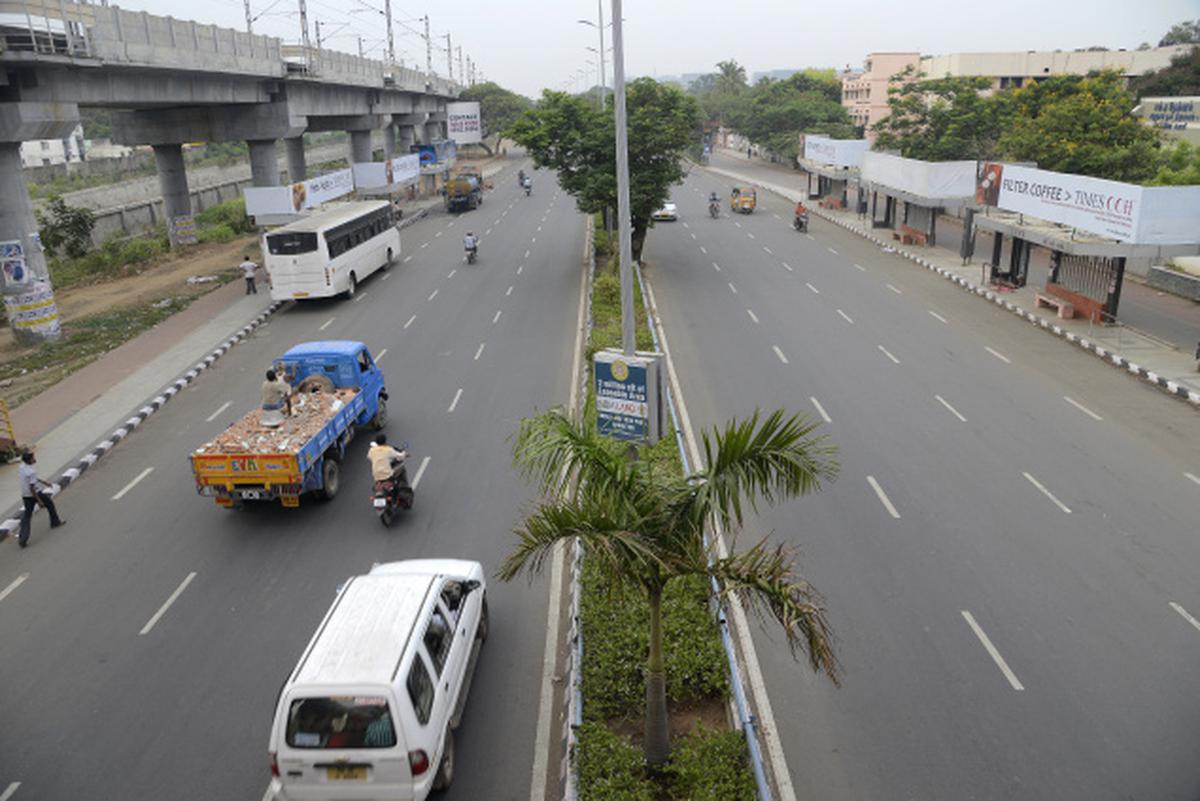
Chennai OMR Five-Kilometre Stretch to Be Re-Laid by September
Chennai’s Rajiv Gandhi Salai, better known as Old Mahabalipuram Road (OMR), will see a five-kilometre stretch re-laid before the end of September, bringing long-awaited respite to thousands of motorists and pedestrians enduring deteriorating road conditions. The Tamil Nadu Road Development Company (TNRDC), which will assume charge of the stretch after metro rail construction is completed, has floated tenders worth nearly ₹40 crore to fast-track repairs.
The work will include re-laying service lanes, installing kerbstones to separate service roads from the main carriageway, and correcting road levels to ensure proper rainwater drainage. Officials confirmed that the restored stretch is part of the 17-kilometre corridor, of which only 4.8 km is being handed back at present. The entire road will be comprehensively re-laid once all metro-related works conclude, a process expected to take another 18 months.
For years, OMR has remained synonymous with urban growth as well as traffic congestion, with the IT corridor accommodating lakhs of daily commuters. However, poor road conditions, deep potholes, and inadequate drainage have made it a hazardous route. Two-wheeler riders, in particular, have been vulnerable, often reporting back injuries caused by uneven surfaces. Frequent accidents, some caused by broken kerbstones and makeshift pothole covers, have amplified concerns about road safety. Residents and commuters argue that timely intervention is not just an infrastructure necessity but a public safety imperative.
The upcoming re-laying marks an important shift, not just for smoother travel but also for embedding sustainability into road infrastructure. Engineers say the focus will be on improving stormwater management, an urgent need given Chennai’s history of flooding during monsoons. Ensuring water is channelled into drains instead of stagnating on carriageways is central to building climate-resilient urban infrastructure. By correcting levels and reducing patchwork repairs, the project also aims to cut carbon footprints associated with repetitive construction and emergency fixes.
Experts point out that OMR’s revival is crucial in reimagining Chennai’s mobility framework. With the metro expansion nearing completion, the IT corridor is expected to witness a major shift from private vehicles to public transport. However, whether this transition succeeds will depend on better last-mile infrastructure, including safer service lanes and pedestrian-friendly features. In this context, the re-laying of OMR is more than just a repair—it represents an opportunity to align urban growth with sustainability, safety, and resilience. Officials emphasise that while the September deadline applies only to the first five kilometres, the broader commitment is to restore the entire Rajiv Gandhi Salai within 18 months. For Chennai’s residents, the hope is that this effort will not only repair roads but also reset priorities towards durable, eco-friendly, and commuter-centric infrastructure.