


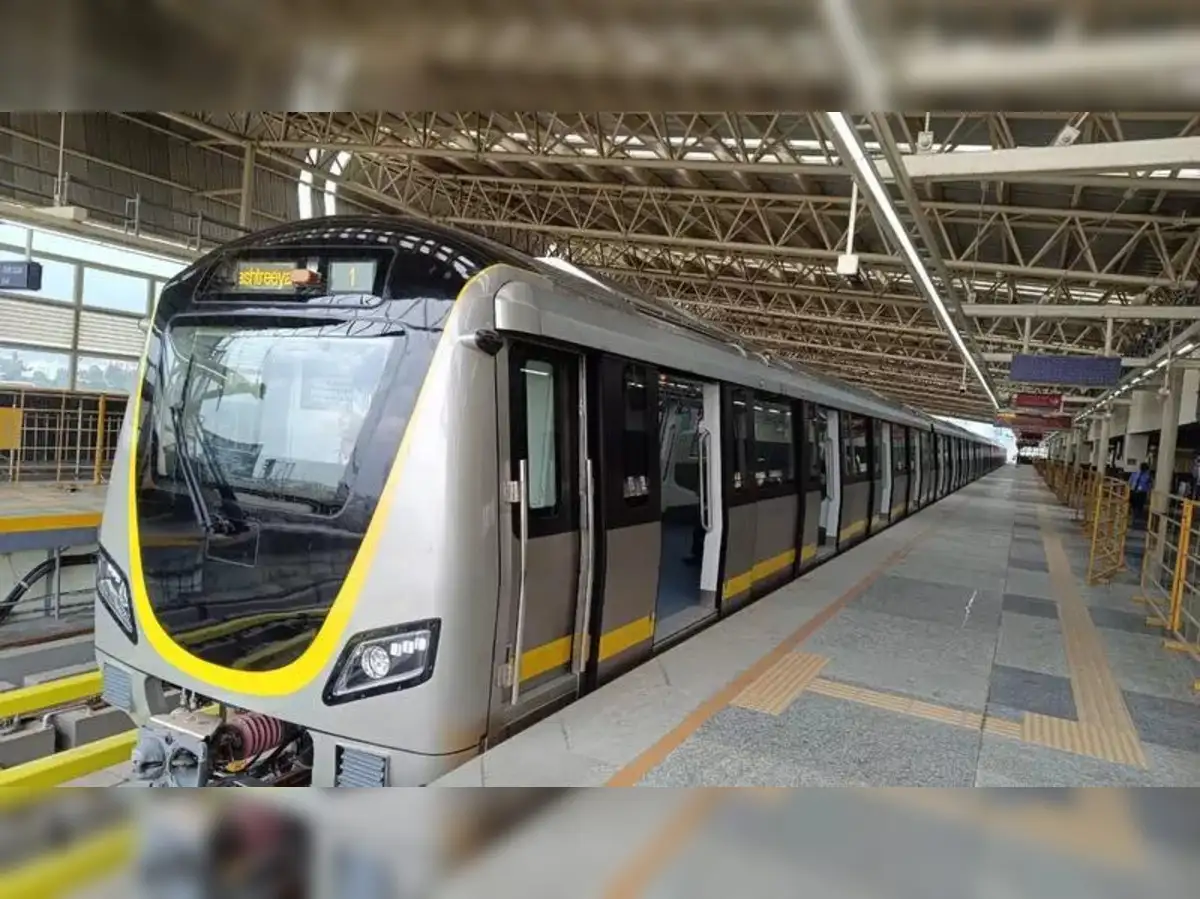
Bengaluru Metro’s Yellow Line is set to become faster and more commuter-friendly with the arrival of its fourth trainset at Hebbagodi depot after a 15-day journey from Kolkata. The new addition, expected to begin service after testing, will cut the current 25-minute train interval to 20 minutes, easing congestion for thousands of daily riders and strengthening the city’s push for sustainable public transport.
The initial coach of the new trainset reached the Hebbagodi depot after a 15-day journey from Kolkata. The remaining five coaches are scheduled to arrive within the next few days. Once assembled, the full six-coach train will undergo static testing, followed by at least two weeks of mainline trials during night hours before entering passenger service in early September, according to metro officials.
Also Watch: An Exclusive Interview with Sanjeev Jaiswal (IAS), CEO MHADA
Manufactured under a sub-contract by an Indian rolling stock firm in partnership with a global train manufacturer, the delivery marks progress on a delayed ₹1,578-crore contract awarded for 36 trainsets. Fifteen of these were designated for the Yellow Line, with the rest for other operational corridors. Previous setbacks included partner finalisation issues and visa delays for foreign technical staff, but production and deliveries are now on track. The Yellow Line, covering 19.15 kilometres, began operations on 11 August and currently runs trains every 25 minutes. Officials expect the addition of the fourth train to cut the headway to around 20 minutes, improving convenience during peak travel hours and attracting more daily riders from road to rail.
Ridership trends indicate the city’s growing appetite for sustainable mass transit. On its second operational day, the metro system recorded over 1.03 million boardings, maintaining the momentum of its opening day. Ticket sales through smart cards, tokens and QR codes reflect the diverse passenger profile, from daily office commuters to occasional travellers seeking an alternative to congested roads. Transport planners see the expansion as more than an operational milestone; it is part of Bengaluru’s broader strategy to reduce traffic congestion, curb vehicular emissions, and encourage low-carbon mobility. The Yellow Line in particular is expected to ease pressure on parallel road corridors, helping the city progress towards its net-zero urban transport goals.
While immediate commuter benefits are evident, the real impact will be measured in how effectively the frequency improvements and network expansions influence travel behaviour. Officials maintain that continued investments in rolling stock, integrated ticketing, and last-mile connectivity are essential for building a metro system that serves as Bengaluru’s primary public transport backbone. With each additional train, the city edges closer to a modern, reliable, and eco-friendly urban mobility framework, setting a precedent for other Indian metros seeking to balance rapid growth with environmental responsibility.
Also Read: India Builds 10660 Km Highways Targets Rs 3 Trillion Projects
Bengaluru Metro Expands Yellow Line Operations
