


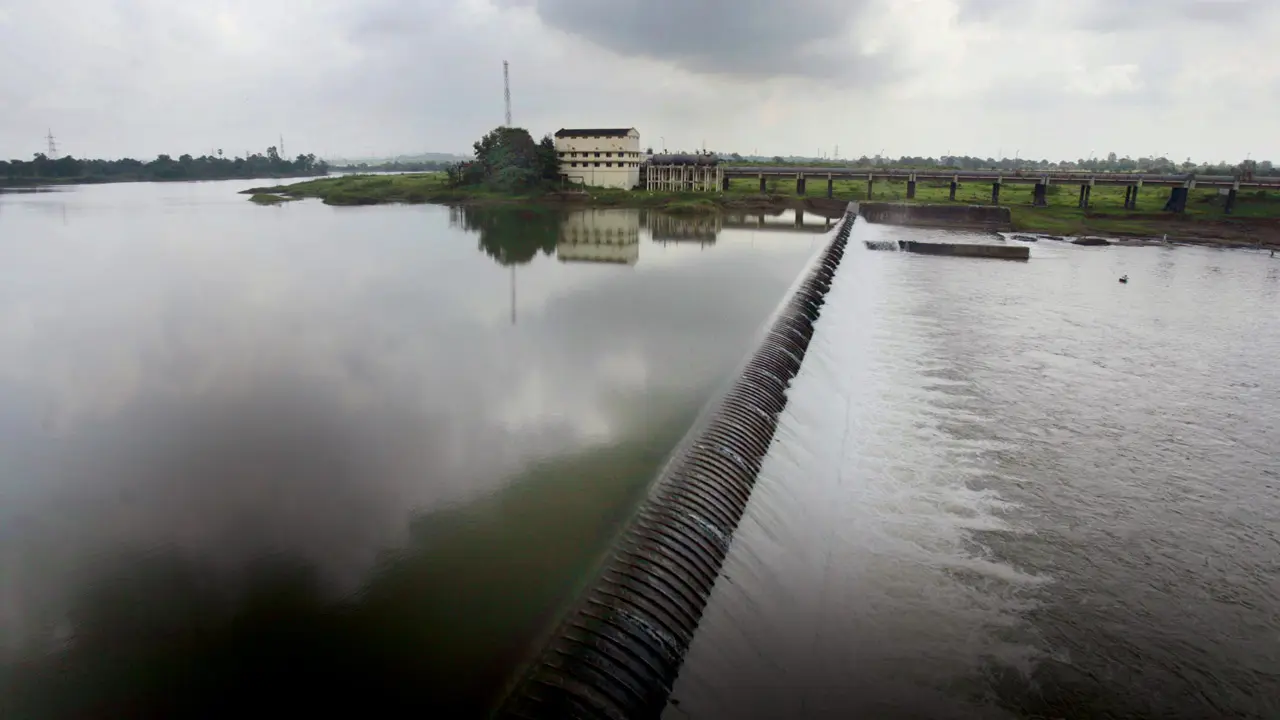
Mumbai’s water reserves have surged to 89.38% capacity, bolstering the city’s water security as sustained monsoon showers continue to replenish its seven key lakes. Latest civic data shows the reservoirs collectively hold over 12.91 lakh million litres of water, offering a significant buffer for the months ahead.
The Brihanmumbai Municipal Corporation (BMC) confirmed that individual lake levels reflect healthy storage across the network. Tansa reservoir leads with 97.88% of its capacity filled, followed by Middle Vaitarna at 95.26% and Modak Sagar at 91.24%. Upper Vaitarna, a critical source for western suburbs, currently holds 84.07%, while Bhatsa has reached 87.93%. Tulsi and Vehar, the smaller lakes in the system, are at 87.44% and 76.61% respectively. The city’s water distribution relies on two primary systems — the Vaitarna network, which feeds western suburbs from Dahisar to Bandra and central-western Mumbai from Mahim to Malabar Hill, and the Bhatsa system, which serves eastern suburbs from Mulund to Mazgaon. Water from the Bhatsa network undergoes treatment at the Panjarpur facility before reaching homes and businesses.
Weather conditions have played a decisive role in this year’s replenishment. The India Meteorological Department (IMD) reported a generally cloudy outlook with moderate to heavy rainfall likely over the next few days. A yellow alert remains in place for Mumbai, Thane, and Palghar, signalling the possibility of isolated heavy showers. The IMD has further projected increased rainfall activity on August 16 and 17, issuing an orange alert for districts such as Raigad, Ratnagiri, and hilly belts of Pune, Kolhapur, and Satara. Officials have advised preparedness for localised flooding in vulnerable zones, especially in low-lying areas prone to waterlogging during high tide conditions.
Mumbai’s tide data for Thursday shows a high tide of 4.28 metres expected at 3:04 pm, followed by a low tide of 0.77 metres at 9:14 pm. These tidal patterns, when combined with intense rainfall, often exacerbate drainage challenges in the city. Experts believe the strong reservoir levels not only secure immediate drinking water needs but also give the city leverage to implement sustainable supply management. This includes reduced dependence on last-minute cutbacks and improved allocation for critical infrastructure. However, civic officials caution that responsible water use remains vital to ensure reserves are sustained, particularly if post-monsoon rainfall trends weaken.
While the healthy storage levels are a relief, climate analysts warn that erratic monsoon behaviour due to climate change can alter future patterns. They emphasise that building eco-friendly, resilient urban water systems remains crucial to long-term water security, even during years of surplus.
Also Read : Mumbai To Inaugurate Santacruz Chembur Link Road Extension Project Today
