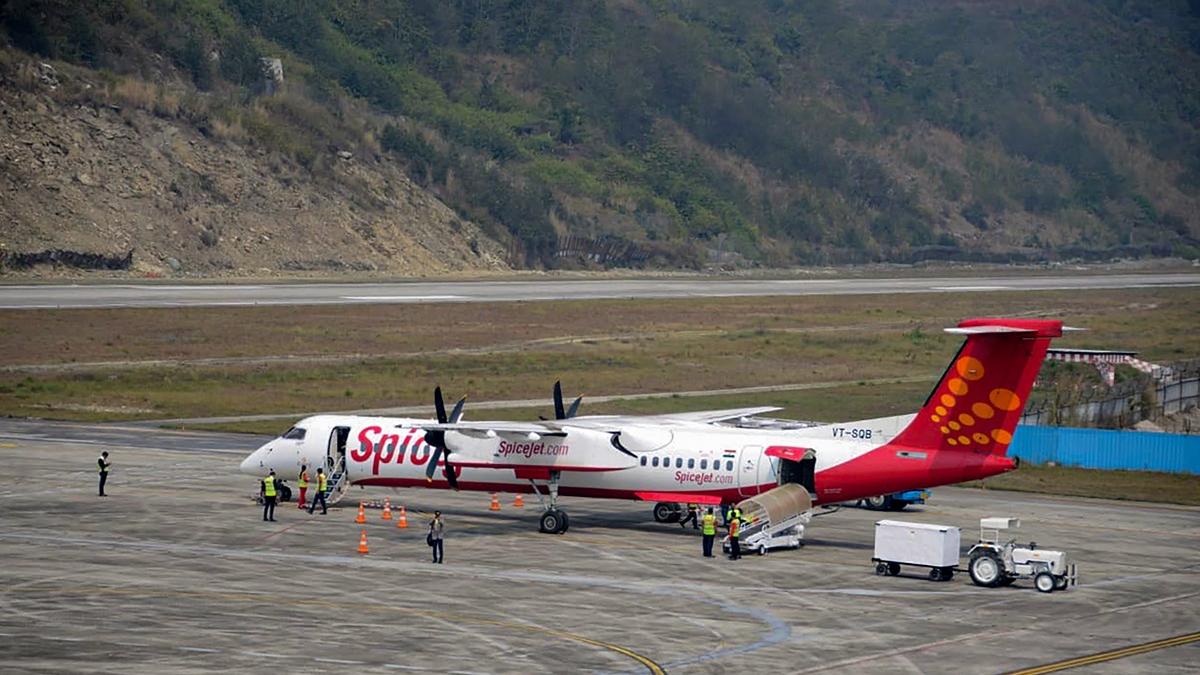
Ministry of Civil Aviation Promises Full Support for Flight Restoration at Pakyong Airport
A high-level meeting convened by the Ministry of Civil Aviation has put the spotlight on the urgent need to restore flight services at Sikkim’s Pakyong Airport. The airport, inaugurated with great fanfare in 2018, has faced chronic operational disruptions, with the latest suspension of flights since June 2024 severely impacting the state’s residents, burgeoning tourism sector, and overall economic health. This gathering, bringing together central government officials and representatives from major airlines, signals a concerted effort to address the deep-seated issues hindering sustainable air connectivity to the Himalayan state.
The discussions underscored the complex challenges facing Pakyong Airport, which has historically struggled with consistent operations. Officials from the state’s tourism and civil aviation department have been vocal about the elusive nature of reliable air service, noting that the airport has only been operational for less than a third of the days in a year since its opening. A key technical limitation is the airport’s relatively short 1.75 km runway, which can only accommodate smaller aircraft like the Bombardier Q400. This has become a significant bottleneck, as most major Indian airlines predominantly operate larger Airbus or Boeing jets, which are unsuitable for this runway. This situation highlights a classic infrastructure-versus-demand conundrum that is common in the development of regional air links.
Adding to the operational woes is the unpredictable weather in the region, which often leads to poor visibility and flight cancellations. While authorities have implemented modern navigation procedures, like the Required Navigation Performance (RNP) approach, to mitigate some of these issues, the challenges persist, particularly during the monsoon season. This is a critical factor for airlines, who must balance the viability of a route with the inherent operational risks. The inconsistent services have created a cycle of uncertainty, deterring both airlines from committing to year-round operations and passengers from relying on the airport as a primary travel option.
A state official has expressed a strong stance against seasonal flights, arguing that while they may benefit tourists during peak season, they fail to provide a genuine, long-term solution for local residents who depend on the airport for essential travel and connectivity. This perspective frames the issue not just as a logistical problem but as a matter of social equity, advocating for an approach that serves all citizens equally. The Ministry of Civil Aviation has assured its “full support” to expedite the restoration of services, suggesting a collaborative approach with airlines and other stakeholders. However, the path forward will require a fundamental rethink of the operational model.
One potential long-term solution, as suggested by state experts, is the extension of the runway to a length of 2.5-2.8 km, which would allow larger aircraft to operate and thereby attract a wider pool of airline partners. While this would be a significant infrastructure investment, it could provide the stable, reliable connectivity that has so far eluded Sikkim. Such a move would be a powerful statement of commitment to sustainable development in the region, fostering economic growth without compromising the fragile Himalayan environment. The ultimate goal is to transform Pakyong Airport from a sporadic, weather-dependent facility into a consistent and dependable lifeline for the entire state, ensuring its place as a key component of India’s broader and more inclusive urban mobility network.