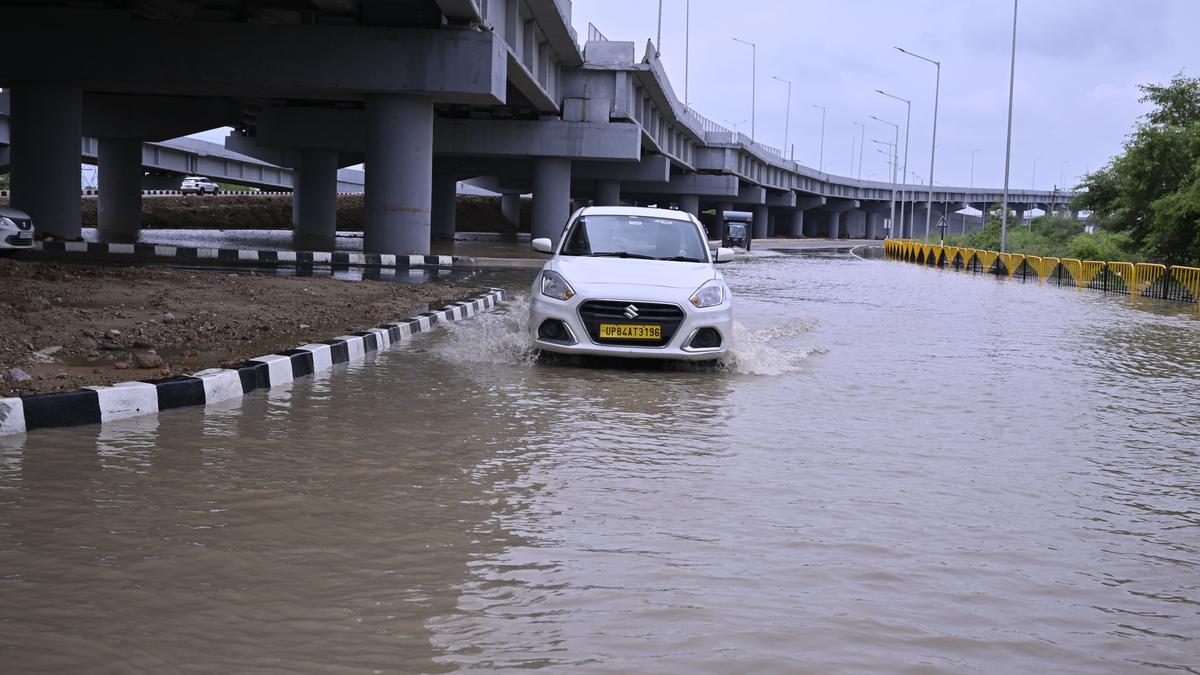
Delhi waterlogging disrupts traffic after heavy monsoon rain
Delhi woke up on Saturday to a city transformed into a sprawling water basin, with persistent overnight rain submerging arterial roads, stalling traffic, and leaving several vehicles stranded. Key districts including Vasant Kunj, R K Puram, Connaught Place, and Minto Bridge remained heavily waterlogged, as the downpour, which began late Friday night, showed no signs of relenting.
The India Meteorological Department initially issued a red alert for intense showers and thunderstorms, later scaling it down to a yellow alert. Despite the downgrade, the rainfall data underscored the severity: Safdarjung recorded 78.7 mm, Pragati Maidan 100 mm, Lodhi Road 80 mm, Pusa 69 mm, and Palam 31.8 mm in just 24 hours. The city’s maximum temperature was pegged at 32°C, with a morning low of 23.8°C. Major roads such as Panchkuian Marg, Mathura Road, Shastri Bhawan stretch, Moti Bagh, and Kidwai Nagar were reduced to crawling traffic, testing commuters’ patience and city infrastructure alike. Public transport was severely hampered, with buses diverted and cab services delayed. The downpour exposed Delhi’s chronic urban drainage challenges, which experts say have been exacerbated by unplanned construction, encroachment on natural water channels, and inadequate maintenance of stormwater systems.
Urban planners emphasise that the city’s drainage network—designed decades ago—is ill-equipped for the changing rainfall patterns influenced by climate change. More frequent and intense cloudbursts, they note, demand rapid adaptation measures, from widening stormwater drains to integrating permeable surfaces that allow natural absorption of rainwater. Civic authorities have stated that water pumps are being deployed at critical choke points and that clearance of clogged drains is underway. However, environmental experts warn that such reactive measures are insufficient, arguing for a long-term sustainable water management plan that includes rainwater harvesting, wetland restoration, and decentralised stormwater storage.
Residents in several low-lying areas reported knee-deep flooding inside homes and shops, prompting questions about preparedness despite repeated monsoon disruptions in past years. The combination of high-intensity rainfall, poor drainage, and growing urban density underscores the urgent need for climate-resilient urban design. While the rains brought a temporary relief from heat, they also underscored a harsher truth, that without systemic reform in drainage and city planning, every downpour risks paralysing the capital’s mobility, economy, and public safety. For now, the city waits for the skies to clear, even as the forecast warns of continued showers until mid-next week.