


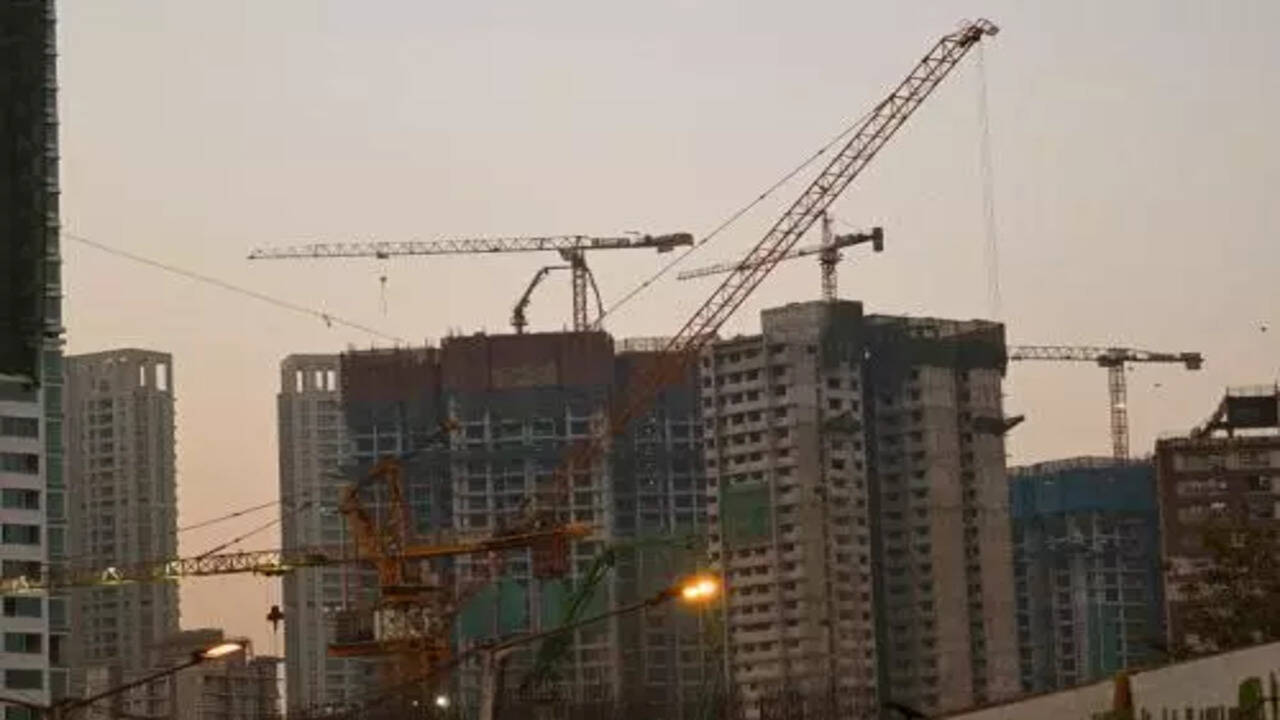
Mumbai Metropolitan Region Development Authority (MMRDA) has initiated a decisive legal crackdown on unauthorised constructions within its jurisdiction, marking a significant policy shift to curb haphazard urban development. Empowered under Section 53 of the Maharashtra Regional and Town Planning (MRTP) Act, 1966, designated MMRDA officials now hold the authority to take legal action against illegal structures cropping up across several growth nodes in the Mumbai Metropolitan Region (MMR).
The authority’s newly adopted enforcement strategy will cover planning zones where MMRDA functions as the special planning authority, including areas like Bandra-Kurla Complex, Wadala, Oshiwara District Centre, Ambernath-Kulgaon-Badlapur, Bhiwandi surrounds, Kalyan Growth Centre, and the Chhatrapati Shivaji Maharaj International Airport notified area. In extended regions such as Palghar and Alibaug, powers remain temporarily with the respective district collectors until formal development plans are finalised. Officials stated that the intent is not only to deter unauthorised developers but also to protect homebuyers and residents from legal and financial distress caused by illegally erected structures. The enforcement model is guided by the principle of ensuring urban equity, accountability, and transparency in rapidly expanding regions where construction demand has outpaced institutional control.
MMRDA has formalised a Standard Operating Procedure (SOP) to maintain due process. This SOP details a clear legal roadmap: issuing statutory notices, conducting hearings, facilitating appeals, and executing demolitions only after all judicial steps are fulfilled. The framework ensures that rights of landowners, homebuyers, and tenants are respected while addressing illegal construction at its root. According to senior officials at MMRDA, the enforcement will prioritise sustainability and fair governance over arbitrary action. The SOP has been rolled out across all planning zones to ensure unified legal adherence and to prevent ad-hoc interpretation of regulations. “This is not a demolition drive but a discipline drive,” said an official, reinforcing that the focus is on enabling lawful growth rather than aggressive punitive action.
With urbanisation continuing to reshape the fabric of Mumbai and its peripheral zones, this regulatory move is expected to bring long-overdue discipline to the urban development process. It reflects a growing alignment between planning authorities and climate-conscious, legally accountable infrastructure development, as the city navigates the complex balance between real estate potential and ecological integrity. As the SOP is implemented, officials say the impact will be closely monitored to ensure it leads to reduced encroachment, enhanced public trust in governance, and a more sustainable urban blueprint for the Mumbai region.
Also Read : India Targets ₹10 Lakh Crore Highway Push With Green Tech
