


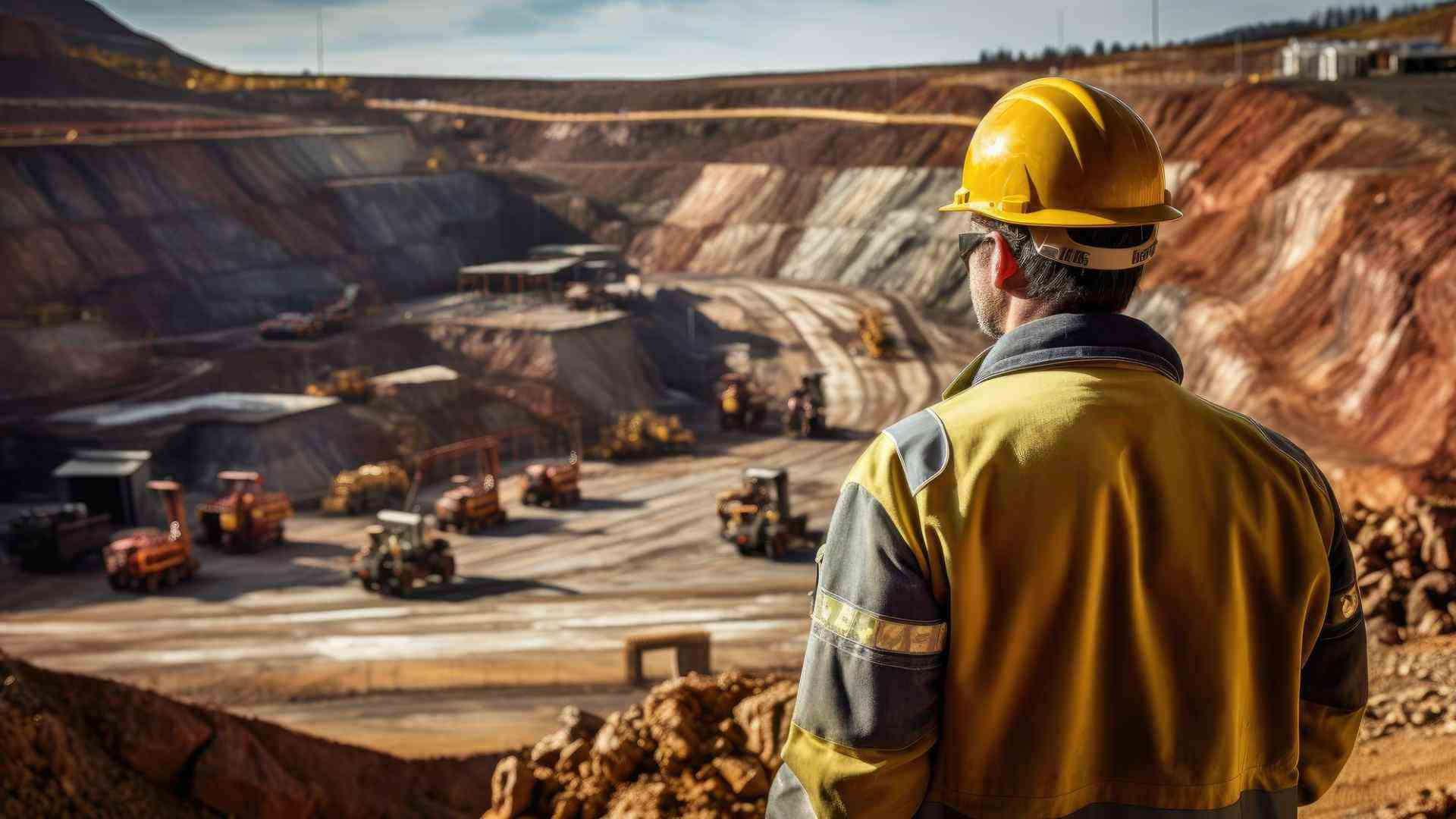
Hindmetal Exploration Services, a subsidiary of a leading mining company, has become the first to deploy advanced electromagnetic (EM) technologies. This strategic investment is not just about finding more minerals but about doing so with unprecedented precision and efficiency. By integrating tools like Borehole EM systems, drone-based surveys, and powerful AI/ML models, the company is pioneering a non-invasive, data-driven approach to discover base and critical minerals. This innovative shift promises to significantly reduce the environmental footprint of exploration, while also bolstering India’s long-term mineral security.
This technological leap represents a departure from traditional, resource-intensive exploration methods. Instead of relying heavily on extensive and often disruptive drilling, Hindmetal is using highly sensitive tools to see deep beneath the Earth’s surface. Borehole EM technology, for instance, provides high-resolution imaging of conductive ore bodies like sulfide deposits, allowing geologists to accurately map their geometry and conductivity. On the surface, the deployment of Superconducting Quantum Interference Device (SQUID) sensors—known for their extreme sensitivity—enables the detection of weak electromagnetic signals, making it possible to identify deeply buried or low-conductivity mineral targets that might have been missed by older methods. These technologies allow for targeted and highly accurate drilling, dramatically reducing the number of unnecessary exploratory holes and the associated ecological disturbance.
The company’s commitment to a sustainable and eco-friendly approach is further cemented by its use of drone-based surveys. Equipped with LiDAR and hyperspectral imaging, these unmanned aerial vehicles can conduct detailed terrain mapping over vast areas. This method provides geoscientists with a wealth of data on topography, vegetation, and surface geology without the need for ground teams to traverse sensitive ecosystems. By integrating these surveys with a systematic, science-based “Data-to-Discovery” framework, Hindmetal is able to generate precise three-dimensional models of a region’s mineral potential. This holistic data collection is a cornerstone of responsible exploration, allowing for both brownfield initiatives near existing mines and greenfield discovery in underexplored regions, all while minimizing environmental impact.
The most impactful innovation, however, lies in the application of Artificial Intelligence and Machine Learning. By feeding a massive volume of diverse datasets—including geological, geophysical, and satellite data—into AI/ML models, experts can identify patterns and make predictive judgments with far greater accuracy than ever before. This data-driven approach significantly reduces the exploration timeline and increases the probability of a successful discovery. By focusing on base metals and critical minerals, which are essential for a variety of zero-net-carbon technologies like batteries and electric vehicles, this initiative is directly contributing to India’s energy transition. The increased efficiency and success rate in resource identification are critical for building a self-reliant and resilient economy, ensuring a steady supply of materials needed to power a sustainable future.
Backed by its QCI-NABET accreditation and a team of specialists, Hindmetal’s move to embrace these advanced technologies positions it as a key player in modernizing India’s mining sector. An official from the company stated that this investment in innovation supports more efficient and precise resource identification, which is vital for the nation’s long-term mineral security. The adoption of these practices sets a new benchmark for the industry, proving that economic progress and environmental responsibility can be mutually reinforcing goals.
Also Read :Mumbais Undersea Tunnel Progresses As Gujarat Bridges Nears Completion
