


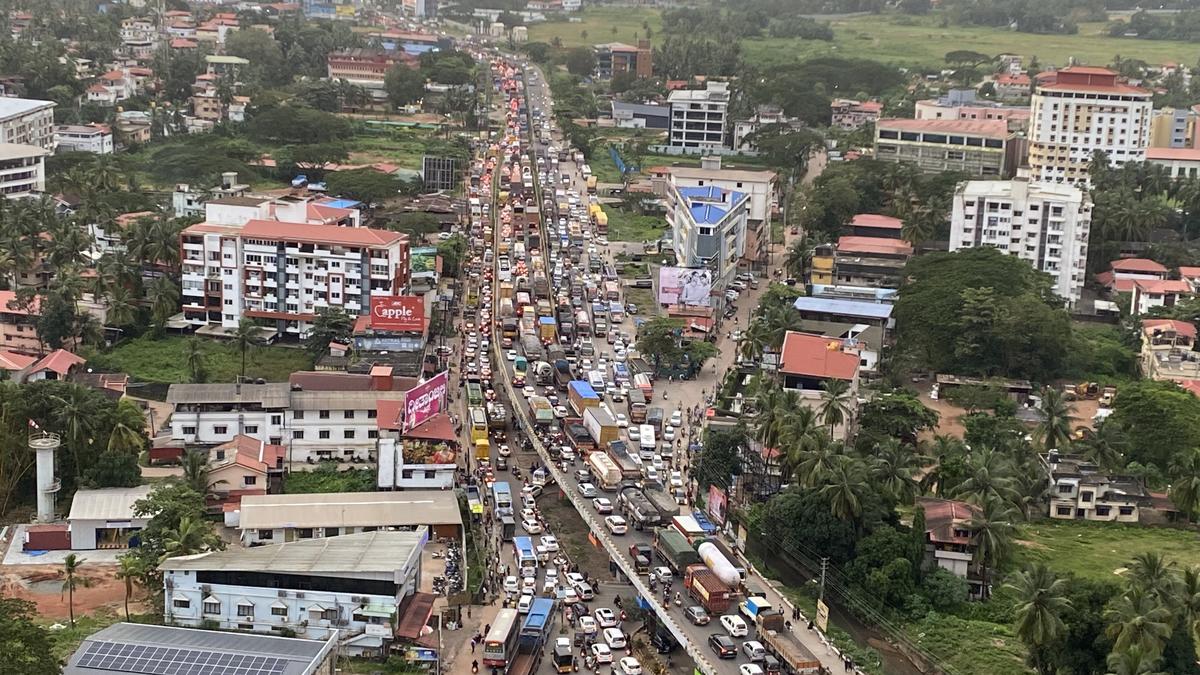
Mangaluru’s urban mobility was thrown into disarray recently as an unannounced patchwork repair on the Kulur Arch Bridge on NH 66 triggered a massive traffic blockage. Commuters faced severe congestion extending from the Kottara flyover all the way to Kulur, as vehicles were brought to a near-standstill. This incident, while seemingly a minor inconvenience, highlights a critical failure in urban governance and public communication. The lack of prior notification from local authorities not only disrupted the daily routines of thousands but also underscored a reactive approach to infrastructure maintenance, where quick fixes are prioritised over transparent, long-term planning. Such unplanned disruptions have a cascading effect on the city’s productivity, economy, and overall quality of life, raising serious questions about the sustainability and efficiency of its civic management.
The decision to conduct the repair work without any public notice is a prime example of administrative oversight that directly impacts citizens. For a city aiming to foster a zero-net-carbon, eco-friendly environment, such traffic jams are particularly detrimental. The extended period of vehicular idling results in a sharp increase in fuel consumption and the release of harmful pollutants, directly counteracting efforts to improve air quality. A sustainable city requires not just robust physical infrastructure but also an intelligent and communicative governance framework that minimises public inconvenience and environmental harm. Officials must recognise that effective traffic management and transparent planning are as crucial to a city’s health as the quality of its roads.
This recent incident is not an isolated event. It follows a prior repair period in late July, when the National Highways Authority of India (NHAI) temporarily closed the bridge to lay paver blocks, a measure adopted in response to heavy rains. While that work was a stopgap solution to address the challenging monsoon conditions, the latest unannounced patchwork suggests a persistent reliance on piecemeal repairs. This approach, while appearing to fix immediate issues, often fails to provide a durable, long-term solution, leading to recurring problems and public frustration. It points to a broader need for a comprehensive and proactive maintenance schedule that is both well-planned and effectively communicated to the public.
For commuters, the cost of such disruptions goes beyond mere inconvenience. The unpredictable nature of travel can negatively impact businesses, delivery services, and personal schedules. It also disproportionately affects vulnerable communities who rely on public transport and cannot afford unpredictable delays. A truly equitable and gender-neutral city ensures that its infrastructure planning provides for reliable and safe mobility for all citizens. Moving forward, local and national authorities must adopt a more coordinated and transparent approach to road maintenance. By issuing timely public advisories and planning repairs with citizen welfare in mind, they can build not only better roads but also greater public trust and contribute to a more sustainable, efficient, and livable urban environment.
Also Read :Pune PMRDA Plans 50 Km Cement Road Along Hinjewadi Shivajinagar Metro
