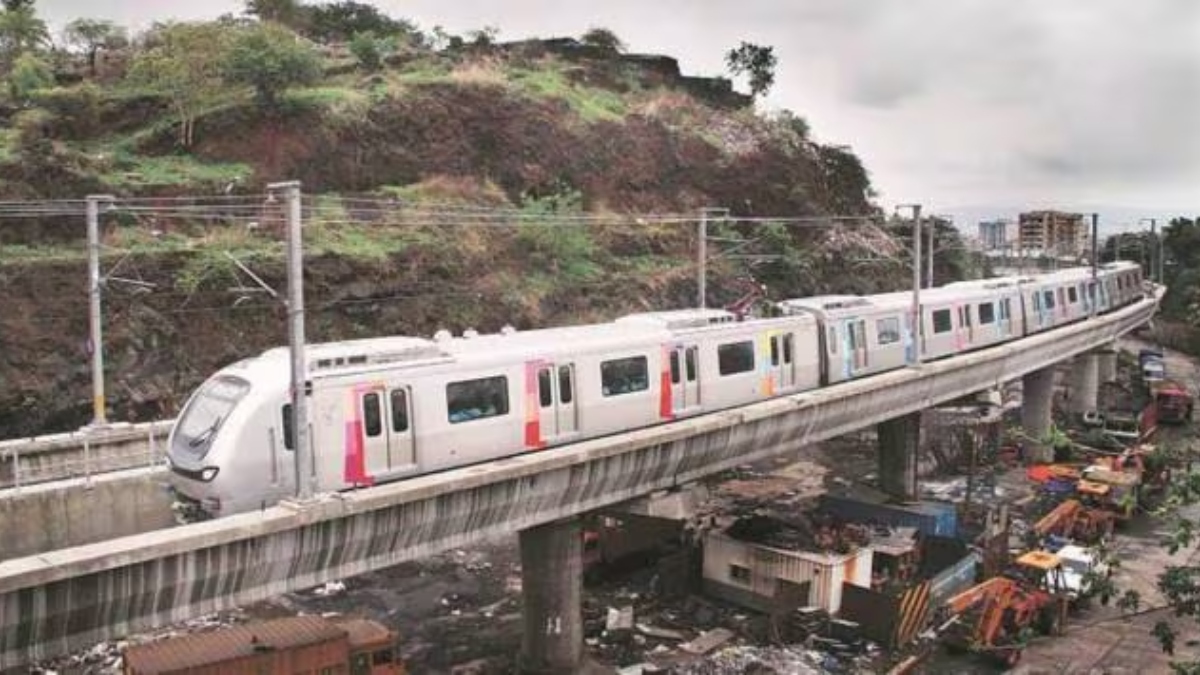
Mumbai Metro Lines 2A And 7 Achieve Over 20 Crore Rides in 39 Months
Mumbai’s urban landscape is witnessing a significant transformation with the Maha Mumbai Metro achieving a remarkable milestone: over 20 crore passenger journeys on Metro Line 2A (Dahisar to Andheri West) and Metro Line 7 (Dahisar to Gundavali) within just 39 months of operations. This achievement underscores the metro system’s growing indispensability to the city’s daily commute and highlights its pivotal role in advancing Mumbai’s vision for sustainable, eco-friendly, and efficient urban mobility. The rapid adoption of these metro lines signals a crucial shift in commuter behaviour towards modern public transport solutions.
Since their launch on April 2, 2022, these two vital metro corridors have steadily integrated into the city’s transport fabric. What began with a modest 19,451 passengers on its inaugural day has burgeoned into a widespread movement. The system recorded 1 crore passengers within just nine months, surged to 10 crore in 25 months, then 15 crore in 33 months, culminating in the impressive 20 crore mark by August 2025. This exponential growth trajectory is a testament to the operational efficiency and reliability provided by the Mumbai Metropolitan Region Development Authority (MMRDA) and the Maha Mumbai Metro Operation Corporation Ltd (MMMOCL).
Beyond mere numbers, this milestone signifies Mumbai’s proactive stride towards becoming a smarter, future-ready city. The metro lines have not only drastically cut down commute times, offering air-conditioned, safe, and affordable travel, but have also significantly alleviated road congestion and vehicular emissions. By encouraging a modal shift from private vehicles to public transit, the metro directly contributes to the city’s zero net carbon ambitions and enhances overall air quality. The operational corridors have already achieved carbon-neutral certification, with plans to extend this commitment to under-construction lines, positioning Mumbai as a national leader in climate-aligned urban transit.
The metro’s impact extends across diverse demographics, connecting office-goers, students, the elderly, and tourists, thereby fostering greater social equity and accessibility across the sprawling metropolis. The emphasis on seamless connectivity, coupled with continuous improvements in service frequency and punctuality, has cemented the metro’s position as a preferred mode of transport. Officials from the operating entities have expressed profound gratitude for the consistent ridership and acknowledged the relentless dedication of the metro staff, whose round-the-clock efforts ensure safety, cleanliness, and efficiency.
Looking ahead, the journey continues with new phases and expansions already planned or under construction. These future developments aim to further enhance connectivity, integrate digital ticketing solutions, and improve last-mile access, ensuring that the metro network remains responsive to the evolving needs of Mumbai’s citizens. The success of Metro Lines 2A and 7 serves as a compelling blueprint for sustainable urban development, showcasing how strategic infrastructure investments can transform urban living, reduce environmental impact, and contribute to a more equitable and connected city.