


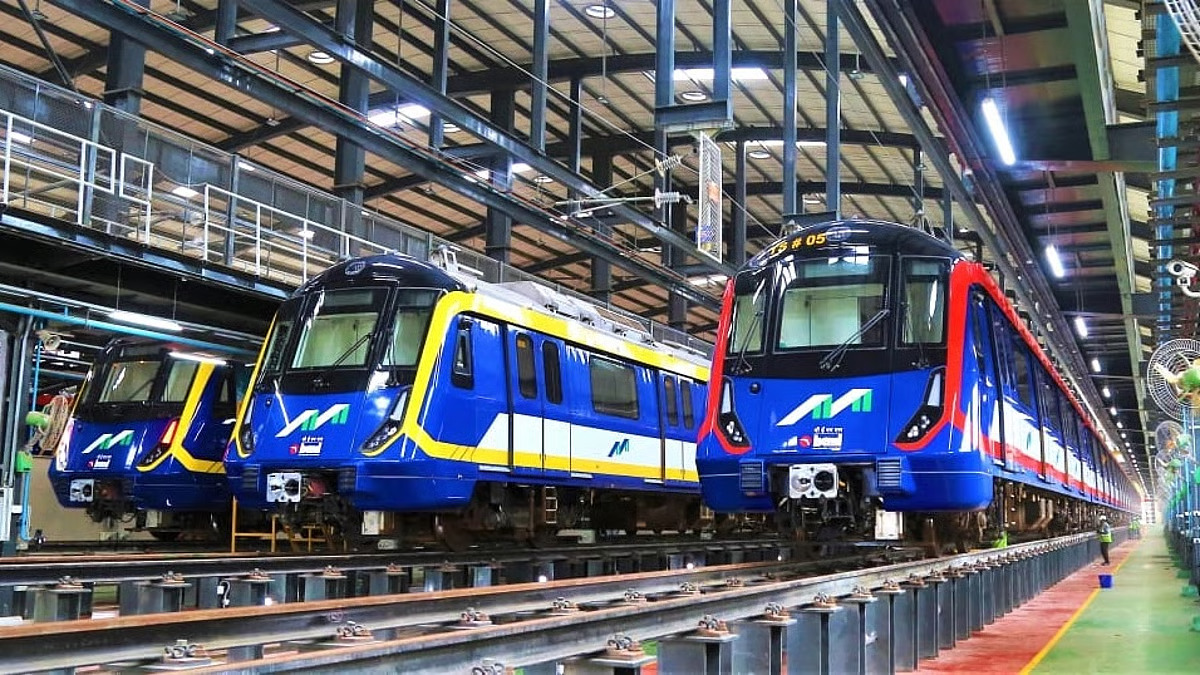
Mumbai’s suburban metro network is rapidly transforming commuter behaviour, with Metro Lines 2A and 7 recording over 200 million passenger journeys since their launch in April 2022. The milestone reflects a marked shift in urban mobility preferences as more residents opt for predictable, high-frequency rail services over conventional road-based options.
The latest ridership data shows that the two corridors—Line 2A (Dahisar East to DN Nagar) and Line 7 (Dahisar East to Gundavali)—have witnessed a consistent monthly growth of 4 to 5 percent. Notably, the system achieved its first 10 million rides by January 2023, reached 100 million by mid-2024, and crossed 150 million earlier this year. The 200 million mark was officially crossed in August 2025, just over three years into operations. On July 8, the network achieved another milestone, carrying over 300,000 commuters in a single day for the first time—a reflection of the growing dependency on the metro as a reliable transport backbone for Mumbai’s western suburbs.
Officials overseeing operations attribute the surge to the metro’s punctuality, travel-time savings, and the convenience of air-conditioned coaches—particularly during Mumbai’s sweltering summers. According to the regional transport authority, this trend underscores increasing public trust in the system and signals the need for continued expansion and integration across the Mumbai Metropolitan Region (MMR). The lines were developed to strengthen north-south connectivity in the city’s western belt, particularly bridging key areas along the Western Express Highway and Link Road. A senior official from the planning body noted that the metro has become the transport mode of choice for office-goers, students, and daily wage workers alike, as they move between dense residential zones and key commercial centres.
To sustain and scale this growth, the Mumbai Metro Operating Corporation is enhancing the commuter experience with digital ticketing options, improved service frequency, and integrated last-mile solutions. Operational teams are working to make travel more accessible and commuter-friendly, while also aligning with the broader goals of reducing road congestion and carbon emissions. Authorities say the network’s efficiency is being matched with an equally strong focus on infrastructure maintenance, cleanliness, and commuter safety—elements that have helped drive repeat ridership and long-term system adoption.
Urban planners argue that metro systems like these are essential for cities like Mumbai that are battling space constraints, vehicular pollution, and overburdened roads. The 200 million rides milestone is not just a statistical achievement—it signals the beginning of a more sustainable transport era that prioritises public mobility, energy efficiency, and equitable access across demographics. As the network expands, the emphasis is now on strategic integration, real-time data analytics, and commuter-focused innovations to ensure that Mumbai’s public transport keeps pace with its growing population and evolving urban demands.
Also Read : Mumbai To Complete Sewri Worli Connector Project Within One Year
